

Reported by Ariajegbe Sylvia Esezobor
Three months to the 2027 general elections, political parties and their candidates are yet to fully hit the streets for campaigns, despite the Independent National Electoral Commission opening the campaign window nearly two months ago. According to the commission's timetable, the Presidential and National Assembly polls will be held on January 16, 2027, while those of the governorship and state houses of assembly will take place three weeks later, on February 6, 2027. INEC cleared the way for presidential and National Assembly election campaigns on August 19, and for the governorship and state assemblies on September 9. Since then, no serious campaigns have commenced.
Exactly 97 days to the presidential and National Assembly polls, and 118 days to the governorship and state assembly balloting, no party or candidate has unveiled its campaign plan and itinerary. Unlike previous election cycles, when streets would at this stage be awash with posters and billboards and candidates would be criss-crossing their constituencies in an unmistakable poster war, the current political atmosphere is relatively subdued. Only a handful of leading parties have constituted campaign councils, while many candidates are concentrating on consultations, grassroots mobilisation, party structures and legal battles. Where campaigns have begun, another battle is emerging: the struggle for billboards and other public advertising spaces, with allegations of removal, destruction, intimidation and partisan use of regulatory powers.
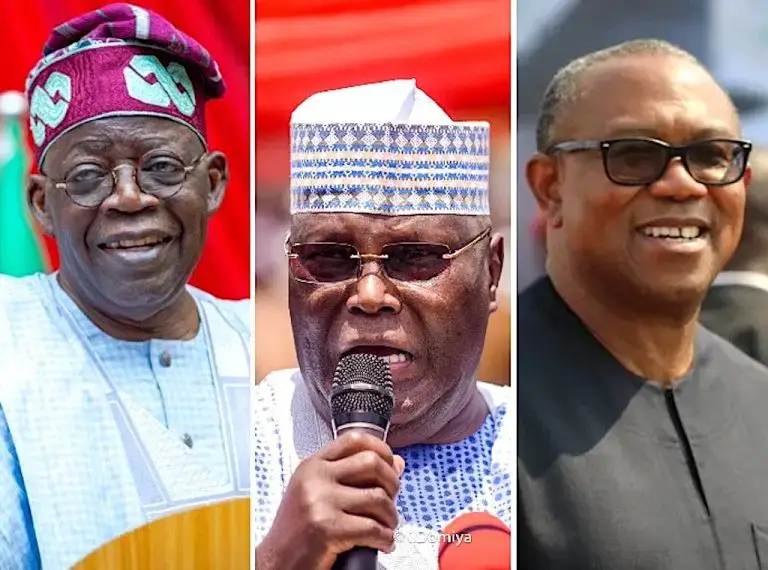
The ruling All Progressives Congress has moved the furthest in formalising its campaign structure. President Bola Ahmed Tinubu has approved the party's campaign timetable, with the Director-General of the Presidential Campaign Council, Senator Abdulaziz Yari, announcing that the council will hold its inaugural meeting on Wednesday, October 14, 2026, at the State House Banquet Hall in Abuja. The official flag-off of the party's presidential campaign will follow in Kaduna on October 24. From Kaduna, the campaign will move to Port Harcourt, Rivers State, and subsequently to Maiduguri, Borno State, with details of other scheduled engagements to be made public after the council's inauguration.
The African Democratic Congress inaugurated its Presidential Campaign Council on Friday, October 9, 2026, at the Shehu Musa Yar'Adua Centre in Abuja. The inauguration was presided over by the party's National Chairman, Senator David Mark, and brought together party leaders and candidates seeking elective positions on the ADC platform. The ADC ticket is held by former Vice-President Atiku Abubakar, with former Rivers State Governor Rotimi Amaechi as his running mate. Atiku had earlier named Senator Austin Akobundu as the Director-General of the Campaign Council in what he described as a lean structure.
The Nigeria Democratic Congress has given its presidential candidate, Peter Obi, and his running mate, Rabiu Musa Kwankwaso, a free hand to nominate key members of the party's Presidential Campaign Council, including the Director-General, Deputy Director-General, campaign spokesman and other officials. The party said the arrangement was designed to promote inclusiveness and cohesion, and that the council would be announced and inaugurated after receiving the candidates' inputs. The inauguration, initially scheduled for the first week of September, was postponed due to Obi's travel schedule. The party also said it had proposed a campaign timetable since August but was awaiting the conclusion of funding and fundraising arrangements to be spearheaded by the candidates.
The Allied Peoples Movement has set a target of 68 million votes for its presidential candidate, Oyo State Governor Seyi Makinde, representing about two-thirds of the 103 million registered voters. The party inaugurated its National Campaign Management Committee in Abuja on Tuesday, with the vice-presidential candidate, former DSS Director-General Lawal Daura, representing Makinde. The party said the campaign was focused on "resetting Nigeria" and that it was prepared to work within the provisions of the Electoral Act 2026 to secure victory. The APM has also announced plans to hold zonal town hall meetings, with the North-East zonal engagement scheduled for Yola, Adamawa State.
The subdued start to the campaign season has been attributed to a combination of factors. In Ondo State, political activities remain low, with only a few APC candidates displaying posters at strategic locations. The development has been linked largely to the crisis within the APC, where several aspirants who lost the party's primaries have gone to court to challenge the outcome. The uncertainty surrounding candidacies has therefore slowed political activities. In Ekiti, Tinubu's posters and billboards are prominent across several locations, while the presence of opposition parties, particularly the ADC and NDC, remains subdued. A major political development in the state is the decision of Dr Wole Oluyede, who contested the June 20, 2026 governorship election on the PDP platform, to support Tinubu's re-election through the Oluyede Progressive Alliance for Renewed Hope Agenda.
The National Peace Committee has raised concerns over increasing incidents of misinformation, political intimidation, violence and inflammatory rhetoric ahead of the elections. The committee said its Election Security Information Hub recorded 60 election-related incidents across the country between August 19 and September 19, 2026. Misinformation and disinformation constituted the largest category, accounting for 40 per cent, or 24 incidents. Attacks and disruptions affecting political activities and assets accounted for 21.7 per cent, or 13 incidents, while political intimidation and threats, including incidents involving security personnel, represented 16.7 per cent, or 10 incidents. Political violence and thuggery accounted for 10 per cent, or six incidents, while inflammatory statements represented 6.7 per cent, or four incidents. The committee urged the police and other security agencies to intensify prompt, impartial and evidence-driven investigations into electoral offences and political violence, and called on INEC to ensure stronger monitoring of political campaigns and strict enforcement of the Electoral Act 2026.
INEC has established a joint financial monitoring mechanism with the Economic and Financial Crimes Commission, the Independent Corrupt Practices and Other Related Offences Commission and the Nigerian Financial Intelligence Unit to track illegal campaign expenditure and curb vote buying. The commission's chairman, Professor Joash Amupitan, warned that violations of the Electoral Act would attract arrest and prosecution. "Elections must be decided by the conviction of the voter, not the depth of a candidate's pocket," he said. INEC has also acquired 57,000 new Bimodal Voter Accreditation System machines, introduced an enhanced electronic EC8A form and deployed artificial intelligence-driven systems to detect anomalies in database traffic and strengthen cybersecurity.
For Nigerians, the delay in campaign activities may offer a temporary respite from the noise and spectacle that typically accompany election seasons. But with the campaign window already open and the election just over three months away, the pressure on parties and candidates to present their programmes to the electorate is mounting. The coming weeks will determine whether the subdued atmosphere gives way to the intense political competition that Nigerians have come to expect, or whether the 2027 campaign remains unusually quiet until the final stretch.
📩 Stone Reporters News | 🌍 stonereportersnews.com
✉️ info@stonereportersnews.com | 📘 Facebook: Stone Reporters News | 🐦 X (Twitter): @StoneReportNew | 📸 Instagram: @stonereportersnews
Add comment
Comments