

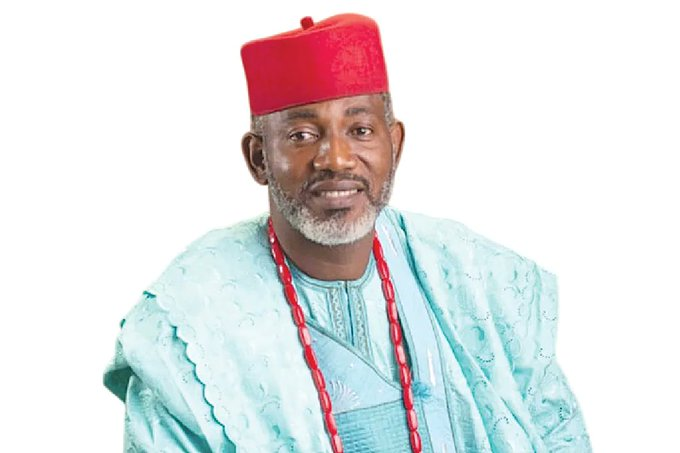
A University of Ilorin lecturer has recounted how his arrest over a WhatsApp message about a road construction project in Kogi State left him fearing for his life, alleging that police officers transported him across state boundaries under misleading circumstances and pressured him to withdraw his comments before granting him bail. The incident has renewed concerns about the use of criminal investigations in disputes involving public officials, government projects and citizens expressing opinions on social media.
The lecturer, Chief Elijah Olorunsuwa, of the University of Ilorin's Department of Political Science, disclosed his experience in an interview published by PUNCH on Sunday, October 11, 2026. His arrest occurred on September 16 at his residence in Ilorin, Kwara State, following a petition by Jerry Omodara, Special Adviser on Security to Kogi State Governor Usman Ododo. The disagreement concerned claims about the financing of the Kabba–Oke-Offin–Olle–Iluke road project in Kogi State.
Olorunsuwa explained that approximately eight police officers arrived at his residence around 5 a.m., initially presenting their visit as an attempt to speak with his wife. When he approached the gate, an officer identified himself as a member of the Kogi State Police Command and informed him that he was under arrest.
The lecturer said he requested an arrest warrant and an explanation of the alleged offence. According to him, the officers claimed that the warrant was available at the police command headquarters and would be presented when they arrived.
He initially followed the officers in his own vehicle to a police facility in Eyenkorin, where nobody was available to attend to them. After consulting his lawyer, he agreed to enter the police vehicle on the understanding that they were proceeding to the Kwara State Police Command headquarters.
However, Olorunsuwa alleged that the officers changed direction and drove towards Kogi State instead. He said the unexpected diversion caused considerable anxiety because his lawyer was waiting at the location originally agreed upon.
The lecturer described the journey as deeply distressing, explaining that he believed he had been taken away under false pretences. Concerned about his safety, he contacted associates and asked them to publicise his arrest.
Upon arriving in Lokoja, the Kogi State capital, Olorunsuwa said he received a copy of the petition explaining the allegations against him. The document concerned a message he had shared in an Oke-Offin community WhatsApp group about the financing of a road reconstruction project.
According to his account, another group member had announced that the Kogi State Government was reconstructing the road. Olorunsuwa responded that information available to him indicated that the World Bank was financing the project.
He further claimed that the intervention had been facilitated by James Faleke, a member of the House of Representatives, with the state government expected to provide counterpart funding. The lecturer attributed that information to a senior official of a federal government agency.
Omodara disputed the claim, maintaining that the road project was being financed by the Kogi State Government. In his petition dated September 11, the security adviser accused Olorunsuwa of publishing false information capable of misleading the public and damaging the government's reputation.
The petition requested police intervention and called for the lecturer to provide evidence supporting his statements about World Bank financing. It also sought possible prosecution under cybercrime legislation if the allegations were established.
Olorunsuwa said Omodara had previously demanded that he delete the WhatsApp message and warned of legal consequences. He maintained that he was willing to defend his statements through lawful proceedings.
The lecturer acknowledged that community elders subsequently intervened, encouraging efforts to resolve the disagreement. Earlier accounts indicate that he removed the disputed comments following those discussions, although the disagreement over a formal retraction continued.
The most troubling aspect of his experience, according to Olorunsuwa, occurred while he was detained. He alleged that officers made signing a retraction a condition for his release on bail, despite his insistence that he had not deliberately circulated false information.
He initially resisted the demand but said his position changed after learning about reported deaths involving miners held in a Nigeria Security and Civil Defence Corps detention facility in Minna, Niger State.
The reports intensified his anxiety about remaining in custody, particularly because he had been transported away from his home state and was uncertain about what might happen next.
Olorunsuwa said he eventually signed the retraction because he wanted to leave detention, maintaining that the document did not represent a voluntary admission of wrongdoing.
His account also described the emotional impact on his family. He said the early morning arrival of police officers frightened his wife, who had initially believed the visitors were ordinary callers seeking assistance.
The lecturer was released later on September 16 and reportedly instructed to return to the police station the following day. His subsequent public statements have focused on the circumstances of his arrest and the disputed retraction.
Omodara has defended his decision to petition the police. He maintained that the road reconstruction was funded by the Kogi State Government and accused the lecturer of circulating misleading information. He said Olorunsuwa's refusal to publish the requested retraction prompted formal action.
The competing claims about the project's financing remain central to the disagreement. Neither the lecturer's account of World Bank involvement nor the security adviser's assertion of exclusive state funding should substitute for official financing documents.
The controversy has wider implications for freedom of expression and the appropriate use of police powers. Nigeria's Constitution protects freedom of expression and personal liberty, while permitting lawful investigations into suspected offences.
However, the lecturer's allegations concerning the absence of an arrest warrant, his transfer between states and the circumstances of his retraction raise procedural questions that require examination under applicable law.
An arrest without a warrant is not automatically unlawful in every circumstance, but police officers must comply with statutory safeguards, including requirements concerning notification of alleged offences and the treatment of suspects.
Olorunsuwa has indicated that he is considering legal action over the incident. He has also alleged that subsequent warnings concerning his public comments increased his concerns about intimidation.
There has been no independently established judicial finding that the officers unlawfully arrested him or compelled his retraction. Similarly, the available information does not establish that the lecturer committed the cybercrime alleged in the petition.
The case illustrates how a disagreement about public infrastructure financing developed into a criminal complaint and an interstate police operation.
For Olorunsuwa, the experience remains deeply personal. His account describes a frightening journey, anxiety about detention and a decision to sign a statement he says he did not voluntarily accept.
For public authorities, the controversy raises questions about transparency, accountability and the handling of disputed information concerning government projects.
The immediate issue remains unresolved: whether the road financing claim was accurate and whether the police intervention complied with legal safeguards.
Until those questions are conclusively addressed, the case stands as a contested encounter between a university lecturer and state authorities, with implications for how Nigerians discuss public expenditure and exercise their right to express opinions about government activities.
📩 Stone Reporters News | 🌍 stonereportersnews.com ✉️ info@stonereportersnews.com | 📘 Facebook: Stone Reporters News | 🐦 X (Twitter): @StoneReportNew | 📸 Instagram: @stonereportersnews
Add comment
Comments