

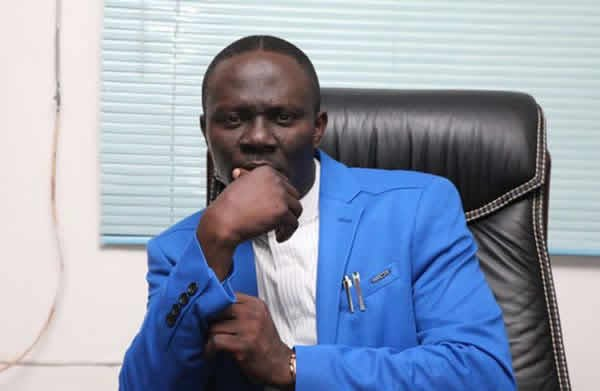
Edo State Commissioner for Information and Strategy, Kassim Afegbua, has defended President Bola Ahmed Tinubu's economic policies, arguing that Nigerians should give the president another four years to consolidate reforms introduced since he assumed office in 2023. He acknowledged the difficulties associated with the administration's decisions but maintained that the measures were necessary to address longstanding economic problems.
Afegbua made the remarks during an interview with ARISE News, reported on Sunday, October 25, 2026, as political discussions intensified ahead of Nigeria's presidential election scheduled for January 16, 2027. The commissioner compared the Tinubu administration with previous governments, particularly that of former President Goodluck Jonathan, and questioned whether lower living costs in earlier years necessarily demonstrated public satisfaction with government performance.
“President Tinubu has taken painful decisions to improve things. Give him another four years to consolidate what he is doing,” Afegbua said, defending the administration's economic direction despite continuing concerns over household expenses, purchasing power and the cost of essential goods.
The commissioner argued that Nigerians should assess government performance within a broader historical context rather than focusing exclusively on present economic difficulties. He recalled the circumstances surrounding Jonathan's defeat in the 2015 presidential election, suggesting that public dissatisfaction existed even when food prices were considerably lower than they are today.
“If things were so good during Goodluck Jonathan's administration, why was he defeated? Food may have been cheaper then, but people were still unhappy,” he said.
His comparison placed the debate over Tinubu's economic record within Nigeria's wider political history. Jonathan, who governed from 2010 until 2015, lost his re-election bid to Muhammadu Buhari, marking the first time an incumbent Nigerian president was defeated at the ballot box.
However, the circumstances surrounding that election involved several issues beyond food prices, including insecurity, corruption allegations, governance concerns and demands for political change. The result therefore cannot independently establish whether current economic policies are succeeding or whether voters consider present conditions preferable to those of earlier administrations.
Afegbua also criticised opposition parties, accusing them of failing to present convincing alternatives to the government's economic programme. He argued that political criticism should be accompanied by practical proposals addressing Nigeria's structural challenges, rather than expressions of dissatisfaction alone.
“The opposition will continue to lament, but they have not presented any good policies,” he said.
The commissioner's assessment represents the position of a government official supporting Tinubu's administration. Opposition parties have separately criticised the social consequences of economic reforms, particularly the removal of petrol subsidies and changes to foreign exchange management, which have contributed to higher living costs.
Afegbua further referred to economic decisions taken during the period when former Vice-President Atiku Abubakar served in government. He questioned the consequences of privatisation and the disposal of public assets, arguing that earlier policy choices contributed to difficulties confronting the Nigerian economy.
His criticism reflected continuing political disagreements over the legacy of economic reforms implemented by successive administrations. Privatisation, public spending, exchange rate management and fuel subsidies have remained contentious issues, with supporters and critics offering different assessments of their long-term consequences.
Turning to Edo State, Afegbua said the government had introduced measures to support farmers and market women, alongside transportation initiatives intended to ease difficulties faced by residents. He referred to recently introduced buses and presented the programmes as examples of government efforts to respond to economic pressures.
The commissioner linked these state-level initiatives to the broader policy direction of the Tinubu administration. However, the interview did not establish the number of beneficiaries, the financial value of the programmes or independently measured improvements in household welfare arising from the interventions.
Tinubu's economic programme began with the removal of the longstanding petrol subsidy shortly after his inauguration in May 2023. His administration also introduced major changes to the foreign exchange system, allowing the naira to depreciate substantially as authorities sought to address distortions in currency markets.
The government has consistently argued that these measures were necessary to improve public finances, reduce waste, encourage investment and create a more sustainable economic framework. Supporters maintain that continuing the reforms would allow their anticipated benefits to become more visible.
Critics, however, have highlighted the immediate consequences for households and businesses. Higher petrol prices have increased transportation and operating costs, while currency depreciation has made imported products and production inputs more expensive, adding pressure to family budgets.
The competing assessments have become increasingly prominent as Tinubu seeks a second presidential term. On Saturday, October 24, the president formally launched his re-election campaign in Kaduna, defending his administration's record and promising further economic improvements.
During the campaign event, Tinubu rejected suggestions that the government should restore the petrol subsidy. He maintained that the previous arrangement encouraged corruption, smuggling and irregularities in public expenditure, while promising that his administration would continue pursuing economic recovery.
The president also criticised opposition figures, accusing previous administrations of contributing to the poverty and economic difficulties confronting Nigerians. His remarks drew attention to the competing explanations offered by the government and its opponents for the country's economic challenges.
Earlier in October, Tinubu had declared that Nigeria was moving from a period of difficult economic adjustments towards a phase focused on prosperity, employment and lower living costs. He acknowledged that millions of citizens continued to struggle with expenses involving food, education, healthcare and transportation.
His administration has pointed to improvements in economic growth, foreign reserves and investment conditions as evidence that the reforms are producing results. Nevertheless, stronger national economic indicators do not necessarily mean that households are experiencing immediate improvements in their purchasing power.
On October 22, the National Economic Council endorsed a 90-day economic action plan aimed at reducing living costs and improving food affordability. The programme identified tax harmonisation, investment facilitation, completion of priority projects and household support among its central objectives.
The council also approved a national dashboard intended to improve accountability in project implementation and the utilisation of resources associated with petrol subsidy removal. Vice-President Kashim Shettima urged governments at different levels to ensure that economic reforms produced measurable benefits for ordinary Nigerians.
Against this background, Afegbua's appeal reflects the administration's argument that economic reforms require continuity to achieve their intended objectives. His position contrasts with criticism from opposition figures and citizens concerned about the immediate financial burden associated with the policies.
As the January 2027 presidential election approaches, the effectiveness of Tinubu's economic programme remains a major subject of public debate. Afegbua has urged Nigerians to allow the president another term, while voters will ultimately determine how they assess the administration's record, its promises and the alternatives presented by competing candidates.
📩 Stone Reporters News | 🌍 stonereportersnews.com
✉️ info@stonereportersnews.com | 📘 Facebook: Stone Reporters News | 🐦 X (Twitter): @StoneReportNew | 📸 Instagram: @stonereportersnews
Add comment
Comments