

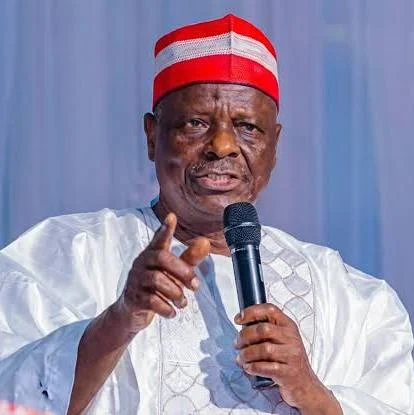
Rabiu Musa Kwankwaso, the Nigeria Democratic Congress (NDC) vice-presidential candidate, has warned the African Democratic Congress (ADC) against presenting a northern presidential candidate in Nigeria’s 2027 election, arguing that the South should complete its turn in the country’s informal power-sharing arrangement.
The former Kano State governor made the remarks during an interaction with journalists at his residence in Kano on Sunday, November 1, as rival opposition parties continued debating presidential zoning and their prospects of defeating the ruling All Progressives Congress (APC).
“ADC will lose if it gives ticket to North. It's the turn of the South in 2027. ADC should not give its presidential ticket to the North. North should wait till 2031,” Kwankwaso said, according to reports of the meeting.
He urged the ADC to reconsider any plan to field a northern politician, arguing that such a decision would undermine fairness between Nigeria’s two broad geographical regions. His intervention also directly challenged former Vice-President Atiku Abubakar, whom he encouraged to support the presidential ambition of Peter Obi.
Kwankwaso is Obi’s running mate on the NDC ticket. Obi, a former Anambra State governor, contested the 2023 presidential election as the Labour Party candidate before emerging as the NDC’s candidate for the next election.
Kwankwaso maintained that the South should retain the presidency until 2031, following President Bola Tinubu’s first term, which began in 2023. Under that interpretation, the North would have the next opportunity after a further four-year southern presidency.
The proposed timetable is a political argument, not a constitutional requirement. Nigeria’s Constitution does not reserve the presidency for either region or prescribe an eight-year rotation between North and South. Candidates must instead satisfy constitutional eligibility requirements and their parties’ nomination rules.
Nevertheless, the principle of zoning has influenced political calculations for decades. Supporters see it as a mechanism for distributing power in a diverse federation, while critics argue that competence, policy and electoral choice should take precedence over geographical origin.
Kwankwaso said a northern candidacy could generate political friction rather than strengthen national cohesion. He portrayed his own decision to accept a vice-presidential nomination as a sacrifice intended to preserve regional balance and promote Obi’s candidacy.
“I sacrificed my ambition for Peter Obi because he is credible and from the South,” he said, adding that they shared political objectives and believed they could govern effectively together.
The comments followed months of disagreement over opposition cooperation. Although both the NDC and ADC seek to challenge the APC, their competing presidential tickets have complicated attempts to establish a unified electoral strategy.
In October, Kwankwaso rejected suggestions that the NDC should withdraw from the presidential race in favour of the ADC or another party. He insisted that the Obi-Kwankwaso ticket would remain in contention and defended its readiness to lead Nigeria.
That declaration came amid accusations from the ADC presidential campaign council that Kwankwaso’s criticism of Atiku was politically advantageous to Tinubu. Kwankwaso rejected suggestions that his party was working for the ruling APC.
The exchange illustrates a wider dilemma facing opposition leaders: whether to compete separately, negotiate an alliance or pursue a common candidate capable of attracting support across Nigeria’s regions and political constituencies.
Atiku, a former vice-president and longstanding presidential contender, has repeatedly sought the country’s highest office. His northern background has made zoning a central issue in discussions about his political ambitions, particularly among politicians who believe a southern candidate should lead the next administration.
However, Kwankwaso’s warning does not determine the ADC’s nomination process. The party and its members retain responsibility for selecting candidates according to their constitution, electoral rules and applicable national law.
The NDC itself adopted a southern zoning position earlier this year. At its May convention, Kwankwaso publicly endorsed the decision, despite previously expressing interest in pursuing the presidency himself.
He said the decision reflected a desire for national unity and political fairness. The subsequent emergence of an Obi-Kwankwaso ticket turned that principle into a defining feature of the party’s electoral identity.
The arrangement also gives Kwankwaso a prominent national role while preserving his political influence in Kano and the wider North-West, a region with substantial electoral significance.
His Kwankwasiyya movement has built a recognisable political following, particularly in Kano State. Obi, meanwhile, commands support among sections of younger voters and other constituencies who backed his previous presidential campaign.
Their alliance seeks to combine those different bases, although electoral success will depend on organisation, turnout, policy credibility and the ability to persuade voters beyond established supporters.
For the ADC, the challenge is different. It must weigh the electoral appeal of its own leadership against criticism from rival opposition figures who argue that a northern ticket would weaken the case for political rotation.
The broader debate also involves President Tinubu, who is eligible to seek another term in 2027. His candidacy would provide voters with the option of retaining a southern president while assessing the performance of the incumbent administration.
Consequently, regional origin alone cannot settle the contest. Nigerians will also be judging competing proposals on insecurity, inflation, employment, public services and the cost of living.
Kwankwaso’s remarks sharpen the disagreement over how opposition parties should balance those issues against longstanding expectations about the distribution of political power.
They also underscore that zoning remains influential despite lacking constitutional force. Political parties may choose to apply it, but voters ultimately decide among candidates presented to them.
With the 2027 election approaching, the NDC vice-presidential candidate has made his position unmistakable: the South should retain the presidency, and the ADC risks political defeat if it chooses otherwise.
📩 Stone Reporters News | 🌍 stonereportersnews.com
✉️ info@stonereportersnews.com | 📘 Facebook: Stone Reporters News | 🐦 X (Twitter): @StoneReportNew | 📸 Instagram: @stonereportersnews
Add comment
Comments