

Reported by: Ijeoma G | Edited by: Oravbiere Osayomore Promise.
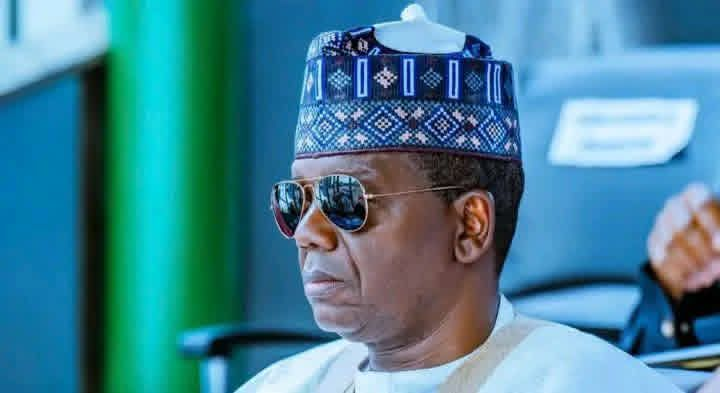
A United States state legislator has called for the reassignment of Nigeria’s Minister of State for Defence, Bello Matawalle, following concerns linked to a security assessment report on Nigeria’s worsening security situation.
A United States state legislator has called for the reassignment of Nigeria’s Minister of State for Defence, Bello Matawalle, following concerns linked to a security assessment report on Nigeria’s worsening security situation.
The call was made by Kimberly Daniels, a member of the Florida State Legislature and President of the United World Congress of Diplomats (UN-WCD), in a statement issued on Tuesday in which she referenced recent killings and insecurity in parts of North-Central and North-West Nigeria.
According to the statement, Daniels urged Nigerian authorities to consider removing or reassigning the minister, arguing that “warning signs” identified in the report should not be ignored as the country continues to confront multiple security challenges.
The security assessment referenced in the remarks was not fully detailed in the public statement, but it was cited as part of broader concerns about violent incidents in several states, including attacks, kidnappings, and communal clashes reported across Nigeria in recent months.
She further stated that strengthening Nigeria’s security architecture and ensuring accountability in defence leadership were necessary steps to address the evolving threats facing the country.
The statement has generated attention due to its implication of foreign political commentary on Nigeria’s internal security affairs, although no official response or the Ministry of Defence at the time of reporting.
Observers note that the issue reflects ongoing sensitivity around Nigeria’s security management and the role of international commentary in domestic governance discussions.
Weeks of heightened insecurity in parts of Nigeria have continued to draw both domestic and international attention, with policymakers under pressure to demonstrate progress in addressing armed violence and instability.
The call for Matawalle’s reassignment adds to broader debates about defence coordination, leadership accountability, and the effectiveness of Nigeria’s security strategy.
Nigeria has in recent years faced complex security challenges including insurgency in the North-East, banditry in the North-West, and communal conflicts in parts of the North-Central region, which have collectively strained security agencies and heightened public concern.
In this context, public commentary from foreign political figures or institutions often draws scrutiny, particularly when it touches on appointments within sensitive security ministries.
The Ministry of Defence, where Bello Matawalle serves as Minister of State, plays a central role in coordinating Nigeria’s military response to internal security threats.
While calls for political or administrative changes are not uncommon in democratic discourse, decisions on cabinet composition remain the prerogative of the Nigerian president.
The development continues to circulate in political and diplomatic discussions, with attention focused on whether any official clarification or response will follow.
Bello Matawalle is a former governor of Zamfara State who was appointed Minister of State for Defence, a position that involves supporting oversight of military operations and defence policy implementation.
Zamfara State has been one of the epicentres of banditry in Nigeria’s North-West, with repeated incidents of kidnappings, rural attacks, and displacement of communities reported over several years.
This background has often placed additional scrutiny on officials linked to defence and internal security portfolios.
International comments on domestic security matters sometimes reflect broader concerns about governance, human rights, and regional stability in West Africa.
However, such statements can also generate diplomatic sensitivity, especially when they involve calls for changes in government appointments.
The Florida State Legislature, where Kimberly Daniels serves, is a state-level legislative body in the United States responsible for enacting laws within the state of Florida, separate from federal foreign policy institutions.
The United World Congress of Diplomats (UN-WCD), where Daniels holds a leadership role, is presented as an international platform for diplomatic engagement and policy dialogue.
Such organisations sometimes issue statements on global governance issues, including security and humanitarian concerns in different regions.
Analysts say that while such calls do not automatically translate into policy changes, they can influence public discourse and media narratives surrounding governance in affected countries.
Weeks ahead of major political developments in Nigeria, attention to security leadership remains a recurring theme in both domestic and international commentary.
The Nigerian government has not yet issued an official response to the statement at the time of filing this report.
Security analysts note that Nigeria’s defence leadership structure involves coordination between the Minister of Defence, service chiefs, and other security agencies tasked with managing internal and external threats.
This coordination is considered critical in responding to insurgency, terrorism, and organized criminal networks operating across different regions.
Calls for reassignment or resignation of officials in security ministries are often debated within political circles, reflecting differing views on accountability and performance.
The current discussion adds to a series of international statements concerning Nigeria’s security situation, which has remained a key issue in bilateral and multilateral engagements.
Experts emphasize that foreign commentary on domestic security is often interpreted in multiple ways, depending on diplomatic relations and domestic political contexts.
Nevertheless, such statements tend to draw attention to ongoing challenges and may prompt renewed public debate about governance and institutional effectiveness.
At the centre of the debate remains the broader question of how Nigeria addresses insecurity while maintaining stable political and administrative structures.
Weeks of policy discussions and public commentary continue to shape perceptions of the country’s progress in tackling security threats.
The statement attributed to the United States lawmaker has therefore become part of a wider discourse on accountability and leadership within Nigeria’s security framework.
Observers say that how such calls are handled may influence future engagement between Nigerian officials and international stakeholders.
Ultimately, the discussion reflects ongoing scrutiny of governance and security leadership in Nigeria at a time of sustained national security pressure.
It also underscores the intersection of domestic policy challenges and international commentary in shaping perceptions of stability in West Africa.
As Nigeria continues to address multiple security threats, statements from both domestic and international actors are expected to remain part of the broader conversation around reforms and institutional performance.
The development remains under discussion as stakeholders await further clarification or official diplomatic response regarding the remarks and their implications for Nigeria’s security leadership structure.
📩 Stone Reporters News | 🌍 stonereportersnews.com
✉️ info@stonereportersnews.com | 📘 Facebook: Stone Reporters News | 🐦 X (Twitter): @StoneReportNew | 📸 Instagram: @stonereportersnews
Add comment
Comments