

Reported by: Oahimire Omone Precious | Edited by: Oravbiere Osayomore Promise.
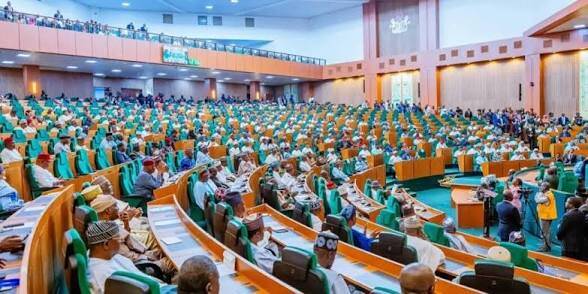
ABUJA, Nigeria – The House of Representatives on Tuesday summoned the nation’s Service Chiefs, the Minister of Defence, the Inspector‑General of Police, the Director‑General of the Department of State Services, the Minister of Finance and the Director‑General of the National Intelligence Agency to appear before it to account for funds released to security agencies in the last six months, amid mounting public frustration over the persistent escalation of banditry, kidnappings and terrorist attacks across the country. The resolution followed the adoption of motions on the escalating wave of violence, particularly in the North‑West region, where lawmakers said communities were being systematically emptied by armed gangs.
The Green Chamber passed the resolution during Tuesday’s plenary following the adoption of a motion of urgent public importance sponsored by Sulaiman Gumi, the lawmaker representing the Gummi/Bukkuyum Federal Constituency of Zamfara State. The motion highlighted a series of deadly attacks, kidnappings and mass abductions across Zamfara, Sokoto, Katsina, Kaduna, Kano, Kebbi and Jigawa states, which lawmakers described as evidence of a deteriorating security situation despite ongoing military operations and substantial budgetary allocations to the defence and security sector.
Presenting the motion, Gumi painted a grim picture of the security situation, describing it as a full‑blown humanitarian crisis driven by armed banditry, kidnappings and the growing activities of violent criminal groups. He told the House that between June 1 and June 6, 2026, rampaging bandits riding on about 250 motorcycles invaded his constituency and parts of Sokoto villages bordering Zamfara State, killing at least 93 people. He also drew the attention of the House to the abduction of seven students of the Federal Polytechnic, Kaura Namoda, Zamfara State, from their off‑campus hostel on the night of June 2 and the early hours of June 3, 2026. He further disclosed that two senior lecturers of the same institution had earlier been kidnapped and remained in captivity for more than two months, despite ransom payments.
Gumi recounted a recent attack on Zurmi Local Government Area of Zamfara State in which four people were killed and several travellers abducted. According to him, bandits also abducted a councillor and a local government director in Talata Marafa Local Government Area while they were travelling in connection with arrangements for intending pilgrims. Those victims, he said, were later killed by their captors despite efforts to negotiate their release. He also cited the abduction of a retired Major General Rabe Abubakar, a former Director of Defence Information, and his wife along the Marabar Musawa‑Kafinsoli road in Katsina State on May 30, 2026. Just the day before the plenary, he said, 50 elderly men were kidnapped and were still being held captive in Zamfara State.
The lawmaker warned that the security crisis was no longer confined to Zamfara but had spread across the entire North‑West. He cited reports that on May 31, 2026, at least 17 villagers were killed when hundreds of bandits riding motorcycles invaded Dangulbi community in Tureta Local Government Area of Sokoto State. He added that persistent attacks had forced residents to abandon more than 15 communities across Tureta and Sabon Birni local government areas. In Kaduna State, he noted, bandit attacks remained a significant security challenge, with recent incidents concentrated in Kachia, Sanga and Birnin‑Gwari local government areas, while in Kano State, bandit attacks have primarily impacted rural communities sharing borders with Katsina State, resulting in fatalities, livestock rustling and abductions.
Contributing to the debate, Ibe Osonwa (LP, Abia) lamented the increasing incidents of kidnappings and attacks on schools, warning that the trend was worsening the country’s out‑of‑school children crisis and exposing vulnerable communities to constant fear and trauma. He argued that the current security response appeared largely reactive and inadequate, despite the enormous public funds appropriated annually for defence and security operations.
Consequently, the House resolved to invite the Chief of Defence Staff, the Chief of Army Staff, the Chief of Naval Staff, the Chief of Air Staff and other relevant security chiefs, alongside the Minister of Defence and the Minister of Finance, to brief lawmakers on the exact amount of money appropriated and released for security operations and to explain the impact of the expenditure on the fight against insecurity. Specifically, the House requested that the Minister of Finance explain the amount of funding released for the purchase of military equipment needed to combat banditry, terrorism and other security threats. The security chiefs were asked to appear before the House on Wednesday, with deliberations to be held behind closed doors to allow for frank discussions on sensitive operational matters.
In a strongly worded warning, lawmakers maintained that continued insecurity despite massive security spending raises serious questions about accountability and effectiveness within the nation’s security architecture. They stressed that Nigerians deserve to know how public funds allocated for security have been spent and why banditry, kidnappings and terrorist attacks continue to threaten lives and livelihoods across the country. The House also called on President Bola Tinubu to immediately deploy a more aggressive and comprehensive security strategy to dismantle bandits’ strongholds, secure vulnerable communities and ensure the release of citizens held captive by criminal groups.
In addition, lawmakers urged the Minister of Defence to deploy more troops and operational equipment to Zamfara State and other affected North‑West states to strengthen ongoing military operations. The House further called for non‑kinetic approaches to addressing insecurity, urging the Ministries of Agriculture, Education, Environment and Humanitarian Affairs to implement programmes capable of tackling the socio‑economic conditions that fuel criminality. The Green Chamber also urged President Tinubu to direct the recruitment of forest guards in all the states experiencing any form of insecurity, as he did in Oyo State following the abduction of schoolchildren and teachers in Oriire Local Government Area.
The House also called on the parliament to expedite action on the establishment of state police to help tackle the worsening security situation, with Olumide Osoba, a lawmaker representing Abeokuta North/Obafemi Owode/Odeda federal constituency in Ogun State, arguing that states could effectively manage their own police formations if appropriate structures were put in place. The Chairman of the Defence Committee, Babajimi Benson, suggested a review of the country’s cashless policy, noting that because electronic transactions can be traced, kidnappers often avoid receiving ransom payments through the banking system.
The Committees on Defence, National Security and Intelligence, Army and other relevant committees were mandated to oversee implementation of the resolutions and report back to the House within two weeks. The motion was unanimously adopted when Speaker Tajudeen Abbas subjected it to a voice vote.
The summons comes just weeks after the abduction of over 40 students and teachers from schools in Oyo State’s Oriire Local Government Area and scores of students and teachers in Borno State, both incidents sparking national outrage. The Nigeria Union of Teachers has since embarked on an indefinite strike to protest the security crisis, while several civil society groups have also protested and demanded freedom for the kidnapped victims. The Federal Government had earlier set up a special security unit to track down the culprits, but as of the time of this report, the victims remain in captivity.
The decision to summon the Finance Minister and the security chiefs signals a significant escalation of legislative scrutiny of Nigeria’s security architecture, reflecting growing frustration among lawmakers and the wider public over the persistent failure to end the cycle of violence that has claimed thousands of lives and displaced entire communities. For the millions of Nigerians who have lost loved ones, been displaced from their homes, or live in constant fear of the next attack, the question remains whether this latest round of summons will finally produce the results that previous sessions have failed to deliver.
📩 Stone Reporters News | 🌍 stonereportersnews.com ✉️ info@stonereportersnews.com | 📘 Facebook: Stone Reporters News | 🐦 X (Twitter): @StoneReportNew | 📸 Instagram: @stonereportersnews
Add comment
Comments