

Reported by: Puis Althea | Edited by: Oravbiere Osayomore Promise.
The United Kingdom and Nigeria have agreed to significantly deepen their security and defence partnership, committing to stronger collaboration across counter-terrorism, cybersecurity, maritime security, intelligence sharing, and the fight against fraud and illicit finance. The agreement, formalised in a communiqué following the Fourth United Kingdom–Nigeria Security and Defence Partnership Dialogue, marks a major step in the bilateral relationship, with both nations pledging to confront an increasingly complex and interconnected threat landscape.
The high-level dialogue was held at the Office of the National Security Adviser in Abuja on June 23 and 24, 2026, co-chaired by Nigeria’s National Security Adviser, Nuhu Ribadu, and the United Kingdom’s National Security Adviser, Jonathan Powell. The communiqué, published on July 17, 2026, and made available to the media by the British High Commission in Abuja on July 20, outlines a robust agenda for bilateral security cooperation through 2026 and beyond. Both countries agreed to strengthen cooperation "based on mutual accountability and delivery of commitments while working in a spirit of partnership," according to the official document.
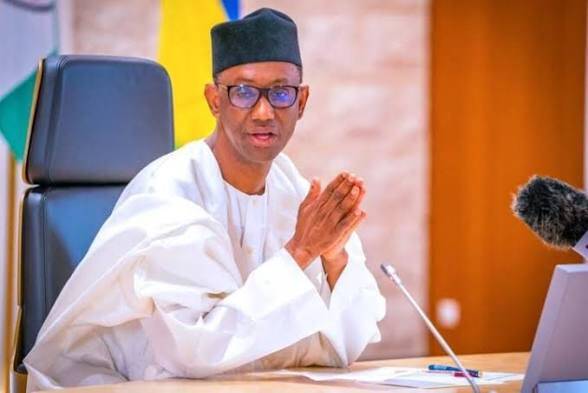
Addressing the opening of the dialogue, Ribadu underscored the gravity of the moment, stating that the global security environment is becoming increasingly complex with traditional threats evolving alongside new technology-driven challenges. He emphasised that terrorism, violent extremism, cybercrime, organised criminal networks, illicit financial flows, and foreign information manipulation require unprecedented levels of cooperation among trusted partners. Ribadu stressed that no nation can address these threats alone, and effective responses require coordinated action across defence, intelligence, law enforcement, diplomacy, cyber capabilities, and financial tools. He also noted that Nigeria remains committed to confronting security threats through a whole-of-government and whole-of-society approach, while acknowledging the UK's support in strengthening Nigeria's crisis response capabilities, disrupting terrorist financing networks, and enhancing investigations.
Jonathan Powell, the UK's National Security Adviser, described Nigeria as the UK's foremost partner in Africa and a critical pillar of regional stability and collective security. He warned that modern threats have become increasingly interconnected and that the partnership with Nigeria is grounded in practical cooperation, including frontline operational support, institutional strengthening, crisis preparedness, and future threat mitigation. Powell disclosed that British military personnel are currently supporting Nigerian forces in Maiduguri, while counterterrorism specialists are working with Nigerian law enforcement agencies and the National Counter Terrorism Centre. "We face an era of hybrid threats. Terrorism, cyber threats, disinformation, illicit finance, organised crime and attacks on critical infrastructure are increasingly connected," Powell said. "These challenges require us to adapt our approaches and work more closely together than ever before."
On defence cooperation, the UK renewed its long-term commitment to supporting Nigeria’s Armed Forces through joint doctrine, training, technical advice, and lessons learning to counter threats from Uncrewed Air Systems and Improvised Explosive Devices. The two countries also reaffirmed support for Nigeria’s Joint Doctrine and Warfare Centre, maritime domain awareness, and hydrography, while agreeing to explore opportunities to strengthen defence trade relations. Both governments underscored their shared commitment to deepening cooperation on maritime security in the Gulf of Guinea, aligning efforts to combat illicit maritime activities and transnational threats.
On cybersecurity and hybrid threats, Nigeria and the UK agreed to establish a structured framework for cooperation covering cyber resilience, intelligence sharing, capability building, and strategies to combat misinformation, cyber-attacks, and organised crime. The communiqué noted that both countries committed to advancing a new structured framework for cooperation on countering hybrid threats, which will include the advancement of concrete cyber resilience initiatives, a formalised intelligence-sharing mechanism, robust joint capability-building programmes, and cooperation on counter-hybrid threat strategies. The UK also reaffirmed its cooperation on countering hybrid threats, including cybersecurity and Foreign Information Manipulation and Interference, while welcoming progress under the existing Cyber Memorandum of Understanding and agreeing to further collaboration on threat intelligence sharing and a new phase of targeted programme partnership.
The two countries also agreed to intensify efforts against terrorism and violent extremism by strengthening intelligence exchange, multi-agency coordination, investigations, and forensic capabilities. The UK further pledged continued support for aviation security at Lagos and Abuja airports and backed Nigeria's plan to expand the Multi-Agency Anti-Kidnap Fusion Cell across states. On non-kinetic responses, both governments reaffirmed their commitment to preventing violent extremism through Disarmament, Demobilisation, and Reintegration programmes and broader peacebuilding initiatives, implementing a comprehensive, whole-of-society approach to building sustainable peace under Nigeria’s national security framework. The UK also welcomed Nigeria's efforts to expedite terrorism cases through remote court proceedings and ongoing mass terrorism trials at the Federal High Court.
On human rights, both countries stressed the importance of civilian protection, accountability, and conflict prevention, while recognising the need for transparent investigations into violations committed by both state and non-state actors. Ahead of Nigeria’s forthcoming elections, the two governments underscored the importance of effective election security before, during, and after the polls to protect voters, safeguard democratic institutions, reduce election-related violence, and maintain public order. Both sides agreed to closely monitor implementation of the agreed commitments ahead of the next Security and Defence Partnership Dialogue, which will be hosted by the United Kingdom in 2027.
The Fourth UK–Nigeria Security and Defence Partnership Dialogue marks a significant evolution in the bilateral relationship, moving beyond traditional military cooperation to address modern technology-driven hostilities. The agreement reflects a shared recognition that the future security landscape will be shaped not only by conventional threats but also by technology, information, and data, requiring stronger partnerships, deeper intelligence sharing, and greater investment in innovation. As Ribadu stated, "The future security landscape will be shaped not only by conventional threats but also by technology, information and data. Building resilience against these threats requires stronger partnerships, deeper intelligence sharing and greater investment in innovation."
📩 Stone Reporters News | 🌍 stonereportersnews.com
✉️ info@stonereportersnews.com | 📘 Facebook: Stone Reporters News | 🐦 X (Twitter): @StoneReportNew | 📸 Instagram: @stonereportersnews
Add comment
Comments