

Reported by: Oahimire Omone Precious | Edited by: Oravbiere Osayomore Promise.
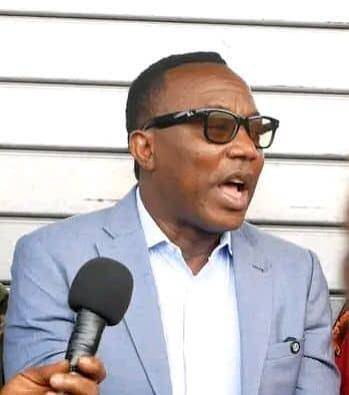
Presidential candidate of the African Action Congress, Omoyele Sowore, has forcefully denied longstanding allegations that his activism and journalism are financed by Western governments, insisting that his work has always been driven by personal conviction, good conscience, and an unwavering commitment to confronting oppression and corruption. Sowore made the remarks during an interview on PAPShow, hosted by Umar Isa, where he spoke extensively about his activism, journalism, political career, public perception, and allegations that he is sponsored by the United States or other Western interests.
Responding to a question on whether he was being funded by the West because of his years in the United States and his brand of "disruptive journalism," Sowore dismissed the allegation as baseless. "No," he said. "So I lived in the US for 20 years, unbroken. And I came in 2019, I was arrested. And I spent five years and went back in 2024, for less than a year, came back again. And I got arrested. And I've been stuck here since then. See what people do in Nigeria, they measure you and look at you. And they look at how courageous you are, how innovative, or creative you are, they have to slap a label on you."
According to him, many Nigerians assume that because he lived in the United States for two decades and founded SaharaReporters there, he must have been receiving foreign funding. "And that label is, 'Oh, Sowore lived in the US for 20 years, he founded SaharaReporters in the US, he got foundation funding. Because of that, he was a Western puppet and all that.' That is just how people react to certain individuals." He argued that public figures who consistently challenge those in power are often subjected to propaganda and conspiracy theories. "If you go out of here, and PAP becomes very successful, and I hope you guys do.... Because if you're consistent, you will be. But somebody is going to accuse you one day, and say PAP is being funded by Saudi Arabia, because maybe you have a Muslim inscription in your office, or you have posted pictures before visiting Mecca. You know, if you offend the government in your content creation and analysis and distribution, they can even accuse you of being terrorists in this country. So that's how the world engages and interacts with ideas that they don't accept."
Reflecting on his activism, Sowore said allegations against him were nothing new, recalling that even as a student activist in the 1990s, he was accused of being sponsored by external forces. "When I was in university in Nigeria, I didn't even have an international passport. They were accusing us of all kinds of things in the university, that we were being funded by politicians outside, or human rights groups outside. That was the 90s. So there's never a period in my life as an activist that I was never accused of being something different from what I've been. But I've been at this for 37 solid years. You cannot find anything. So whenever they can't find anything, they have to throw things at you that they hope can stay."
The presidential candidate also recalled how different political camps had, at various times, accused him of working for their rivals. "In 2015, the Jonathan people said I was working for Buhari. By 2019, the Buhari people said I'm working for Atiku." He further recounted that when he was arrested in 2019 over the #RevolutionNow movement, security agencies claimed in court that he had travelled to Dubai to collect money from former Vice President Atiku Abubakar to overthrow the Nigerian government. "In fact, when they arrested me in 2019, they claimed that I met Atiku in Dubai. I've never been to Dubai before. But that's what they put in court. When they were seeking to detain me, they put it there that I went to Dubai, picked money, and I was trying to use it to overthrow the Nigerian government through RevolutionNow. I've never been to Dubai before in my life. I've flown through Dubai airport to Kenya and to Australia, but I've never stepped my foot on Dubai. Well, if you say never stepped, the airport is also a part, but I never left the airport."
Speaking on how he defines himself, Sowore said he had stopped worrying about labels, stressing that his actions are guided solely by conviction. "I think I just let whomever sees me interact with me and know what I do in their own definition, define who they think I am. I have gone past the stage of trying to struggle with definition. How do I define myself? But I know for sure that I do everything I do based out of personal conviction and it's driven by good conscience and I do everything I have to do to the best of my ability without favor." He acknowledged that different groups, including politicians, elites and traditional institutions, view his activities differently. "So it depends on who is touched. So the politicians, the elites, the traditional institutions have different levels of what I do."
Sowore described himself primarily as a citizen reporter, explaining that journalism became his pathway back into activism after he left Nigeria in 1999. "I call myself a citizen reporter. That's how I started out and I've never changed that because I did journalism out of curiosity and that's a way of helping society. When I was away, because when I left Nigeria in 1999, I felt like a fish out of water and I felt like I betrayed the cause. I hadn't gone on exile. So journalism was my way of finding my balance and my route back to activism in ways that made me feel content and alive again to what I think was my calling." He maintained that activism is not limited to one profession. "You can be an activist judge. You can be an activist journalist. You can be an activist policeman, activist soldier."
According to him, SaharaReporters introduced a new style of journalism in Nigeria and Africa. "If I was a journalist, it's because people consider my endeavour within the journalism world, SaharaReporters, as fine journalism. It was innovative. It was disruptive in ways that journalism had never experienced in Nigeria before it came about. On the continent of Africa, it was one of those early digital journalism platforms." Sowore said he identifies his work as adversarial journalism, arguing that journalism cannot always remain neutral in the face of injustice. "No, objectivity is a journalism that is imbued with a brand that sees itself as neutral. You can't be neutral in a society where there is a demand for you to take a stand. My stand is 'confront oppression, corruption, and be unapologetic about it'. So that cannot be neutral." Asked whether he believes he serves ordinary Nigerians, Sowore answered in the affirmative. "Absolutely. Because if you don't serve the masses, you won't find the masses listening to you, sharing your content, using it as empowerment."
📩 Stone Reporters News | 🌍 stonereportersnews.com
✉️ info@stonereportersnews.com | 📘 Facebook: Stone Reporters News | 🐦 X (Twitter): @StoneReportNew | 📸 Instagram: @stonereportersnews
Add comment
Comments