

Reported by: Althiea .P | Edited by: Bornet .k
The Nigerian Navy has received new operational support from the European Union (EU) and the Government of Portugal as part of efforts to strengthen Nigeria’s maritime security capabilities and improve the fight against piracy, crude oil theft, illegal fishing and other transnational crimes in the Gulf of Guinea.
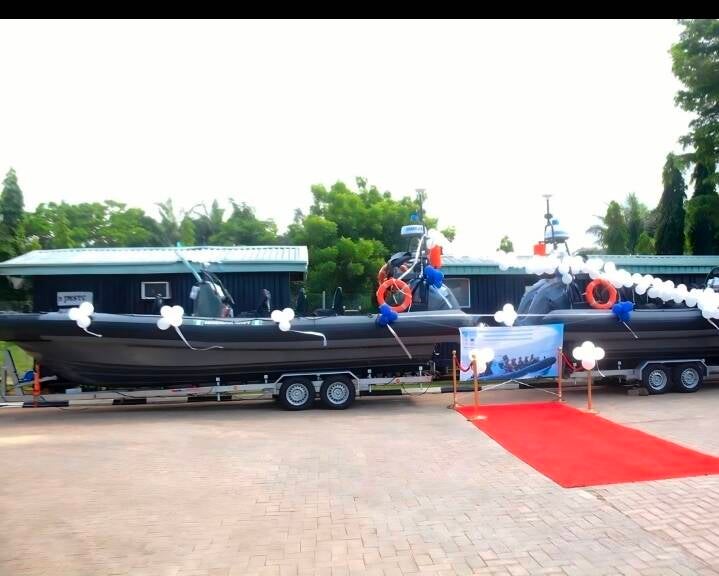
The support package, which includes two 8.9-metre rigid-hull inflatable boats (RHIBs) and specialised maritime crime investigation equipment, was officially provided to enhance the Navy’s ability to conduct patrol operations, gather intelligence and investigate maritime-related offences. The initiative forms part of wider international cooperation aimed at securing one of Africa’s most important maritime regions.
The Gulf of Guinea remains a strategic economic corridor, carrying significant volumes of international shipping and supporting Nigeria’s oil and gas industry. However, the region has faced persistent security challenges, including attacks on vessels, piracy, illegal bunkering, smuggling and organised maritime criminal networks operating across national boundaries.
The latest assistance from the EU and Portugal is expected to provide additional capacity for the Nigerian Navy as it continues efforts to protect Nigeria’s territorial waters and support regional maritime stability. Officials said the donated assets would serve as force multipliers in ongoing operations against maritime threats.
The European Union Ambassador to Nigeria, Gautier Mignot, described the cooperation as part of the EU’s continued commitment to improving maritime security in West Africa. The partnership reflects the EU’s broader engagement with coastal states to address organised crime and protect freedom of navigation in strategic waterways.
Portugal’s involvement in the initiative builds on its maritime expertise and longstanding cooperation with African partners in naval training and security development. The partnership highlights the growing recognition that maritime threats require international collaboration, intelligence sharing and coordinated operational responses.
The Nigerian Navy has in recent years intensified efforts to modernise its fleet, improve surveillance systems and strengthen its presence across the country’s maritime domain. The service has participated in several multinational exercises and security initiatives designed to improve cooperation among regional and international naval forces.
In 2026, the Nigerian Navy deployed 10 ships, two helicopters and other maritime surveillance assets for Exercise Obangame Express, a multinational maritime security exercise focused on strengthening cooperation and combating illegal activities in the Gulf of Guinea.
The Chief of Naval Staff, Vice Admiral Idi Abbas, has emphasised the importance of partnerships and technological advancement in building a modern naval force capable of responding to evolving security threats. The Navy has continued to seek cooperation that will improve indigenous capacity, maritime surveillance and operational effectiveness.
The Federal Government has also reaffirmed its commitment to providing the Navy with the resources needed to safeguard Nigeria’s maritime interests and support the growth of the blue economy. During activities marking the Navy’s 70th anniversary, Defence authorities highlighted the importance of a technology-driven maritime force capable of protecting national economic assets.
Security analysts have consistently argued that maritime insecurity cannot be addressed by individual countries alone because criminal networks operate across borders. They have called for stronger regional cooperation among Gulf of Guinea states, improved intelligence exchange and sustained investment in naval capabilities.
The Nigerian Navy has maintained that protecting the country’s maritime environment remains central to national security and economic development. Nigeria’s coastline provides access to major shipping routes and offshore resources, making maritime protection a critical component of the country’s security strategy.
The EU and Portugal-backed support comes at a time when Nigeria and its international partners are increasing efforts to reduce maritime crimes and create safer waters for commercial activities. Authorities said continued cooperation, training and equipment upgrades would remain essential in ensuring effective responses to emerging threats.
With the arrival of the new patrol boats and investigation equipment, the Nigerian Navy is expected to further strengthen its ability to monitor coastal areas, respond quickly to incidents and support law enforcement operations against maritime criminals.
The latest development represents another step in Nigeria’s broader campaign to build a stronger maritime security architecture and reinforce its role as a leading force in maintaining stability within the Gulf of Guinea.
📩 Stone Reporters News | 🌍 stonereportersnews.com
✉️ info@stonereportersnews.com | 📘 Facebook: Stone Reporters News | 🐦 X (Twitter): @StoneReportNew | 📸 Instagram: @stonereportersnews
Add comment
Comments