

Reported by: Puis Althea | Edited by: Oravbiere Osayomore Promise.
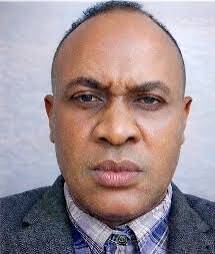
Investigative journalist and human rights advocate Daniel Nduka Okonkwo has delivered a scathing indictment of Nigeria's political elite, declaring that the country's public education system will never improve as long as government officials continue to send their children abroad for degrees while taxpayers foot the bill for a system they themselves have abandoned. In a detailed analysis published on July 26, 2026, Okonkwo argued that the practice is not merely a personal choice but a structural betrayal that perpetuates a two-tier society where the children of the ruling class access world-class education while the children of ordinary Nigerians are left to rot in underfunded, dilapidated institutions. "Our leaders gorge themselves on the marrow of a nation starving for knowledge, sending their children to foreign schools while leaving Nigerian universities to rot," he wrote. "Lecture halls crumble, laboratories remain barren, and hostels overflow with despair, yet officials parade abroad as patrons of education. This is not mere neglect; it is betrayal, a deliberate strangling of the very institutions meant to secure Nigeria's tomorrow".
Okonkwo's analysis, which was published across multiple platforms including Opinion Nigeria, SaharaReporters, and Daily Intel Newspaper, cites a cascade of recent high-profile graduations of the children of Nigeria's most powerful figures. He noted that Olayinka Tinubu, son of President Bola Ahmed Tinubu, earned a Master of Science in International Financial Management from the University of Surrey on April 15, 2026. Around the same time, Oduko Soludo, daughter of Anambra State's First Lady, graduated with First Class Honours in Neuroscience from a university in the United Kingdom. Jazmyne Wike, daughter of Federal Capital Territory Minister Nyesom Wike, earned a Bachelor of Laws with Upper Second Class Honours from the University of Southampton on July 22, 2026. She joins a family pattern: her brother Jordan earned a law degree from the University of Exeter in 2022 and a Master of Laws from Queen Mary University of London in 2025, while another brother, Joaquin, earned a master's degree from King's College London in January 2026. "The three graduations span four years and three different institutions," Okonkwo noted, "but together they show a family that has sent its children through five degree programmes in the United Kingdom within a decade".
Okonkwo traced the pattern across administrations and political affiliations, citing former President Muhammadu Buhari's children Yusuf and Zahra, who graduated from the University of Surrey in 2016; former Vice President Atiku Abubakar's daughter Hafsat, who also graduated from a foreign university that same year; and former Deputy Senate President Ike Ekweremadu's daughter Sonia, who earned a degree in Media and Communications from a UK university. Peter Obi's two children both studied in England: his son Gregory earned a Philosophy degree from the University of Bristol, while his daughter Gabriella also maintains a low profile outside the public eye. Yusuf Datti Baba-Ahmed, Pro-Chancellor of Baze University, celebrated his son's graduation from Queen Mary University of London. Okonkwo also cited a Carnegie Endowment for International Peace report finding that roughly 40 per cent of Nigeria's past and present state governors have educated their children in the United Kingdom, and that every Nigerian president and vice president since 1999 has done the same.
The financial arithmetic, Okonkwo argued, exposes the fundamental contradiction at the heart of the practice. He calculated that tuition and living costs at popular destinations such as the United States, the United Kingdom, and Canada typically range from $15,000 to over $60,000 a year, which converts to roughly ₦25 million to ₦90 million annually at current exchange rates. Against this, he set the official pay structure published by the Revenue Mobilisation Allocation and Fiscal Commission: a state governor's basic annual salary is officially fixed at roughly ₦2.2 million, though total monthly take-home pay rises to somewhere between ₦650,000 and ₦950,000 once statutory allowances are added, putting the full annual package in the region of ₦7.8 million. A senator's basic salary sits at approximately ₦2 million annually, with total take-home pay benchmarked at around ₦1.06 million monthly. On these figures, Okonkwo concluded that even the full allowance-inclusive salary of a governor or senator does not comfortably cover a single child's foreign tuition and living costs, let alone multiple children graduating from different universities within the same decade, as seen in more than one political family. "That gap is where the harder questions belong," he wrote. "When a public salary cannot plausibly cover the cost, the funding has to come from somewhere else, whether through legitimate personal business, an inheritance, a loan, or something less defensible".
Okonkwo acknowledged that sending a child overseas for education is not, in itself, illegal under Nigerian law. To prosecute, investigators must establish a direct link between specific tuition payments and the proceeds of embezzlement or illicit enrichment, rather than legitimate business income, loans, or allowances. "That burden of proof is high, and it is precisely why so many of these arrangements are never tested in court, even where the numbers do not appear to add up," he wrote. But he argued that the question of where the money came from is not an accusation; it is simply the next line of inquiry that a functioning democracy owes its people.
The consequence, Okonkwo warned, is a widening divide. Nigeria's local workforce, trained in underfunded institutions, competes at a structural disadvantage against returning elite graduates whose credentials were obtained at a cost few of their fellow citizens could ever afford. Every dollar spent on tuition abroad is a dollar that never circulates in the Nigerian economy from which it was, in many cases, extracted in the first place. Meanwhile, Nigeria's public universities continue to decay. The Academic Staff Union of Universities has repeatedly accused federal and state governments of neglect, citing broken agreements, unpaid salaries, and ignored campus needs. Budgetary allocations remain far below the 26 per cent benchmark recommended by UNESCO, leaving institutions without basic operational funding. "Hostels, lecture halls, and laboratories remain dilapidated, overcrowded, or poorly equipped," Okonkwo noted. ASUU's cries echo against deaf ears, agreements are signed only to be broken, and the nation's brightest minds flee in droves. "This is not mere neglect," Okonkwo concluded. "It is betrayal".
📩 Stone Reporters News | 🌍 stonereportersnews.com
✉️ info@stonereportersnews.com | 📘 Facebook: Stone Reporters News | 🐦 X (Twitter): @StoneReportNew | 📸 Instagram: @stonereportersnews
Add comment
Comments