

Reported by: Ijeoma G | Edited by: Oravbiere Osayomore Promise.
Motorists and passengers plying major roads across Nigeria's South-East region have raised the alarm over what they describe as a worsening security and extortion crisis, with police officers at checkpoints, touts at motor parks, and armed robbers on highways combining to make travel a nightmare for millions of residents. Speaking to journalists in separate interviews between Sunday, July 26, and Tuesday, July 28, 2026, victims appealed to state governors and security agencies to intervene urgently, noting that the situation has added significant hardship to already struggling citizens.
The crisis begins even before travellers leave the city. At the Onitsha Bridgehead in Anambra State—the gateway to the South-East—passengers reported that some motor parks have become major flashpoints where criminals disguised as bus conductors collect transport fares from unsuspecting travellers and then disappear, leaving passengers stranded. A student who identified herself as Gracebell narrated how she was robbed while travelling from Edo State to Enugu via Onitsha on Sunday, July 26. She said she was also molested by roadside commercial vehicle operators along Ilodibe Service Lane by Eastern Academy in the Upper Iweka area of Onitsha. "When I arrived, I found out there were many unbranded commercial vehicles loading along the road—even in front of the park. A loader stopped me to board his vehicle, but I insisted that I must enter a recognised park. In the process of struggling with him, another person snatched one of my travelling bags containing my handset and other valuables," she recounted.
Another traveller, Uche Michael, told reporters that many passengers who board vehicles in the Upper Iweka area face unnecessary headaches because of criminal elements disguised as transporters. He recounted how he was a victim at a motor park in Amansea, Enugu, last week when his phone and wallet were stolen while he was being dragged to board a vehicle. "When they see you with a bag entering the park, they will run to you to carry the bag and pretending to take it to the boot only for them to disappear with it," he said. "Sometimes, someone will come into the bus, pretending to be the bus conductor and collect transport fare, but afterward disappears and when the original bus conductor comes, he will not listen to your explanation".
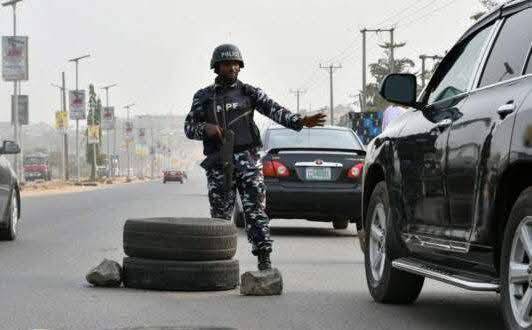
The harassment does not end at the parks. Once on the road, travellers face a gauntlet of security checkpoints. The Foundation for Environmental Rights, Advocacy and Development (FENRAD), a civil society organisation, has estimated that illegal roadside collections at security checkpoints across the South-East could exceed N1.3 trillion annually. According to the group, roads across the five South-East states—Abia, Anambra, Ebonyi, Enugu and Imo—have increasingly become "corridors of intimidation and illegal revenue collection," where motorists, traders and commuters are routinely forced to part with money before being allowed to proceed. FENRAD's monitoring data indicates that nearly 200 checkpoints currently exist across the region, with an estimated 37 in Abia, about 30 in Imo, 30 in Anambra, around 40 in Enugu and about 40 in Ebonyi. Motorists travelling along major economic corridors such as the Aba–Port Harcourt Road, Owerri–Onitsha Road, Enugu–Port Harcourt Expressway and Onitsha–Enugu Expressway reportedly encounter between 25 and 40 checkpoints within short travel distances. Motorists are often compelled to pay between N100 and N5,000 per checkpoint, depending on the type of vehicle and the discretion of security personnel.
The group warned that these illegal payments are worsening transportation costs and increasing the economic burden on citizens and businesses already facing difficult economic conditions. FENRAD also criticised the silence of South-East governors, stating that "the Governors, as Chief Security Officers of their respective states, cannot continue to remain silent while citizens are subjected to daily humiliation and economic exploitation on public roads".
Beyond extortion, armed robbery has returned with a vengeance on major highways. On Sunday, July 26, 2026, one person was reportedly killed in an armed robbery attack along the Nawfia axis of the Onitsha–Enugu Expressway. Residents of Nawfia community had recently embarked on a massive environmental clean-up exercise, clearing thick vegetation and removing logs allegedly used by criminals to barricade sections of the road and trap unsuspecting travellers. Despite the community's efforts, the robbers have continued to strike with increasing boldness. A video circulating online allegedly captured the latest attack, which resulted in the death of one person, heightening fears among road users. Residents and commuters appealed to the Anambra State Government, the police, and the military to take urgent coordinated action to restore confidence and guarantee the safety of travellers using the route.
Similarly, on the Enugu-Abakaliki Expressway, one of the busiest routes in the South-East, highway robbery has resurfaced, particularly around the Eke-Obinagu and Idodo areas of Enugu State. Sources said the latest incident involved the killing of a commercial Sienna bus driver who was reportedly returning from Lagos to Abakaliki, the Ebonyi State capital. The development has reportedly led to the return of multiple police checkpoints mounted along the highway between 6pm and 7am. However, some motorists accused security operatives of focusing more on extorting drivers than tackling the growing insecurity. One commercial driver, who identified himself as Nwaneri, linked the resurgence of highway robbery to worsening economic hardship. "I can tell you for sure that hunger and economic deprivation in Enugu State are contributing to the return of highway robbery," he said. "Since kidnapping is no longer as profitable as before, many criminals have returned to highway robbery".
The complaints come amid broader concerns over police misconduct in the region. In February 2026, police in Imo State dismissed three officers over alleged kidnapping and extorting N1.7 million from a victim at gunpoint. In March 2026, six police officers in Anambra State were arrested and detained for allegedly torturing and extorting N200,000 from a trader in Onitsha. In May 2026, police operatives were arrested and detained for assaulting passengers in Abia State. A human rights lawyer, Comrade Okonkwo K. Okonkwo, also sued the federal government in June 2026 over what he described as "oppressive" military checkpoints in the South-East, which he said had resulted in harassment, extortion, arbitrary arrest, unlawful detention, torture, degrading treatment, enforced disappearances, and extrajudicial killings of residents.
As the complaints mount, South-East governors face increasing pressure to act. For the thousands of commuters who traverse the region's roads daily, the journey has become a test of endurance, patience, and luck. The question remains: how many more travellers must lose their belongings, their money, or their lives before decisive action is taken to restore safety and dignity to the roads of Nigeria's South-East?
📩 Stone Reporters News | 🌍 stonereportersnews.com
✉️ info@stonereportersnews.com | 📘 Facebook: Stone Reporters News | 🐦 X (Twitter): @StoneReportNew | 📸 Instagram: @stonereportersnews
Add comment
Comments