

Reported by: Oahimire Omone Precious | Edited by: Oravbiere Osayomore Promise.
The rescue of 44 schoolchildren and teachers abducted from Oriire Local Government Area of Oyo State on May 15, 2026, brought relief to their families after 56 agonising days in captivity. However, the protracted delay in securing their freedom exposed a complex web of operational failures, political intrigue, and difficult strategic choices that turned the abduction into one of the most politically charged security incidents in Nigeria's recent history. While the federal government and security agencies have attributed the delay to operational caution and poor communication infrastructure, critics have pointed to political calculations, regional bias, and the government's refusal to negotiate with terrorists as key factors that prolonged the ordeal of the victims.
The attack itself was meticulously planned and executed. On the morning of May 15, suspected members of Jama'atu Ansarul Muslimina fi-Biladis Sudan (Ansaru), an Al-Qaeda-affiliated terrorist group, stormed three schools in Yawota and Ahoro-Esinle communities—Baptist Nursery and Primary School, L.A. Primary School, and Community Grammar School. The attackers killed the Assistant Headmaster of L.A. Primary School, Joel Adesiyan, and an unidentified commercial motorcyclist caught in the crossfire. They then abducted 39 pupils and seven teachers, including the school principal, Rachael Alamu, using the vehicle of one of the teachers to escape before setting it ablaze at the entrance of the forest. One of the abducted teachers, Michael Oyedokun, was reportedly killed a day later to discourage pursuing security operatives, while another teacher died in captivity.
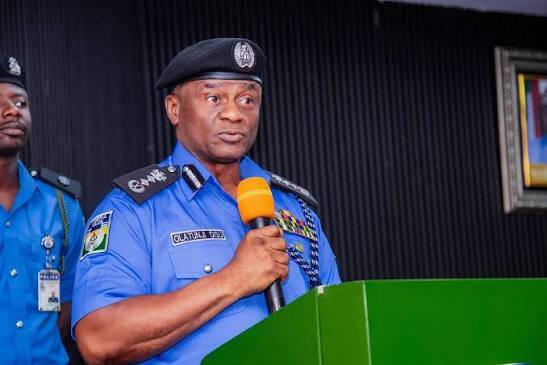
From the outset, security forces faced immense operational challenges. Inspector-General of Police Olatunji Disu later revealed that the location of the attack created significant obstacles for security operatives. The area had virtually no communication network, making coordination extremely difficult. “In that area, there is no network at all, at all. And I think even police station far, far, far, far from them. But they had only one street, one road that goes to the two villages where this kidnap happened,” Disu explained during a press briefing. Despite these challenges, police officers, soldiers, and local vigilantes immediately launched a search operation, with one officer losing his life while tracking the attackers. The Nigerian Air Force and police helicopters were deployed to search day and night, yet the dense forest terrain and the abductors' demands for the release of detained Ansaru commanders created a deadlock.
The terrorists demanded the release of two high-profile Ansaru commanders—Mahmud Usman, also known as Abu Bara'a, and his deputy, Abubakar Abba, alias Mahmud al-Nigeri—who had been captured in a high-risk intelligence-led operation between May and July 2025. The Federal Government, however, refused to negotiate with terrorists, maintaining that the victims would be rescued through security operations. A Presidency source revealed that the Oyo and Borno school abductions were deliberately timed to maximise pressure on the government and strengthen the terrorists' bargaining position. “They are pressing for a swap with some high-profile terrorists who are in government custody. Why this is taking time is due to this issue. The security chiefs and the Federal Government are in a difficult position, and this is unfamiliar terrain for them, as there has not been an extensive operation in the forested area of Oyo,” the source said.
The political dimension of the abduction added another layer of complexity. The attack occurred less than 48 hours after Governor Seyi Makinde of Oyo State announced his presidential aspirations for 2027. Speaking in Bauchi, Makinde noted: “For seven years, we didn't witness anything like this in Oyo State. I declared to run for the presidency of Nigeria at four o'clock, and by 9 a.m. the following day, the children were abducted”. Although Makinde did not directly accuse anyone of orchestrating the attack, his remarks fuelled political debate over whether the kidnapping was coincidental or part of a broader political agenda. The controversy deepened when Peter Obi, the 2027 presidential candidate of the Nigeria Democratic Congress, disclosed that Makinde had told him President Bola Tinubu had not contacted him for more than 50 days after the abduction. Obi wrote: “But, to my utmost shock, I discovered that, contrary to my assumption that they had been in regular communication over the matter, Governor Seyi Makinde had not received a single call from President Bola Tinubu”.
The federal government, however, maintained that security considerations, not politics, dictated its response. The IGP explained that the inability of security agencies to provide regular updates during the operation was deliberate, as officials feared that revealing information could compromise the safety of the hostages. “Everybody were attacking us, left and right, with gun security. What is this? What is that? We cannot come out and talk. We cannot expose those children,” Disu said. He added that security officials held late-night meetings to decide the best way to rescue the victims while managing public pressure. “Most of this, we did not come back and even tell a lot of our colleagues because we wanted to keep it secret,” he said.
The successful rescue operation, which took place on July 10, was described as the outcome of weeks of coordinated intelligence gathering and joint operations involving the Armed Forces, intelligence agencies, the Air Force, Amotekun Corps, local hunters, and vigilantes. The General Officer Commanding 2 Division of the Nigerian Army, Major General Chinedu Ralph-Nnebeife, recounted that security agencies refused to negotiate with the kidnappers despite sustained pressure. However, the operation came at a heavy cost, with two teachers and several security personnel losing their lives during the abduction and rescue efforts. Speaking on behalf of the rescued victims, Principal Rachael Alamu said they endured fear, uncertainty, and psychological trauma throughout their 56 days in captivity. “Many times, they used fear to subdue us. At some point, they told us the government was no longer interested in our case because it did not value us,” she said.
The Oyo abduction has also sparked debates about regional bias in federal security responses. Northern leaders and organisations, including the Arewa Consultative Forum, have questioned why the Oyo rescue operation attracted such intense federal attention while mass abductions in states like Borno, Kaduna, and Plateau have continued with seemingly less urgency. They argue that abductions in southern or western regions tend to trigger immediate, forceful federal intervention, while kidnappings in the north are often treated as logistical challenges. Security experts, however, have countered that differences in rescue outcomes stem from structural and geographical factors rather than ethnic or geopolitical bias. Former DSS Assistant Director-General Mohammed Ngoshe explained that the circumstances surrounding the Oriire abduction differed from those in other parts of the country. “Every case, every security operation, has its own dynamics. What happened in Oriire might not be the same as what is happening in Borno,” he said. He also defended the limited public disclosure by security agencies, insisting that security operations could not be conducted in the open.
For the families of the 44 victims, the 56-day ordeal is finally over, but the questions raised by the abduction linger. The incident has exposed the vulnerabilities of Nigeria's security architecture, the dangers of political interference in security operations, and the deep-seated regional grievances that continue to shape the national discourse on insecurity. As Nigeria approaches the 2027 elections, the Oyo abduction will likely remain a touchstone for debates about governance, security, and political accountability. For now, the focus has shifted to the plight of other abducted citizens across the country, with the Arewa Consultative Forum calling for intensified efforts to secure the release of all Nigerians in captivity. The Oyo rescue, while a success, has also cast a harsh spotlight on the thousands of others who remain in captivity, waiting for the same urgency and commitment that finally brought the children of Oriire home.
📩 Stone Reporters News | 🌍 stonereportersnews.com
✉️ info@stonereportersnews.com | 📘 Facebook: Stone Reporters News | 🐦 X (Twitter): @StoneReportNew | 📸 Instagram: @stonereportersnews
Add comment
Comments