

Reported by: Ijeoma G | Edited by: Oravbiere Osayomore Promise.
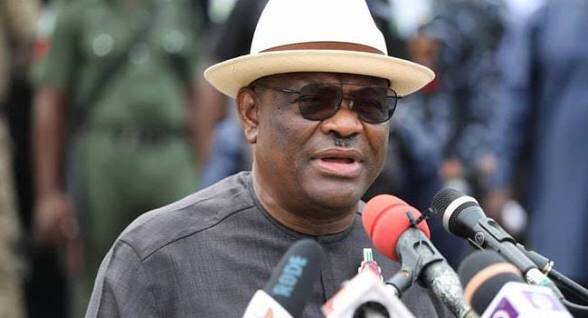
The Minister of the Federal Capital Territory, Nyesom Wike, has taken a swipe at Cardinal John Onaiyekan, the Archbishop Emeritus of the Catholic Archdiocese of Abuja, accusing him of consistently criticising President Bola Tinubu's administration through a partisan lens and warning that religious leaders who take political sides risk losing their moral authority and credibility. Wike made the remarks on Tuesday, August 4, 2026, during his monthly media chat aired live on TVC, while reacting to the public controversy that followed the closed-door meeting between President Tinubu and the Catholic Bishops' Conference of Nigeria (CBCN) on July 28, 2026.
Wike insisted that he had no objection to religious leaders criticising the government, stating that such feedback was necessary for governance to improve. "I have always said this, particularly to religious leaders. I am not against comments about government, because if comments are not made about government, government may not be able to know areas where they should concentrate or focus," he said. However, he argued that criticism must be balanced with acknowledgment of areas where the administration had performed well. "It is not every time you say things are bad, things are bad. Nobody has heard him say one day government has done this well," Wike said, referring to Onaiyekan.
The minister maintained that when a religious leader consistently offers only negative commentary without recognising any progress, it creates the impression of political opposition rather than constructive engagement. "If you are a religious leader, and it is perceived or seen you are taking a side, which is very clear, it becomes difficult for people to begin to see those comments as being helpful or real," Wike said. He urged religious leaders to adopt a balanced approach, commending the government where it had done well while critiquing areas needing improvement. "As a leader, commend government when government has done well on some areas. Criticise government that, 'Look, yes, you have done this well, this well, this well. But we think that you should look into these other areas,'" he advised.
Wike also dismissed claims that Onaiyekan and other Catholic bishops remained politically neutral during the 2023 general election. "Don't tell me non-partisans, no. Don't tell me that. You know what happened in the 2023 election. People took sides—religious leaders took sides. It was very open," Wike declared. When pressed on whether the bishops' position was non-partisan, Wike rejected the argument, stating: "I would be stupid to sit here for anybody to tell me this person is impartial. No. We know ourselves in this country. We know who belongs to where. Who did they support in 2023? It was very obvious".
The controversy stems from Onaiyekan's interview on Arise Television following the July 28 meeting, where he disclosed that the bishops had told President Tinubu the country was "bleeding" and that the economy was severely hurting Nigerians. He also suggested that the President might not be receiving a complete picture of the country's realities, as some around him were presenting an overly optimistic assessment. The Presidency subsequently faulted Onaiyekan for publicly revealing details of the closed-door engagement, describing it as an abuse of privilege.
Wike argued that when respected public figures consistently highlight only the negative aspects of government, it becomes difficult for the administration to regard their interventions as objective. "Where a public figure's interventions are consistently negative, government would rightly conclude the criticism was rooted in opposition rather than objectivity," he said. He added that when a particular section consistently voices such criticisms, "the government must proceed with caution".
The minister's remarks come amid an escalating war of words between the Presidency and the Catholic hierarchy, with presidential aides having previously accused Onaiyekan of being "more political than spiritual" and of "rooting for" Peter Obi, the presidential candidate of the Nigeria Democratic Congress (NDC) ahead of the 2027 election. Onaiyekan has consistently rejected claims of partisanship, insisting that the Catholic bishops spoke from a moral responsibility to Nigerians and not from any political interest, and that their concerns on insecurity, economic hardship, youth unemployment, and governance were presented in good faith.
As the political season intensifies ahead of the 2027 general elections, Wike's intervention has added a fresh layer of tension to the already charged relationship between the Tinubu administration and the Catholic Church. His warning that religious leaders who take sides risk losing credibility underscores the growing perception that Nigeria's political class is increasingly wary of ecclesiastical interventions in governance, while the Church maintains its duty to speak truth to power regardless of political consequences. The exchange also highlights the delicate balance religious leaders must navigate as they seek to hold government accountable without being perceived as partisan actors in Nigeria's fiercely contested political arena.
📩 Stone Reporters News | 🌍 stonereportersnews.com
✉️ info@stonereportersnews.com | 📘 Facebook: Stone Reporters News | 🐦 X (Twitter): @StoneReportNew | 📸 Instagram: @stonereportersnews
Add comment
Comments