

Reported by: Oahimire Omone Precious | Edited by: Oravbiere Osayomore Promise.
A coalition of more than 80 Nigerian, African, and international civil society organisations, including Amnesty International Nigeria, the Socio-Economic Rights and Accountability Project (SERAP), and the Civil Society Legislative Advocacy Centre (CISLAC), has issued a firm demand that the National Assembly immediately withdraw the proposed Foreign Aids (Regulation, Transparency and Disclosure) Bill, 2026, warning that its passage would significantly expand executive control over civic life and accelerate democratic decline ahead of the 2027 general elections. The organisations, speaking at a joint press conference in Abuja on Monday, August 3, 2026, also called for the withdrawal of a separate bill seeking to compel social media platforms to establish physical offices in Nigeria, describing both pieces of legislation as part of an increasingly coordinated legislative assault on constitutional freedoms.
The coalition, coordinated by CISLAC and representing 90 organisations, singled out Senate Bill 1034, sponsored by Senator Ibrahim Hassan Dankwambo, which seeks to establish a Foreign Aid Regulatory Commission (FARC) with sweeping powers to supervise all foreign grants, donations, and technical assistance received in Nigeria. According to the coalition, the proposed legislation would require government agencies, non-governmental organisations, civil society organisations, and other entities receiving foreign assistance to register with the commission, disclose project details publicly, integrate donor-funded projects into government budgets, and comply with regulatory oversight. The bill also proposes penalties for fund diversion, false disclosures, and projects executed without authorisation. However, the coalition argued that the bill goes far beyond promoting transparency and instead creates a framework capable of placing independent organisations under direct government control. "The proposed legislation would grant the Nigerian government excessive powers over civil society organisations, independent media, and foreign-funded projects while posing a serious threat to constitutional freedoms and democratic governance," CISLAC Executive Director, Auwal Musa Rafsanjani, told journalists.
The coalition warned that the bill's provisions duplicate the statutory functions already performed by existing agencies, including the Corporate Affairs Commission (CAC), the Economic and Financial Crimes Commission (EFCC), and the Special Control Unit Against Money Laundering (SCUML), while creating opportunities for undue state interference. Rafsanjani maintained that the commission's proposed powers to register organisations, conduct inspections, demand information, impose sanctions, and enforce compliance with government policies could criminalise legitimate humanitarian and advocacy work. The groups also expressed concern that requirements to align foreign-funded projects with government-defined development priorities could interfere with human rights advocacy, anti-corruption work, governance programmes, and public interest litigation.
The coalition argued that the pending bills should not be viewed in isolation but as part of a broader trend of shrinking civic freedoms under the administration of President Bola Tinubu. They alleged that since May 2023, authorities have increasingly relied on restrictive laws, arbitrary arrests, politically motivated prosecutions, and judicial harassment against journalists, activists, bloggers, and civil society organisations. As examples, the coalition cited the continued prosecution of activist and publisher Omoyele Sowore, alleged reprisals against SERAP, and what it described as the misuse of the Cybercrimes Act to prosecute journalists and government critics. The organisations also referenced a May 2026 report by the Committee to Protect Journalists (CPJ), which documented 91 cases of journalists being arrested, attacked, or harassed across 13 states and the Federal Capital Territory during the first three years of the current administration. "These legislative proposals are being considered at a time when civic space in Nigeria is experiencing one of its most serious periods of decline since the country's return to democratic rule in 1999," Rafsanjani said. "The pending bills represent an increasingly coordinated legislative effort to expand executive control over civil society, independent media, and digital spaces while curtailing civic participation, public scrutiny, and democratic accountability."
The coalition also raised concerns over the timing of the proposed laws, warning that their passage ahead of the 2027 general elections could entrench fear, self-censorship, and intolerance of dissent. They argued that independent advocacy, investigative journalism, and public scrutiny are essential safeguards of constitutional governance and accountability, not threats to democracy. "Rather than creating an open environment where citizens, journalists, civil society organisations, and political actors can participate freely, these measures risk entrenching fear, self-censorship, and intolerance of dissent," the statement read.
The Country Director of Amnesty International Nigeria, Isa Sanusi, urged lawmakers to reject the bills in their entirety and instead pursue legislation that protects civic space, strengthens transparency and accountability, promotes meaningful public participation, and reinforces Nigeria's constitutional and democratic values. The coalition also opposed the proposed bill requiring social media platforms to establish physical offices in Nigeria or risk being prohibited from operating in the country, describing the measure as capable of restricting access to information, encouraging censorship, and discouraging innovation and investment. Citing Sections 39 and 40 of the 1999 Constitution, the African Charter on Human and Peoples' Rights, and the International Covenant on Civil and Political Rights (ICCPR), the organisations insisted that any restriction on fundamental freedoms must meet the requirements of legality, necessity, and proportionality. "Both the Foreign Aids Bill and the proposed legislation requiring social media platforms to establish physical offices in Nigeria are incompatible with Nigeria's constitutional, regional, and international human rights obligations," the coalition stated.
The organisations have demanded that the Senate President, the Speaker of the House of Representatives, and all lawmakers immediately withdraw the Foreign Aids (Regulation, Transparency and Disclosure) Bill, the social media office bill, and all other pending bills that unjustifiably restrict civic space, the rights to freedom of expression, association, peaceful assembly, media freedom, access to information, and democratic participation. They also called for meaningful consultations with journalists, civil society organisations, digital rights advocates, and other stakeholders before introducing reforms affecting civic freedoms. The coalition warned that the National Assembly now faces a defining constitutional choice between enacting laws that strengthen democratic values or those that could limit civic participation. "We urge the National Assembly to reject these repressive bills in their entirety and instead enact legislation that protects civic space, strengthens transparency and accountability, promotes meaningful public participation, and reinforces the constitutional and democratic values on which Nigeria's future depends," the petition stated.
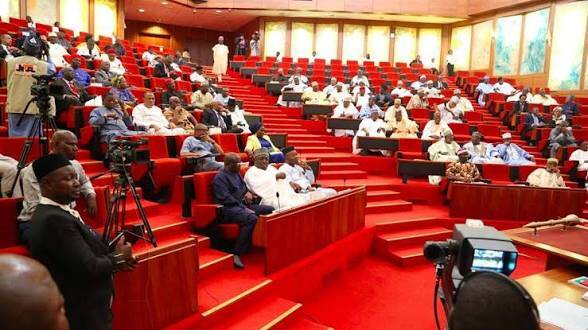
The Foreign Aids Bill, which has passed its second reading in the Senate, was sponsored by Senator Ibrahim Hassan Dankwambo, representing Gombe North. The bill's proponents have argued that it is necessary to ensure transparency and accountability in the management of foreign assistance, which has often been shrouded in opacity. However, the coalition's intervention has added significant weight to the opposition against the bill, raising the stakes for lawmakers as they consider legislation that could have far-reaching implications for Nigeria's civic space and democratic governance. As the 2027 elections approach, the coalition's demand for the withdrawal of the bills has become a rallying point for civil society, media, and human rights defenders, who see the proposed laws as a direct threat to the freedoms that underpin Nigeria's democracy.
📩 Stone Reporters News | 🌍 stonereportersnews.com
✉️ info@stonereportersnews.com | 📘 Facebook: Stone Reporters News | 🐦 X (Twitter): @StoneReportNew | 📸 Instagram: @stonereportersnews
Add comment
Comments