

Reported by: Oahimire Omone Precious | Edited by: Oravbiere Osayomore Promise.
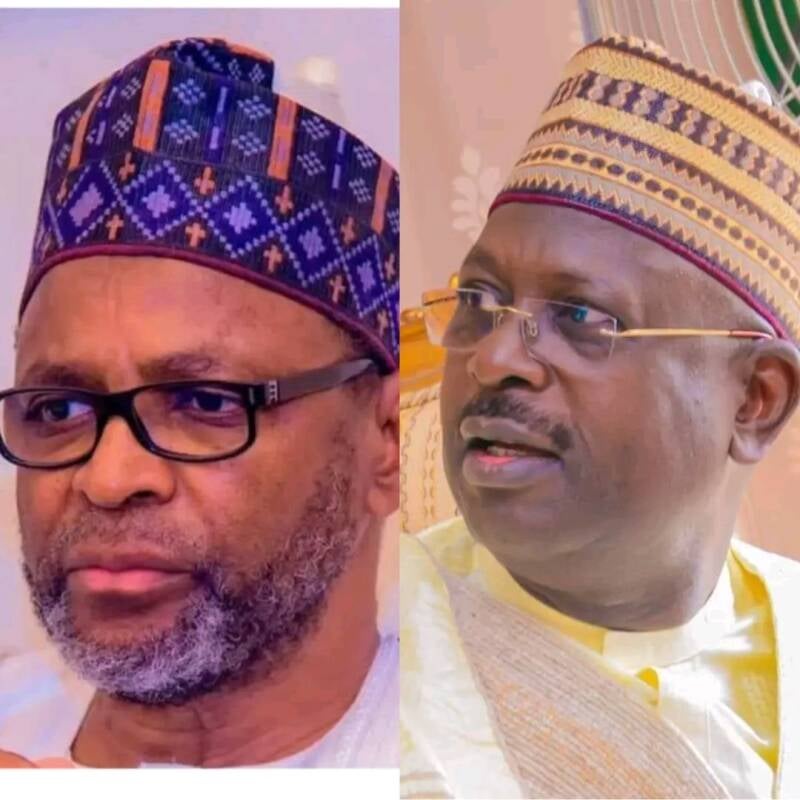
A potentially explosive internal crisis is engulfing the African Democratic Congress in Jigawa State, as the party's governorship candidate for the 2027 election, Senator Sabo Mohammed Nakudu, has forcefully disowned an alleged power-sharing agreement that has surfaced in political circles, threatening legal action against those he accuses of fabricating the document. The purported "Strategic Alliance and Power-Sharing Agreement," dated July 3, 2026, reportedly carved up political offices between Nakudu and his former primary election rival, Honourable Bashir Adamu Jumbo, in a 60:40 arrangement that covered the deputy governorship slot, elective positions, and federal and state appointments. But in a sharp disclaimer issued on August 8, 2026, Nakudu declared he had absolutely no involvement in crafting, negotiating, or blessing the supposed deal, leaving no room for ambiguity.
“I did not negotiate, execute, approve, authorise, consent to, adopt or ratify the said agreement,” Nakudu stated in the disclaimer posted on his Facebook page and subsequently circulated to news organizations. The ADC governorship flagbearer specifically denied signing the document or authorising anybody to sign on his behalf, insisting that the signature appearing against his name is not his authorised signature. He went further, calling for the disputed signature and the document's provenance to be subjected to appropriate forensic examination and investigation. “No person or group was authorised by me to make such commitments on my behalf,” he said.
The candidate also expressed bewilderment over the alleged witnesses to the agreement, stating he was unaware of, and did not authorise, any representation that the document was executed in the presence of former Sokoto State Governor Senator Aminu Waziri Tambuwal, Kashim Ibrahim Imam, and former Senate President Senator David B. Mark. According to Nakudu, the appearance of these names or purported signatures in the disputed document does not establish his participation in or consent to the alleged agreement. He urged individuals, political actors, institutions, and media organisations to refrain from treating, publishing, or circulating the disputed document as an agreement duly executed or authorised by him.
The governorship candidate did not stop at a warning. He threatened to pursue all appropriate legal and lawful remedies against anyone found responsible for allegedly fabricating, altering, falsely attributing, unlawfully using, or circulating the document or his purported signature. He added that he reserves all constitutional, statutory, and other legal rights, including the option of referring the matter to relevant law-enforcement authorities and competent courts. “For the avoidance of doubt, I am not a party to the purported agreement and shall not be bound by any of its provisions,” he concluded.
This dramatic repudiation comes at a particularly tense moment in Jigawa politics, where the ADC has been battling internal fractures since its governorship primary in May 2026. That contest, which pitted Nakudu against Jumbo, was marred by allegations of irregularities, disputed results, and a chaotic collation process that dragged on for days. When results were finally declared, Nakudu emerged victorious with 35,939 votes against Jumbo's 19,537 votes. But the bitterness of that contest has lingered, with party insiders saying the rivalry sharply divided delegates and power blocs across the state.
The crisis, however, predates the primary election. In May 2026, a fresh faction emerged within the ADC in Jigawa following the conduct of parallel ward congresses, with the faction announcing the expulsion of several prominent members, including Nakudu, Jumbo, and others. The re-election of Honourable Kabiru Hussaini Na-Rungo as State Chairman for another four-year term further deepened factional battles within the party, with rival camps contesting the legitimacy of the congress. These internal squabbles have significantly diminished the ADC's standing in the eyes of voters, weakening its ability to mount a formidable challenge to the ruling All Progressives Congress's grip on power in the state.
Nakudu himself is no stranger to political controversy. A former two-term senator who represented Jigawa South-West Senatorial District from 2015 to 2023, he chaired the Senate Committee on Petroleum (Downstream) during the 9th Assembly. He defected from the APC to the ADC in April 2026, announcing his resignation from the ruling party before formally collecting his ADC membership card at a well-publicised event in Dutse. His move was part of a wave of defections that saw politicians and supporters from the APC, PDP, and NNPP join the ADC, a shift that many analysts believed would reshape political alignments in the state ahead of the 2027 elections. Nakudu had previously contested against Governor Umar Namadi during the 2023 APC governorship primaries.
Adding another layer of complexity to the unfolding drama is Nakudu's recent choice of a running mate. In July 2026, the ADC named Malam Aminu Ibrahim Ringim, a former NNPP governorship candidate, as its deputy governorship candidate. Ringim's emergence was seen as a strategic move to consolidate political alliances and build a formidable coalition ahead of the polls. However, the alleged power-sharing agreement that Nakudu has now disowned reportedly included provisions concerning the deputy governorship slot, raising questions about whether the document was an attempt to undermine Ringim's position or to create confusion within the party's ranks.
Political analysts watching the situation closely have warned that unless the ADC leadership quickly reconciles aggrieved stakeholders, the internal crisis could prove fatal to the party's ambitions in 2027. The fragmented opposition in Jigawa, with the PDP also grappling with its own internal challenges, has given the ruling APC a significant advantage. The ADC, which had hoped to position itself as a credible alternative, now finds itself trapped in a cycle of infighting and mutual suspicion that threatens to undo the gains made through its high-profile defections.
For now, Nakudu's forceful disowning of the agreement and his threat of legal action have drawn a clear line in the sand. But the questions linger. Who authored the document? What was its purpose? And how will this latest episode affect the ADC's already fragile unity? As political activities intensify ahead of the 2027 general elections, with parties and political actors expected to continue negotiations and strategic engagements, the Jigawa ADC crisis serves as a cautionary tale of how quickly political ambition can descend into acrimony. The party's ability to navigate this storm and present a united front to the electorate may well determine whether it remains a serious contender or becomes another casualty of Nigeria's notoriously fractious political landscape.
📩 Stone Reporters News | 🌍 stonereportersnews.com
✉️ info@stonereportersnews.com | 📘 Facebook: Stone Reporters News | 🐦 X (Twitter): @StoneReportNew | 📸 Instagram: @stonereportersnews
Add comment
Comments