

Reported by: Ijeoma G | Edited by: Oravbiere Osayomore Promise.
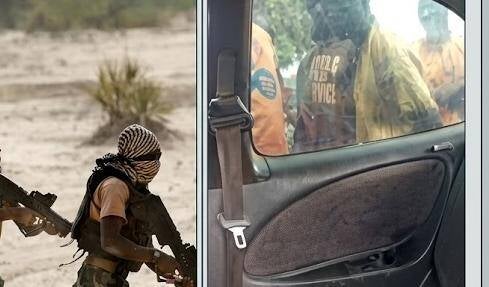
A resident of Ibbi in Niger State has recounted a harrowing scene that unfolded along the Kainji–Ibbi–Zurguma–Mokwa route, where bandits killed a woman, placed her three-month-old infant boy on her lifeless body, and abducted other passengers travelling in the same vehicle. The incident, which occurred in early August 2026, has sent shockwaves through the community and reignited fury over the relentless wave of banditry that has turned one of Nigeria's major transport corridors into a killing field. The resident, who spoke on condition of anonymity, described how the attackers targeted a commercial vehicle, shot the woman dead, and then left her infant wailing on her chest as they dragged other passengers into the bush. The baby was later rescued by passers-by, but the mother's death has become a symbol of the brutality that now defines life along this deadly highway.
The Kainji–Ibbi–Zurguma–Mokwa route has become a nightmare for travellers, with repeated reports of killings, abductions, and armed blockades occurring with alarming frequency. On Wednesday, August 5, 2026, bandits blocked the Mokwa-New Bussa Road at Rafin Zaki between Ibbi and Fallegi in Mashegu Local Government Area, operating for hours and opening fire on a commercial vehicle caught in the ambush. Two passengers sustained gunshot injuries and were evacuated to a nearby hospital. A resident told Daily Trust that the bandits had blocked the same road the previous day, Tuesday, August 4, killing four people and abducting many others. According to him, the repeated attacks have turned the Mokwa-Kainji Road into a major security hot spot, with incidents occurring almost daily.
The violence along this corridor is not new. The Ibbi–Zugurma sector of Kainji National Park has long been a convergence zone for bandits and terrorist factions, including Boko Haram and ISWAP. In February 2026, the Nigerian Army launched a major operation targeting bandits who had migrated from the Ibbi–Zugurma axis, rescuing captives and killing several criminals. But despite these military efforts, the bandits have continued to terrorise civilians along the route, attacking travellers and abducting passengers for ransom. The terrain, dense with forests and national parkland, provides ideal cover for the criminals, who have exploited porous borders and shifting camps to evade security forces.
The toll of this insecurity on ordinary Nigerians is staggering. In the first week of August 2026 alone, bandits killed over 60 people and abducted dozens more in coordinated attacks on villages across Kebbi and Niger States. On August 6, joint security forces rescued 308 abductees in a single-day operation inside Kainji Lake National Park, the largest such rescue in Nigeria's history. Among those rescued were 145 victims from Niger State, many of them women and children. President Bola Tinubu praised the security agencies involved and reiterated his government's commitment to combating terrorism, banditry and organised crime. But for the residents of Ibbi and the countless travellers who risk their lives on these roads, the president's words ring hollow.
The National Union of Road Transport Workers has had enough. On Saturday, August 8, 2026, the NURTW declared a strike and shut down the New Bussa-Mokwa Road in Niger State, citing the repeated incidents of armed attacks, abduction and other criminal activities that have raised serious concerns among transport operators and residents. As of the time of filing this report, the Mokwa-Kainji Road remains blocked by the NURTW to enforce the strike. The action has effectively paralysed transport along one of the state's most vital arteries, leaving goods and passengers stranded and heaping further economic pain on a region already reeling from insecurity.
The human cost of this crisis is immeasurable. The image of a three-month-old infant placed on his dead mother's chest is a grotesque reminder of the depths of depravity to which these criminals have sunk. It is a scene that will haunt the conscience of this nation for years to come. How many more mothers must die? How many more infants must be orphaned on blood-soaked highways? How many more families must bury their loved ones before the government takes decisive action to end this carnage? These are the questions echoing through the villages and towns of Niger State, where fear has become a constant companion and hope a fading memory.
As the NURTW strike continues and the military intensifies its operations, one thing is certain: the Kainji–Ibbi–Zurguma–Mokwa route will not be safe until the bandits who prowl its length are decisively defeated. Until then, every traveller who ventures onto that road does so at their own peril, and every mother who boards a vehicle does so with the knowledge that she may never see her children again. The time for empty promises and half-measures is over. The time for action is now.
📩 Stone Reporters News | 🌍 stonereportersnews.com
✉️ info@stonereportersnews.com | 📘 Facebook: Stone Reporters News | 🐦 X (Twitter): @StoneReportNew | 📸 Instagram: @stonereportersnews
Add comment
Comments