

Reported by: Oahimire Omone Precious | Edited by: Oravbiere Osayomore Promise.
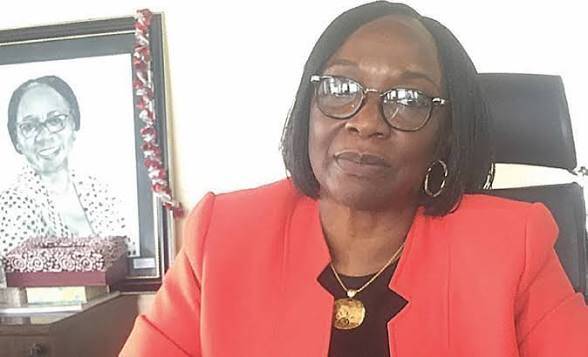
Professor Folasade Ogunsola knows something about the value of UK education. The University of Lagos Vice Chancellor, who earned her PhD in Medical Microbiology from the University of Wales College of Medicine in Cardiff between 1992 and 1998, has now insisted that "Nigeria is full of opportunities".
Speaking at the close-out dinner of the fourth cohort of the Dr Abayomi Ajayi Physician Mentoring Programme in Lagos on Friday, August 7, 2026, the first female and 13th Vice Chancellor of UNILAG acknowledged the allure of foreign shores but challenged young doctors to see beyond the prevailing gloom. "They can be successful here; Nigeria is full of opportunities," she declared, according to multiple media reports on August 8 and 9, 2026. "Young doctors shouldn't leave simply because all they hear is bad news. This is a country of opportunities, and we need to show them they don't have to go abroad to succeed".
Ogunsola's remarks come at a time when Nigeria's healthcare system is bleeding talent at an alarming rate. According to the State of Health of the Nation Report 2025, released in June 2026, no fewer than 20,966 Nigerian health workers relocated abroad within a single year. The mass exodus included 3,919 doctors, 7,487 nurses and midwives, 6,861 medical laboratory professionals, 702 pharmacists, 658 physiotherapists and hundreds of other specialists. The report paints a picture of a healthcare system in crisis, with the number of licensed doctors having dropped to about 40,000, far below the estimated 300,000 needed to adequately serve a population of over 220 million. In 2024, the Minister of Health and Social Welfare, Professor Muhammad Pate, revealed that Nigeria had about 55,000 licensed doctors, disclosing that no fewer than 16,000 doctors had left the country in the previous five years, while about 17,000 others had been transferred out of active service.
Ogunsola, a distinguished Professor of Medical Microbiology who consults for the World Health Organisation and the Nigerian Centre for Disease Control, did not merely offer platitudes. She argued that success should not be measured solely by financial rewards, stressing that "the impact you make on people's lives is what matters most". "That sense of purpose—that you are adding value and people recognise your contributions—is invaluable," she said. The renowned researcher, who holds an MSc in Medical Microbiology with Distinction from the College of Medicine, University of Lagos, in addition to her PhD from Wales, also acknowledged that it is beneficial for doctors to travel abroad to advance their medical skills, provided they return home to build local expertise and strengthen the health sector. "They can travel abroad for training and return home to contribute to national development," she said.
The Vice Chancellor, however, did not shy away from holding the government accountable. She called on the Federal Government to create a more conducive environment for healthcare professionals through improved welfare packages, better working conditions, modern facilities and enhanced security, warning that the continued migration of skilled personnel poses a grave threat to Nigeria's health system. She identified the mentoring of young doctors as an effective tool for tackling the 'Japa Syndrome' and stemming the shrinking of the health workforce. "Many of us graduate from medical school without a clear vision of what we truly want," Ogunsola noted, explaining that mentorship programmes enable young doctors to interact with mentors from diverse fields who help them shape their career paths and gain clarity about where they want to be.
The Dr Abayomi Ajayi Physician Mentoring Programme, now in its fourth cohort, has become a platform where accomplished professionals from medicine, academia, pharmaceuticals and other sectors mentor young doctors in leadership, career planning and financial literacy. The founder of the programme and Medical Director of Nordica Fertility Centre, Dr Abayomi Ajayi, dismissed suggestions that the initiative was created to discourage migration. "We don't tell them, 'Don't go.' We encourage them to make informed decisions. If they leave, they should go to acquire knowledge, skills and experience, then return to help strengthen Nigeria's healthcare system," Ajayi said.
One of the programme's mentors, orthopaedic surgeon and healthcare management expert Dr Kunle Onakoya, noted that medical school produces competent doctors but does not always prepare them for leadership and the wider demands of professional life. "Medicine teaches doctors how to diagnose and treat patients, but there are many practical skills they need throughout their careers. Rather than waiting for medical curricula to change, the foundation decided to provide those skills directly," he said, adding that "going abroad should be a strategic decision, not an emotional one". Another mentor, Rashida Adebisi, Co-founder and Managing Partner of Zenvolve Technologies, highlighted that financial literacy gives doctors an advantage that medical school rarely provides. "Medical school teaches doctors how to save lives. It rarely teaches them how to manage money," she observed.
The UNILAG VC's comments have sparked debate across social media, with some applauding her optimism while others questioned whether words alone can reverse a brain drain driven by poor pay, insecurity and crumbling infrastructure. The reality on the ground remains stark. In the first week of August 2026 alone, bandits killed over 60 people and abducted dozens more in coordinated attacks across Kebbi and Niger States, underscoring the security challenges that make many professionals reluctant to remain in the country. Earlier in June 2026, Ogunsola herself had urged President Bola Tinubu to address the country's security challenges and create an enabling environment for healthcare professionals to thrive.
For now, the Vice Chancellor's message is clear: Nigeria's opportunities are real, but they must be uncovered, nurtured and supported by deliberate government action. Whether her words will stem the tide of migration or simply echo in the hollow chambers of a healthcare system under siege remains to be seen. What is certain is that the clock is ticking, and with every doctor that leaves, Nigeria's ability to care for its people grows ever more fragile. "Nigeria is full of opportunities," Ogunsola insisted. The challenge, as she well knows, is convincing a generation of disillusioned young doctors that those opportunities are worth staying for. (A search of publicly available records did not yield information on the qualifications of her children.)
📩 Stone Reporters News | 🌍 stonereportersnews.com
✉️ info@stonereportersnews.com | 📘 Facebook: Stone Reporters News | 🐦 X (Twitter): @StoneReportNew | 📸 Instagram: @stonereportersnews
Add comment
Comments