

Reported by: Oahimire Omone Precious | Edited by: Oravbiere Osayomore Promise.
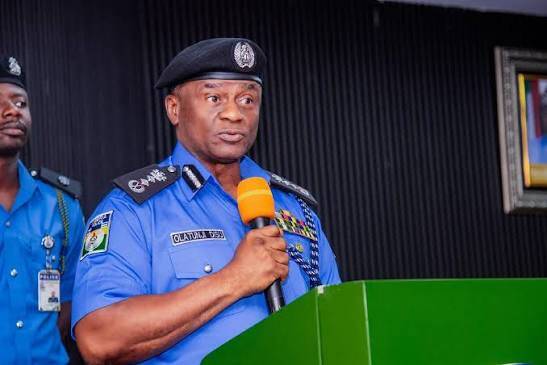
The Inspector-General of Police, Tunji Disu, has announced that a minimum of four police officers will be deployed to each of the 3,673 polling units in Osun State for the August 15 governorship election, in what he described as one of the largest security operations the state has ever witnessed. Speaking during a meeting with civil society organisations at the Force Headquarters in Abuja on Friday, August 7, 2026, Disu said the scale of the deployment reflects both the number of polling units and the mounting tension already building around the election. "Osun has 30 local governments, 332 wards and 3,673 polling units. We intend to have nothing less than four policemen in all the polling booths," the IGP declared. He added that the operation would be larger than the deployment for the last election held in Ekiti State, which he described as peaceful and largely free of complaints.
The election, scheduled for Saturday, August 15, 2026, has emerged as one of the most fiercely contested off-cycle governorship polls in recent Nigerian history. Fourteen political parties have put forward candidates, but the race has increasingly narrowed to a three-horse battle between incumbent Governor Ademola Adeleke of the Accord Party, Asiwaju Munirudeen Bola Oyebamiji of the All Progressives Congress, and Dr Najeem Salaam of the African Democratic Congress. The Peoples Democratic Party and Labour Party are notably absent from the ballot, having failed to field candidates. With 2,339,233 registered voters spread across 30 local government areas, 332 wards and 3,763 polling units, the stakes could not be higher.
Disu disclosed that Commissioner of Police Samuel Erale Etaifo had been deployed to take charge of election operations in Osun, while an Assistant Inspector-General of Police would provide senior operational oversight. Commissioner of Police Abayomi Shogunle will coordinate operations from the central monitoring centre in Abuja. The IGP said the force would undertake a visible deterrence operation, including a show of force, to discourage violence and other disruptive activities. Roadblocks and other movement-control measures would be established to restrict unauthorised movement on election day, and political actors would be prevented from moving with security aides or armed escorts. "When you hear the number of officers deployed, that's one of the reasons why we need to deploy early," Disu said, adding that sister security agencies would also support the police at polling locations.
The heavy deployment is intended to reassure residents and encourage them to vote without fear, the IGP said, stressing that every officer visible on the streets had been deployed specifically to protect voters. He urged political parties, candidates and their supporters to conduct themselves responsibly before, during and after the election, emphasising that political contests should be based on ideas and policies rather than violence. "No political ambition is worth the loss of a single Nigerian life," Disu declared. He also warned that the police would adopt a firm and impartial approach to electoral offences, vote buying, voter intimidation, ballot-box snatching and thuggery, irrespective of political affiliation.
The IGP attributed much of the pre-election violence in Osun to pre-existing cult-related rivalries that had become intertwined with political competition. "We have issues of cultism in Osun already. It became easier for different parties to attack each other using the existing animosity in the state," he said. Disu noted that investigations showed some groups had been recruited by political actors, and that arrests had already been made. The police would continue enforcement action against cult and politically linked threat networks, he added.
The meeting with CSOs, attended by representatives including the Civil Society Legislative Advocacy Center, the Centre for Journalism Innovation and Development, the CLEEN Foundation, the Kukah Centre, Kimpact Development Initiative, Nigerian Women Trust Fund, Partners West Africa, TAF Africa and Yiaga Africa, presented pre-election assessments and security threat analyses. The coalition raised concerns over escalating political violence and the neutrality of security agencies. The Executive Director of Yiaga Africa, Samson Itodo, described the Osun election as a "litmus test" for rebuilding public trust and confidence in Nigeria's electoral process ahead of the 2027 general elections. "The neutrality of the police force is central to this. Of particular concern to the public is the neutrality of our security agencies," Itodo said.
The CSOs' assessment painted a grim picture of the security situation in Osun. Thirteen of the state's 30 local government areas had been classified as high-risk because of killings, violent attacks and heightened political tension. The coalition reported that 34 fatalities were recorded across 44 incidents between June 2025 and June 2026. Itodo identified Osogbo as a critical-risk area requiring strong urban command and control, while Irewole had emerged as a major hotspot. Iwo, Boripe, Ife Central and Ife East were among other areas requiring heightened security attention because of underlying security concerns. He urged the police to adopt risk-specific deployment, particularly in areas identified as hotspots.
The IGP, for his part, insisted that the police had no candidate, no political party and no vested interest in the outcome of the election other than ensuring that the lawful choice of the people prevails. "The Nigeria Police Force remains a professional, apolitical and impartial institution," he said. Disu assured Nigerians that comprehensive security arrangements had been put in place, with intelligence gathering and threat assessments intensified to identify and neutralise potential threats before they escalate. He urged the people of Osun to come out peacefully and confidently to cast their votes, advising them not to be intimidated by rumours, misinformation or the actions of a few individuals who seek to undermine the democratic process.
As Osun State braces for what promises to be a high-stakes electoral contest, the question on many lips is whether the police deployment will be enough to guarantee a peaceful and credible process. The IGP has made his position clear: the police will be firm, impartial and professional. But with 13 local government areas classified as high-risk, 34 election-related deaths already recorded, and a history of cult-related violence intertwined with politics, the challenge ahead is formidable. For the people of Osun, the hope is that the ballot, not the bullet, will decide the next governor. Whether that hope is realised will depend on the effectiveness of the security operation and the willingness of all stakeholders to embrace peace over violence.
📩 Stone Reporters News | 🌍 stonereportersnews.com
✉️ info@stonereportersnews.com | 📘 Facebook: Stone Reporters News | 🐦 X (Twitter): @StoneReportNew | 📸 Instagram: @stonereportersnews
Add comment
Comments