

Reported by: Ijeoma G | Edited by: Oravbiere Osayomore Promise.
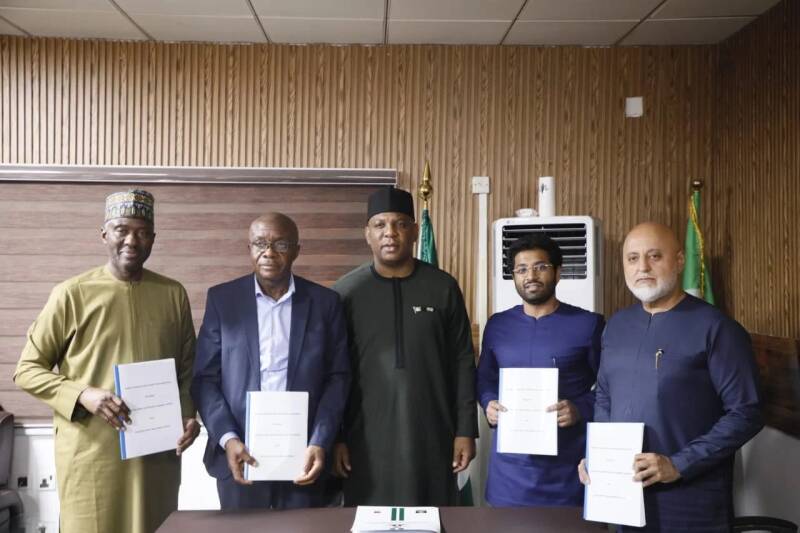
The Federal Government has finally moved to breathe life back into the long-dormant Delta Steel Company, signing a Sub-lease and Operations Agreement with Premium Steel and Mines Limited that commits more than $1.3 billion to rehabilitate and modernise the moribund plant in Ovwian-Aladja, Delta State. The agreement, executed on Thursday, August 20, 2026, between the National Iron Ore Mining Company, Itakpe, and Premium Steel and Mines Limited, is expected to address one of the major requirements for restarting the integrated steel plant: sustainable access to domestic iron ore. Minister of Steel Development, Prince Shuaibu Abubakar Audu, described the development as a critical milestone in President Bola Tinubu's Renewed Hope Agenda, arguing that Nigeria's broader industrial ambitions depend on its ability to produce critical materials locally. "The revival of Delta Steel Company is not merely about bringing an old industrial facility back to life," Audu declared. "It is about restoring Nigeria's capacity to produce steel locally, creating opportunities for our young people, supporting downstream industries and strengthening the foundation for sustainable industrialisation".
The Delta Steel Plant carries a long and difficult history that symbolises Nigeria's stalled industrial ambitions. Commissioned in 1982 with an installed capacity of one million metric tonnes of liquid steel annually, the plant was built as an integrated green steel facility using direct reduction and electric arc furnace technology. However, it operated at only about 25 per cent of its designed capacity before prolonged operational challenges forced its shutdown. In 2005, the Federal Government privatised the company to Global Infrastructure Holdings Limited in an attempt to attract private capital and revive operations. The Asset Management Corporation of Nigeria subsequently re-sold the company to Premium Steel and Mines Limited in 2015 to recover unserviceable debts. Since then, the 172-hectare complex has remained inactive as an integrated steel plant, standing as a monument to failed promises rather than a working mill.
Under the new arrangement, Premium Steel and Mines Limited has committed to inject over $1.3 billion into raw material exploration and exploitation, as well as the rehabilitation and modernisation of the steel complex. The company has also pledged to restore the plant to its installed capacity of one million tonnes of liquid steel annually, subject to the availability of sustainable iron ore supplies, and to commence commercial operations within 18 to 24 months. The project is expected to create about 5,000 direct jobs and more than 20,000 indirect jobs, while contributing to Nigeria's ambitious target of producing 10 million tonnes of liquid steel annually by 2030. The revival is further expected to boost rail and maritime logistics through increased freight movement along the Central Rail Line and greater utilisation of the Delta Steel Company jetty.
The financial stakes of this agreement reach well beyond Delta State. The government has repeatedly put Nigeria's annual steel import bill at about $4 billion, a persistent drain on scarce foreign exchange. Just four countries – Egypt, South Africa, Algeria and Morocco – account for roughly 88 per cent of Africa's steel output, despite Nigeria's abundant iron ore reserves. Restoring integrated production at Aladja is presented as part of a wider plan to create more than 500,000 direct and indirect jobs across the sector and contribute to the administration's $1 trillion economy target. The Delta agreement is one of several moves in 2026 to revive Nigeria's dormant steel assets. The government has said it is close to a roughly $2 billion deal with a Chinese investor to revive the Ajaokuta Steel Company, established in 1979 but yet to produce commercial steel. NIOMCO in Itakpe, the intended ore source for both Aladja and Ajaokuta, remains central to whether any of these plants can run sustainably.
The Federal Government, however, stressed that the agreement must result in actual mine development, plant rehabilitation, commercial steel production and sustainable employment within the agreed 18 to 24-month implementation period. The ministry identified reliable access to iron ore, particularly from NIOMCO, Itakpe, as well as dependable electricity, logistics and other supporting infrastructure as critical to the success of the project. Minister Audu added that the government would work with private investors but stressed that the success of the project would depend on more than financial commitments. "Steel production requires reliable access to raw materials, particularly iron ore, as well as adequate power supply, efficient transport infrastructure and coordinated government policies," he said. The Federal Government is committed to working with responsible private-sector investors to unlock the enormous potential of Nigeria's steel sector, while ensuring that investments are supported by the necessary policy framework and infrastructure.
Salamatu Jibaniya, Head of Press and Public Relations at the Federal Ministry of Steel Development, disclosed in a statement on Thursday that the agreement marks a significant milestone in the Federal Government's ongoing efforts to reposition Nigeria's legacy steel industry assets as a critical driver of industrialisation, economic diversification, job creation and sustainable national development. The ministry said the new agreement would provide a framework for collaboration between the Federal Government and Premium Steel and Mines Limited towards the rehabilitation and sustainable operation of the plant. It is also expected to support the reactivation of the National Iron Ore Mining Company and the development of the Ajabanoko iron ore deposits in Kogi State. The development could mark a new attempt to resurrect one of Nigeria's most ambitious industrial projects, but whether this latest attempt will succeed where previous efforts have failed remains to be seen.
📩 Stone Reporters News | 🌍 stonereportersnews.com
✉️ info@stonereportersnews.com | 📘 Facebook: Stone Reporters News | 🐦 X (Twitter): @StoneReportNew | 📸 Instagram: @stonereportersnews
Add comment
Comments