

Reported by: Oahimire Omone Precious | Edited by: Oravbiere Osayomore Promise.
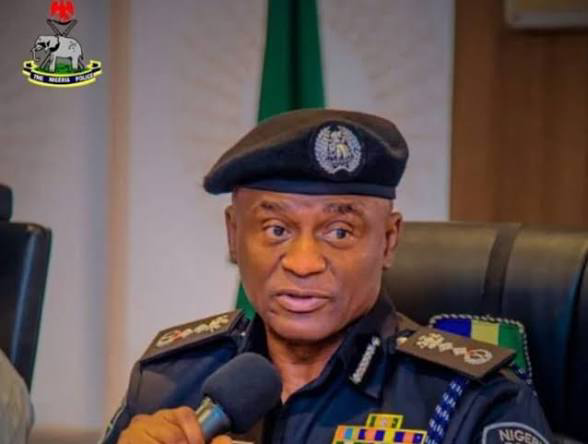
On August 25, 2026, Inspector-General of Police Olatunji Rilwan Disu will clock six months in office, a milestone that offers an opportunity to assess whether the man who was widely hailed as a "square peg in a square hole" has begun to transform the Nigeria Police Force or merely changed the conversation around it. When Disu assumed command on February 25, 2026, he inherited an institution burdened by decades of public distrust, allegations of brutality, institutional weakness and a reputation for impunity. In his maiden speech, he promised that the confidence reposed in him was one he would "neither squander nor take lightly". Six months later, the verdict remains incomplete, but the direction is becoming clearer.
One of the most significant moves Disu made was to confront the contentious issue of state policing head-on. At his inaugural conference with senior officers on March 4, barely a week after assuming office, he inaugurated a steering committee, headed by Professor Olu Ogunsakin, to examine policing models, community security needs, recruitment, training, standards, resource allocation and accountability mechanisms. The committee subsequently submitted a 75-page proposal to the National Assembly on the governance and coordination of federal and state police structures. Rather than standing on the sidelines while the country debated its security future, Disu ensured the police force would have a voice in a debate that could fundamentally reshape policing in Nigeria. However, critics have argued that his proposed 60-month phased implementation roadmap is too long, given the urgent need to stem the tide of violence and pervasive insecurity.
Disu's second defining feature has been accountability within the Force. He strengthened the Complaints Response Unit and the Independent X-Squad, directing senior officers to lead by example. Then came a significant demonstration of intent: following the extrajudicial killing of a suspect in Delta State, Disu publicly described the action as unlawful and announced that the officers involved had been dismissed and would face criminal prosecution. That sent a powerful message that the uniform does not place anyone above the law. He also dismantled the "Keep In View" culture, a bureaucratic loophole used to bury sensitive criminal files, and established clear boundaries regarding case management and jurisdictional interference. In March 2026, he broke a 16-year "jinx" by holding a formal ceremonial pull-out parade for his predecessor, a symbolic gesture of institutional dignity. Yet concerns persist. In August 2026, the Coalition for Whistleblower Protection and Press Freedom called on Disu to arrest officers who allegedly assaulted a journalist in Abuja, raising questions about whether the new accountability measures have fully taken root.
Operationally, the first six months have produced measurable activity. In April alone, intelligence-led operations resulted in the arrest of 28 suspected terrorists, 85 suspected kidnappers, 62 armed-robbery suspects, 51 murder suspects and 54 suspected cultists. The Force also reported the rescue of 189 kidnapped victims and the recovery of 140 firearms and 1,074 rounds of ammunition. The establishment of the Violent Crime Response Unit represents an attempt to provide a specialised response to serious crimes under tighter oversight and with an intelligence-driven model. Disu also approved additional counter-terrorism bases in Madagali, Adamawa State. The real-world success of these reforms culminated on June 6, 2026, when the Intelligence Response Team, leveraging upgraded data-tracking capabilities and real-time surveillance, dismantled a sophisticated kidnapping syndicate in Oyo State and safely rescued Chief Adebayo Adelabu's sister and young nephews.
Disu has also prioritised officer welfare and modernisation, overseeing the merit-based promotion of over 33,000 personnel and advocating for better housing and pensions. He has pushed for stronger zonal supervision, deployed Deputy Inspectors-General to their respective zones, and directed Commissioners of Police to deepen inter-state collaboration. He has also declared an end to police impunity, promised to upgrade the traffic warden unit, and insisted on respect for human rights. However, critics argue that his first 100 days changed the conversation more than the condition of policing. The Nigeria Police Force, they note, is not suffering from a shortage of announcements.
Disu's tenure has not been without controversy. In March, he removed the Force Public Relations Officer, ACP Benjamin Hundeyin, less than six months after his appointment. Pressure has mounted on him to address concerns over the alleged abuse of Nigeria's Cybercrimes Act. He has faced criticism over the continued detention of political opponents and allegations of police brutality. His decision to withdraw police personnel from VIPs, a policy that reportedly irked the Presidency, has also drawn attention. The Coalition for Whistleblower Protection and Press Freedom has demanded compensation for a journalist assaulted by police officers in Abuja. As Disu approaches the six-month mark, the question is whether he will write his name in gold.
The answer will depend on whether he can sustain the momentum of reform, translate announcements into tangible outcomes, and address the systemic issues that have plagued the Force for decades. The people of Nigeria are watching, and they will judge him not by his words, but by his actions. Six months is enough to reveal direction, but not enough to measure full performance. The next six months will determine whether Disu's tenure marks a genuine turning point or another chapter in the long, difficult story of police reform in Nigeria.
📩 Stone Reporters News | 🌍 stonereportersnews.com
✉️ info@stonereportersnews.com | 📘 Facebook: Stone Reporters News | 🐦 X (Twitter): @StoneReportNew | 📸 Instagram: @stonereportersnews
Add comment
Comments