

Reported by: Oahimire Omone Precious | Edited by: Oravbiere Osayomore Promise.
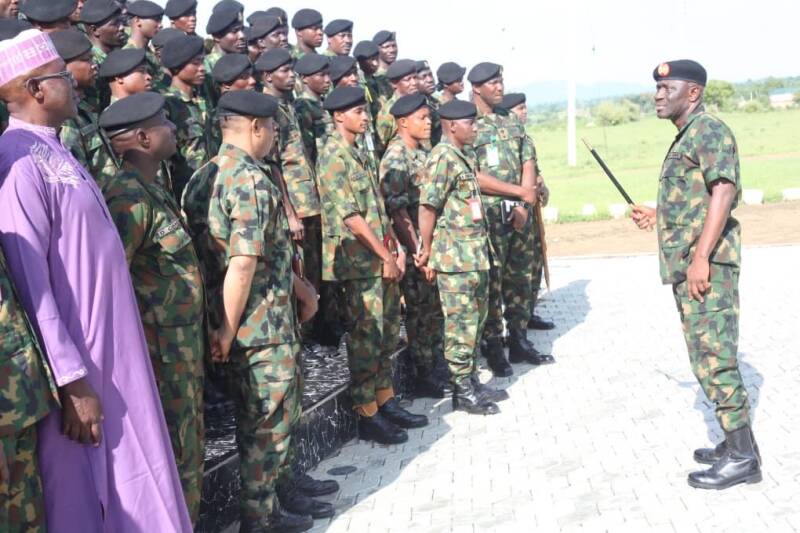
The Commandant of the Nigerian Army Armour School, Major General Sunday Makolo, has charged newly graduated crewmen and mechanics to apply the knowledge acquired during their training to support ongoing Counter-Terrorism and Counter-Insurgency Operations, stressing that the proficiency they demonstrate in the field will determine the success of military campaigns and the safety of personnel. Makolo made the charge on Friday, August 21, 2026, while delivering his remarks at the graduation ceremony of Crewman Driving and Maintenance Course 1/2026, held at the Lieutenant General Faruk Yahaya Auditorium. The course, which began on April 24, 2026, was designed to equip crewmen, instructors, drivers and mechanics with the skills required to operate and maintain Armoured Fighting Vehicles with minimal supervision, a critical capability given the intense operational demands of Nigeria's counter-insurgency campaign in the North-East and other theatres of conflict.
In a direct and unflinching address to the 157 graduating personnel, comprising 84 crewmen and 27 mechanics, Major General Makolo reminded them that they would be entrusted with critical military assets and the lives of crew members, and urged them to uphold the driving and maintenance standards acquired at the NAAS and reflect their proficiency wherever they are deployed. The Commandant noted that the training was aimed at improving operational effectiveness through better vehicle maintenance, early detection of mechanical faults and a deeper understanding of the capabilities and limitations of Armoured Fighting Vehicles, emphasising that these skills are essential for sustaining the momentum of ongoing operations and protecting the lives of personnel. He further appreciated the Chief of Army Staff, Lieutenant General Waidi Shaibu, and the Commander Armoured Corps, Major General Umar Abubakar, for their support in facilitating the course, while also acknowledging his predecessor, Major General Abubakar Ahmed, who initiated the training, as well as the instructors and supporting staff for their dedication.
The graduation ceremony marks a significant milestone in the Nigerian Army's efforts to enhance the operational capabilities of its personnel, particularly in the area of armoured warfare, which has become increasingly important in the fight against terrorism and insurgency. The Nigerian Army has been engaged in a protracted counter-insurgency campaign in the North-East, where Boko Haram and Islamic State West Africa Province terrorists have exploited difficult terrain and sophisticated tactics to challenge military operations. The ability to operate and maintain Armoured Fighting Vehicles effectively is critical to the success of these operations, as these vehicles provide the firepower, protection and mobility needed to engage terrorist forces and protect civilian populations. The NAAS course, which combines theoretical instruction with practical training, is designed to ensure that personnel are not only proficient in driving and maintaining these vehicles but also capable of diagnosing and repairing mechanical faults in the field, thereby reducing downtime and enhancing operational readiness.
The training programme, which is the first of its kind in the 2026 cycle, reflects the Nigerian Army's commitment to professional development and the continuous improvement of its personnel. By equipping crewmen with the skills to operate and maintain Armoured Fighting Vehicles with minimal supervision, the Army is building a cadre of personnel who can sustain operations even in challenging environments where access to technical support may be limited. This is particularly important given the nature of the counter-insurgency campaign in the North-East, where troops often operate in remote and austere conditions, far from the support infrastructure available in garrison locations. The emphasis on early detection of mechanical faults is also critical, as it allows crews to address potential issues before they escalate into major breakdowns that could compromise the safety of personnel and the success of missions.
The graduation ceremony also highlighted the importance of leadership and mentorship in the development of military personnel. Major General Makolo's acknowledgment of his predecessor, Major General Abubakar Ahmed, who initiated the training, underscores the continuity of leadership and the importance of building on the achievements of previous commanders. The Commandant's appreciation of the instructors and supporting staff for their dedication further reflects the collaborative effort required to deliver effective training programmes. The Nigerian Army's investment in training and professional development is a recognition that the success of its operations depends not only on the quality of its equipment but also on the competence and professionalism of its personnel. By investing in the skills and capabilities of its crewmen and mechanics, the Army is building a force that is better equipped to respond to the complex and evolving challenges of the contemporary security environment.
The graduation of the 157 personnel is a positive development that will undoubtedly enhance the operational capabilities of the Nigerian Army. However, it also raises questions about the broader challenges facing the military, including the need for adequate funding, equipment and support to sustain its operations. The Nigerian Army has made significant progress in its counter-insurgency campaign, but the security situation in the North-East and other parts of the country remains fragile, and the military requires continued support to consolidate its gains and address emerging threats. The training of crewmen and mechanics is an important step in this direction, but it must be complemented by other measures, including improved intelligence gathering, better coordination with other security agencies, and enhanced community engagement to address the root causes of insecurity.
As the newly graduated crewmen and mechanics prepare to deploy to their various units, they carry with them the hopes and expectations of their commanders and the nation. Their ability to demonstrate the proficiency acquired during their training will be a critical factor in the success of ongoing operations and the safety of their colleagues. The Nigerian Army has invested significant resources in their development, and it is now up to them to justify that investment by performing their duties with professionalism, dedication and courage. The graduation ceremony at the Lieutenant General Faruk Yahaya Auditorium was not just a celebration of achievement but a call to service, a reminder that the fight against terrorism and insurgency is far from over, and that the nation relies on the men and women of the Armed Forces to protect its citizens and defend its sovereignty. As they take their place in the ranks of the Nigerian Army, they must remember the words of their Commandant: they are entrusted with critical military assets and the lives of crew members, and they must uphold the standards of the Nigerian Army Armour School wherever they are deployed.
📩 Stone Reporters News | 🌍 stonereportersnews.com
✉️ info@stonereportersnews.com | 📘 Facebook: Stone Reporters News | 🐦 X (Twitter): @StoneReportNew | 📸 Instagram: @stonereportersnews
Add comment
Comments