

Reported by: Oahimire Omone Precious | Edited by: Oravbiere Osayomore Promise.
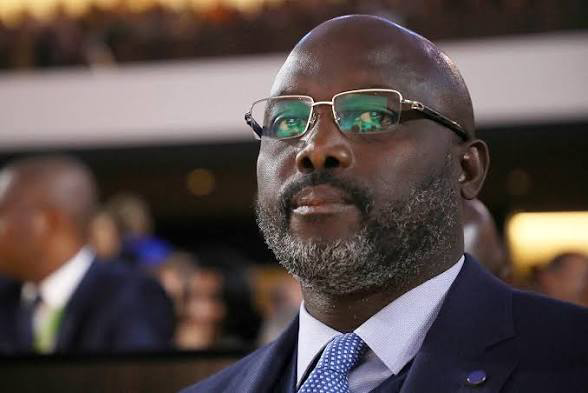
The Nigerian Bar Association's 66th Annual General Conference officially opened on Sunday, August 23, 2026, at the main bowl of the Yakubu Gowon Stadium in Port Harcourt, Rivers State, with a powerful keynote address by former Liberian President George Weah, who warned that threats to democracy do not come only from the barrel of a gun in the night or a defeated leader's refusal to hand over power, but from situations where judicial institutions are weakened and unable to carry out their duties. Weah, who served as Liberia's president from 2018 to 2024, addressed more than 24,000 lawyers gathered from across the country for the conference themed "Beyond Limits," urging the legal profession to ensure that the law is not used to perpetrate war or chaos but as an instrument of humanity, transparency, truth and peace. The former footballer, who famously conceded defeat in Liberia's 2023 presidential election before the final results were formally announced, said he placed the will and peace of his country above personal ambition, arguing that political office should be regarded as temporary stewardship and not a possession worth sacrificing national stability to retain.
In a direct and unflinching address to African leaders and legal practitioners, Weah cautioned against the dangerous tendency of elected governments to gradually transform into authoritarian rulers by weakening the judiciary, legislature and other institutions after assuming office. "Democracy does not survive on the strength of elections alone," Weah declared. "Elections are the doorway into democracy, not the house itself". He warned that a leader who emerges through a free and fair election could still gradually transform into an authoritarian ruler by weakening the judiciary, legislature and other institutions. "A tyrant with a certificate of return is still a tyrant," he declared, stressing that threats to democracy could also emerge from elected governments that pressure judges, manipulate institutions or turn legislatures into "echo chambers" for executive power. The former Liberian leader described as a dangerous threat to democracy governments that call themselves democratic but are corrupt and in bed with judges in order to undermine the rule of law and manipulate society.
Weah charged Nigerian lawyers to defend judicial independence and ensure that courts remained institutions where citizens could seek justice without political permission, stressing that a compromised judiciary ultimately undermines public trust, investment, security and peace. He urged lawyers to be fearless in their duties and help in protecting members of the bench, while emphasising that the true measure of a lawyer was not the number of cases won or the titles attained, but the courage to stand when the country needed courage and to speak when justice needed a voice. The former president also challenged African countries to move beyond the narrative of "brain drain" by deliberately creating systems that would allow professionals in the diaspora to contribute their expertise to national development, promoting what he described as "brain circulation".
Rivers State Governor, Siminalayi Fubara, who declared the conference open, also charged judges responsible for the administration of law and justice to consider the overall impact of their judgments on the polity, as law and order, as well as the rate of national development, are inextricably linked to the quality of justice the courts can deliver with integrity. Fubara urged judges to ensure that nothing but the truth prevails at all times, irrespective of the parties' status or social affiliations, stressing that public confidence in the quality of the nation's judiciary would be enhanced only when judges demonstrate sound knowledge of the law, courage, commitment and integrity to hold both government and citizens equally accountable to the Constitution. He said the ultimate aim of law is to protect and advance the security and well-being of citizens by ensuring equality before the law, safeguarding fundamental human rights and fostering an environment conducive to socioeconomic activities and national transformation.
Fubara disclosed that his administration had expanded access to justice through the appointment of more judges and the establishment of additional courts, including the construction of a Federal High Court building, which he said would be handed over before the end of the year, while reaffirming the state government's commitment to the administrative and financial autonomy of the Rivers State Judiciary. He said the return of the NBA conference to Port Harcourt, which was originally scheduled to host it in 2025 before the declaration of an emergency forced its relocation to Enugu, symbolised the restoration of democratic institutions in the state. Outgoing NBA President, Afam Osigwe, said the decision to return the conference to Port Harcourt was deliberate, while the conference continues to attract legal practitioners, judges, policymakers and other stakeholders from across Nigeria and beyond. As the 2027 general elections draw closer, Weah's warning that democracy cannot survive on strong men but on strong institutions resonates deeply, challenging Nigeria's legal profession to stand firm in defence of judicial independence and the rule of law.
📩 Stone Reporters News | 🌍 stonereportersnews.com
✉️ info@stonereportersnews.com | 📘 Facebook: Stone Reporters News | 🐦 X (Twitter): @StoneReportNew | 📸 Instagram: @stonereportersnews
Add comment
Comments