

Reported by: Ijeoma G | Edited by: Oravbiere Osayomore Promise.
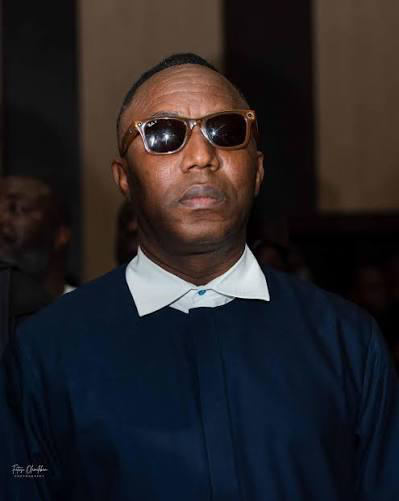
Human rights activist and African Action Congress presidential candidate Omoyele Sowore has thrown his weight behind the establishment of federal, state and local government police forces in Nigeria, but with a crucial caveat: governors' security votes must be removed from their direct control and placed in an escrow account to fund the proposed policing structures. Sowore made the declaration on Monday, August 24, 2026, while speaking at the ongoing Nigerian Bar Association Annual General Conference in Port Harcourt, Rivers State, where he outlined a comprehensive vision for decentralising Nigeria's policing system while simultaneously introducing financial safeguards to prevent abuse of power.
In a direct and unflinching address to the legal community, Sowore said he supported a multi-layered policing architecture that would include federal, state, local government, campus, and even township police forces. However, he argued that governors should not have unrestricted control over security funds, warning that such an arrangement could create room for widespread abuse and political manipulation. "We must remove security votes from governors and put them in an escrow account," Sowore declared. According to him, funds in the proposed escrow account could be used to pay state police officers if state governments fail to meet their financial obligations, effectively creating a fail-safe mechanism to ensure that officers are not left unpaid and vulnerable to corruption.
Sowore's proposal comes amid intensifying debate over the creation of state police in Nigeria, a reform that has gained traction under President Bola Tinubu's administration. The Chief of Staff to the President, Femi Gbajabiamila, had earlier disclosed that a draft national policing bill was expected to be presented to Tinubu for approval as part of ongoing reforms. However, Sowore has been a vocal critic of the government's push to rush the process, warning that introducing state police months before the 2027 general elections could hand governors a dangerous political weapon capable of undermining democracy and worsening human rights abuses.
The AAC candidate stressed that any new policing structure must guarantee adequate welfare for officers to prevent corruption and abuse of power, arguing that hungry and poorly remunerated officers often become part of the security problem rather than the solution. He also called for proper regulation, standardisation and extensive public consultation before any constitutional amendment is enacted, expressing concern that the current proposal was being rushed through the National Assembly without adequate debate.
In a stark warning to the government, Sowore described Nigerian governors as "ravenous political juggernauts" who cannot be trusted with armed security structures, particularly in the lead-up to an election. "Nigerian state governors are not trustworthy to be handed security personnel of this scale," he said, adding that Nigeria must avoid a situation where state police could be controlled by political actors during the electoral period. He also accused governors of stealing local government funds and called for greater autonomy for the third tier of government, arguing that true federalism requires genuine decentralisation of power and resources.
Sowore argued that the debate over state police should be viewed within the broader context of Nigeria's federal structure, insisting that the country's constituent units should have greater control over their security. "Let's ensure that if we are a federation, we are truly a federation," he said, questioning why the nation was still debating a reform that the Constitution already envisions. However, he cautioned that decentralising policing without granting genuine autonomy to local governments could create another avenue for abuse, and called for the proposed policing structures to be properly regulated and standardised to prevent disparities and abuses across different jurisdictions.
The debate over state police has remained a major issue in Nigeria amid worsening insecurity, with supporters arguing that decentralised policing would improve intelligence gathering and enable security agencies to respond more quickly to local threats. Opponents, however, have raised concerns that governors could abuse state police by using them against political opponents and critics, a fear that Sowore has sought to address through his proposal for financial safeguards. His call to place security votes in an escrow account represents a significant departure from the current system, where governors have near-total discretion over the expenditure of security funds, often with little transparency or accountability.
Sowore, who has repeatedly criticised alleged police abuses in Nigeria, said his position on police reform was also informed by his personal experiences with law enforcement. "I am a person who suffers from police abuse on a regular basis. It is in my own interest and personal safety to support responsible policing," he said. His remarks at the NBA conference have injected a new dimension into the ongoing debate over police reform, challenging both the government and the opposition to think beyond the narrow question of whether to create state police and consider the broader issues of governance, accountability and financial transparency that must accompany any meaningful reform. As the 2027 elections draw closer, Sowore's proposal to remove security votes from governors' control and place them in an escrow account is likely to resonate with a populace weary of corruption and abuse of power, setting the stage for a fierce debate over the future of Nigeria's security architecture.
📩 Stone Reporters News | 🌍 stonereportersnews.com
✉️ info@stonereportersnews.com | 📘 Facebook: Stone Reporters News | 🐦 X (Twitter): @StoneReportNew | 📸 Instagram: @stonereportersnews
Add comment
Comments