

Reported by: Oahimire Omone Precious | Edited by: Oravbiere Osayomore Promise.
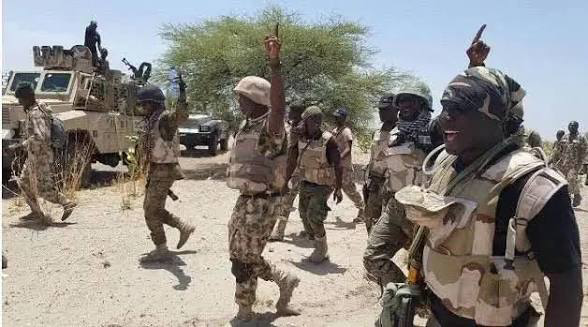
Nigerian troops have dealt a major blow to Boko Haram and Islamic State West Africa Province (ISWAP) terrorists in Adamawa State, dismantling a terrorist camp in the Kopre Mountain area of Hong Local Government Area and neutralising more than 21 fighters during a coordinated military operation.
The operation was conducted in the early hours of Thursday, August 27, 2026, by troops of Operation Hadin Kai, working with a Special Tactical Team from the Office of the National Security Adviser (ONSA). The military said the assault followed credible intelligence on the presence of terrorist elements in the difficult and rugged terrain.
The development was disclosed by Captain Mohammed Goni, Acting Military Information Officer at the Headquarters of the Joint Task Force North-East, Operation Hadin Kai. According to the military account, the joint force included personnel from the ONSA Tactical Team and newly inducted troops of 226 Battalion, deployed to Sector 4 in Adamawa State following a directive from the Chief of Army Staff, Lieutenant General Waidi Shaibu.
The troops reportedly conducted a stealth insertion into the target area before penetrating the terrorists’ enclave and launching a precision strike against the camp. Despite the challenging terrain, the operation succeeded in reaching the location and engaging the terrorist fighters.
According to Captain Goni, the troops encountered the terrorists in two separate engagements. Following the fighting, more than 21 terrorists were neutralised, while several others escaped from the area with gunshot wounds.
The military’s wording is significant because it does not give an exact figure beyond stating that more than 21 terrorists were neutralised. Some reports have therefore used the figure of 21 in their headlines, but the official account supports the more precise description of “over 21.”
After the engagements, the joint force took control of the area and dismantled the terrorist camp. Associated logistics infrastructure was also destroyed, in what the military said would further weaken the terrorists’ ability to operate from the location.
Troops also destroyed several motorcycles, bicycles and jerrycans containing Premium Motor Spirit, or PMS. The military said the items were believed to have supported the terrorists’ logistics and mobility.
Several AK-47 rifles, magazines and a substantial quantity of 7.62mm Special ammunition were also recovered from the location, according to the military statement. The recovered materials were presented as evidence of the operational and logistical activity taking place at the camp.
The operation was not described simply as an offensive against an isolated terrorist position. The military said it formed part of wider search-and-rescue efforts aimed at locating people being held by terrorist elements in the region.
Those efforts include people abducted from Mussa community in May 2026 and schoolchildren kidnapped from Lassa in June. The military said operations would continue until abducted persons are located and rescued.
The authorities have not said that all of the victims connected to those incidents have been rescued. Instead, Operation Hadin Kai has pledged to sustain intelligence-driven operations aimed at locating them and dismantling the terrorist networks responsible for their captivity.
The assault also highlights the importance of intelligence in military operations against terrorist groups operating in difficult terrain. Rather than relying solely on conventional movement, the troops reportedly used intelligence on the location of the terrorists before carrying out a stealth insertion and subsequent attack.
Captain Goni said the operation demonstrated the joint force’s operational tempo, tactical proficiency, intelligence exploitation capability and combat effectiveness. He said the successful assault also demonstrated the ability of the troops to project combat power into difficult and restrictive terrain.
The military has continued to rely on joint operations involving different security structures in its campaign against insurgent groups in the North-East. The participation of the ONSA Tactical Team alongside Operation Hadin Kai troops reflects that wider approach.
The destruction of the camp is also important from a logistical perspective. Terrorist groups operating in remote areas depend on camps and supply networks to facilitate movement, communication and continued operations. Destroying such facilities can restrict their ability to maintain a presence in a particular area, although the longer-term impact will depend on subsequent security operations.
The Military High Command commended the ONSA Tactical Team and Operation Hadin Kai troops involved in the operation, praising their gallantry, professionalism, resilience and coordination.
The Joint Task Force North-East said it would maintain pressure on terrorist elements across the theatre of operations. Its stated objectives include dismantling terrorist strongholds, degrading their logistics and fighting capabilities, denying them freedom of movement and rescuing abducted persons.
The latest operation comes as security forces continue to confront the persistent threat posed by Boko Haram and ISWAP across parts of Nigeria’s North-East. Adamawa, Borno and neighbouring areas have remained central to counter-insurgency efforts because of the continued presence and movement of terrorist elements in difficult-to-access locations.
For communities in affected areas, the significance of military operations extends beyond battlefield results. Residents and families affected by abductions are particularly concerned about the safe return of those taken captive and the restoration of conditions that allow communities to live, work and travel without fear.
The military’s account does not independently establish the identities or organisational affiliations of every person reportedly neutralised in the operation. It describes them collectively as Boko Haram/ISWAP terrorists, and that attribution should therefore be understood as the official military assessment.
Likewise, the reported number of casualties comes from the military and has not been independently verified by an outside body. For that reason, the most accurate formulation is that the troops reported neutralising more than 21 terrorists.
Nevertheless, the operation represents a significant tactical success according to the military, combining intelligence gathering, coordinated troop deployment and a targeted assault against a terrorist camp in challenging terrain.
Operation Hadin Kai has assured the public that its offensive and search-and-rescue activities will continue. The task force said the objective is not only to disrupt terrorist camps but also to locate abducted persons and restore lasting peace and security across the North-East.
The latest assault therefore adds another chapter to Nigeria’s continuing counter-insurgency campaign. With the Kopre Mountain camp dismantled and terrorist logistics destroyed, security forces are expected to maintain pressure on surviving fighters and pursue further intelligence-led operations aimed at preventing the area from becoming a new base for terrorist activity.
For now, the military says the operation has weakened the terrorist presence in the area, while the search for abducted persons and broader security operations across Adamawa and the North-East continue.
📩 Stone Reporters News | 🌍 stonereportersnews.com ✉️ info@stonereportersnews.com | 📘 Facebook: Stone Reporters News | 🐦 X (Twitter): @StoneReportNew | 📸 Instagram: @stonereportersnews
Add comment
Comments