

Reported by: Ijeoma G | Edited by: Oravbiere Osayomore Promise.
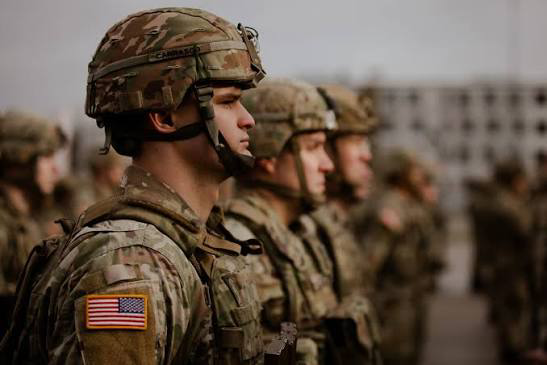
The United States is preparing to withdraw about 200 American troops from Nigeria by late September, ending a limited but high-impact counterterrorism mission that was launched earlier this year. The Pentagon confirmed the drawdown on August 27, 2026, following a joint operation that killed a senior Islamic State leader and more than 200 other militants. However, despite the military gains, analysts warn that the pullout could allow terrorist groups to rebuild if Nigeria cannot sustain the intelligence capabilities the US provided.
The troops were deployed to northeastern Nigeria in February 2026 following public criticism from US President Donald Trump over attacks on Christians in the country. The deployment was initially described as a training and technical support mission, with American personnel expected to assist Nigerian forces with intelligence, surveillance, planning, and specialised military training. The mission later expanded into closer operational cooperation. By March, the US had also deployed MQ-9 Reaper drones to support the mission.
The cooperation peaked in May with an operation in the Lake Chad Basin that killed Abu Bilal al-Minuki, identified by US officials as a senior Islamic State leader and the group's second-in-command globally. More than 200 additional militants were subsequently killed in airstrikes and ground operations, with the campaign making use of MQ-9 Reaper drones and AC-130 gunships. US Africa Command commander, Gen. Dagvin Anderson, said the operation had significantly weakened ISIS' leadership structure in Nigeria and internationally.
Despite those gains, the security situation inside Nigeria remains volatile. In August alone, multiple large-scale attacks have been reported across the country. On August 10, a clash between security forces and militants in Kebbi State left 10 police officers and two civilians dead. On August 17, armed men carried out a house-to-house attack on a community in Plateau State, killing about 30 people. On August 21, dozens of residents were abducted in an attack in Niger State. Gunmen also recently killed more than two dozen people, including an imam, in northwestern Nigeria, while at least 25 people died in a separate attack on a village in central Nigeria.
The withdrawal follows a period of deepening ties between Washington and Abuja. President Trump and Nigerian President Bola Tinubu exchanged letters in July expressing support for their security partnership. A senior Nigerian military delegation also travelled to Washington on August 13 to hold talks with American counterparts. Despite the troop reduction, small teams of American trainers and intelligence analysts are expected to remain in Nigeria to provide continued support. Gen. Anderson said the US would maintain its intelligence partnership with Nigeria.
Nigerian security analyst Malik Samuel acknowledged that recent operations had recorded notable successes, particularly targeted strikes against Islamic State insurgents in the northeast. However, analyst Kabir Adamu cautioned that reduced American intelligence support risked allowing terrorist groups to regroup and reconstitute their networks. Nigerian security forces will assume primary responsibility for the long-term campaign against insurgent groups once the main US contingent completes its withdrawal.
The development comes weeks after Nigeria and the US held their second round of talks in Washington under a joint working group focused on protecting Christian communities in Nigeria's Middle Belt. The working group was formed in response to President Trump's designation of Nigeria as a country of particular concern over allegations of Christian genocide. Nigeria has rejected the position that the violence in the country has a single cause and has insisted that the crisis is multifaceted.
Ladd Serwat, Africa senior analyst at ACLED, described Nigeria's security situation as "a very complicated security situation," noting that Islamist militant groups "constitute only a small proportion of the overall violence" in the country. Security threats in Nigeria comprise terrorism spilling over from neighbouring Sahelian states; banditry in the north-west; Islamist militants such as ISWAP, ISIS, and Boko Haram; pastoralist and farmer clashes; and cult groups and militia.
📩 Stone Reporters News | 🌍 stonereportersnews.com
✉️ info@stonereportersnews.com | 📘 Facebook: Stone Reporters News | 🐦 X (Twitter): @StoneReportNew | 📸 Instagram: @stonereportersnews
Add comment
Comments