

Reported by: Oahimire Omone Precious | Edited by: Gabriel Osa
The Nigeria Police Force has arrested four suspects, including two nephrologists linked to a private hospital in Abuja, over an alleged organ-harvesting and human-trafficking syndicate operating in Nasarawa State and neighbouring areas.
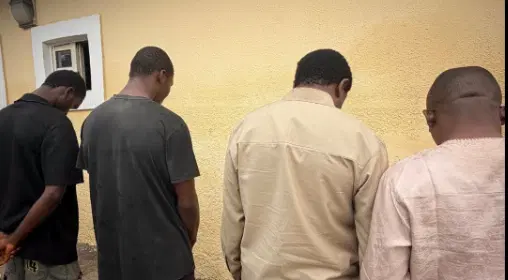
The suspects, identified as 23-year-old Emmanuel Ode, 48-year-old Dr Benjamin Oyime, 53-year-old Dr Daniel Otukpa and 25-year-old David Idoko, were arrested by operatives of the Force Special Tactical Squad during a sting operation in Auta Balifi, Karu Local Government Area of Nasarawa State, on August 19, 2026.
The arrests were announced by the Force Public Relations Officer, CSP Ani Iniedu, in a statement issued on Friday, August 28. The suspects were subsequently paraded as police investigators continued their inquiry into what authorities described as an alleged network involved in human trafficking and illegal organ harvesting.
Police said the operation followed intelligence concerning the activities of the suspected syndicate. During the operation, clothing allegedly purchased with proceeds from the criminal activities was recovered and taken as an exhibit.
Among those arrested are two medical doctors associated with Wellington Hospital in Life Camp, Abuja. Oyime, an indigene of Edo State, was identified by police as a nephrologist and consultant to the hospital. Otukpa, an indigene of Benue State, is also a nephrologist and serves as Acting Director of Clinical Services at the facility.
The police allegations centre on the recruitment of vulnerable young people, particularly those experiencing severe financial difficulties. Investigators said the suspected network allegedly operated by identifying people in Nasarawa and surrounding communities who were economically vulnerable and then persuading them to undergo procedures involving the removal of their kidneys.
According to the police statement, Ode allegedly confessed during interrogation to recruiting victims under false pretences. Police said he provided investigators with information concerning at least two alleged cases, including one involving a 22-year-old man identified as Samuel Ezekiel.
Investigators said Ode allegedly disclosed that on April 24, 2026, he lured Ezekiel to Wellington Hospital in Life Camp, Abuja, where the victim's kidney was allegedly harvested. Police said the young man was reportedly paid $1,250, which the Force valued at approximately N1.7 million at the prevailing exchange rate.
The police also referred to an allegation involving another victim who reportedly told investigators that he was recruited by the same agent in 2022 and taken to a hospital where his kidney was allegedly removed. The second victim was said to have received N7 million.
The allegations have not been tested in court, and the arrests do not amount to findings of criminal guilt. The suspects remain entitled to due process and the presumption of innocence as investigators establish what occurred, who was responsible and whether any criminal offences were committed.
One of the most significant aspects of the investigation is the police allegation that documents were manipulated to facilitate the suspected operations. Investigators said evidence gathered so far indicates that official documents connected with victims may have been falsified.
The documents allegedly included victims' names, National Identification Numbers, birth certificates, age declarations, affidavits and consent letters. If established, such practices could indicate a deliberate attempt to create an appearance of lawful consent or conceal the identities and circumstances of people undergoing the procedures.
The alleged use of consent documents is particularly significant because lawful organ donation requires stringent safeguards designed to ensure that donors understand the procedure and are not subjected to coercion, deception or exploitation. The police allegations suggest that investigators are examining whether vulnerable people were manipulated through financial inducements rather than making genuinely informed and voluntary decisions.
The case also raises questions about the safeguards surrounding kidney transplantation and living organ donation in Nigeria. Medical procedures involving organ donation require careful scrutiny because of the serious physical consequences for donors and the potential for exploitation where extreme poverty creates pressure to accept financial payments.
The involvement of medical professionals, if ultimately established by investigators and the courts, would add another serious dimension to the case. Doctors and healthcare institutions occupy a position of particular responsibility in ensuring that medical procedures comply with professional standards and applicable laws. However, the police allegations against the two doctors must still be tested through investigation and, if charges are filed, judicial proceedings.
The police have not said that all activities associated with Wellington Hospital were connected to the alleged syndicate, nor have authorities announced any finding of institutional liability against the hospital. The investigation is therefore expected to determine the individual roles, if any, played by each suspect and whether additional people or organisations were involved.
The case comes amid continuing public concern in Nigeria over trafficking, exploitation and allegations involving illegal organ removal. Poverty and unemployment can leave vulnerable people susceptible to individuals offering money, employment or other assistance, making protection of economically disadvantaged communities an important element of law-enforcement and public-health policy.
For investigators, establishing the complete chain of events will require more than the allegations contained in preliminary statements. Authorities will need to examine medical records, consent documents, financial transactions, communications, identity records and evidence from alleged victims. The circumstances surrounding any medical procedures will also be central to determining whether they were lawful.
Police said their investigation remains ongoing and that efforts are continuing to apprehend other suspects believed to be connected to the alleged network. The Force has also reaffirmed its commitment to dismantling human-trafficking and organ-harvesting networks and protecting vulnerable Nigerians from exploitation.
The arrests therefore represent an important development, but they are only an early stage of the legal process. The central questions now are whether investigators can substantiate the allegations, establish the precise roles of the four suspects, identify any additional participants and determine whether further victims were involved.
For the alleged victims, the investigation could provide an opportunity to establish what happened to them and whether they were deceived or exploited. For the wider public, the case underscores the importance of effective oversight of medical procedures, robust protection of vulnerable people and transparent enforcement of laws against trafficking and illegal organ removal.
📩 Stone Reporters News | 🌍 stonereportersnews.com
✉️ info@stonereportersnews.com | 📘 Facebook: Stone Reporters News | 🐦 X (Twitter): @StoneReportNew | 📸 Instagram: @stonereportersnews
Add comment
Comments