

Written by: Ijeoma G | Edited by: Oravbiere Osayomore Promise.
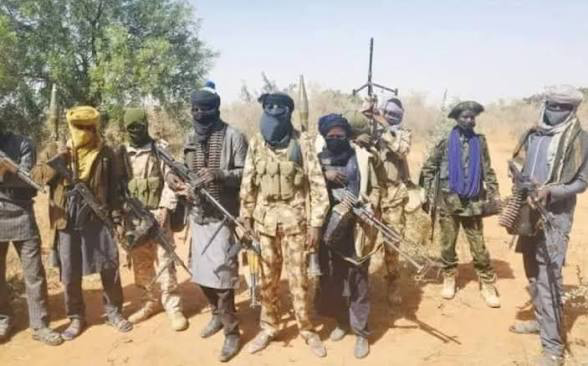
In the brutal arithmetic of Nigeria's North-West, the question is no longer whether a community will be attacked, but what it will cost to survive another season. For Kebbe town in Sokoto State, the price is now N40 million. The payment comes with a seven-day deadline, a threat of fire and death, and a warning that the local Divisional Police Officer must keep his phone charged and ready to take their calls.
This is not a kidnapping for ransom. It is not a one-time extortion. It is a declaration of ownership.
The message arrived on Tuesday afternoon, September 1, 2026, delivered through a local farmer to the District Head of Kebbe. The bandits initially gave the community five days. After pleas from terrified residents, the deadline was extended to Tuesday, September 8. The phone used to communicate the ultimatum was handed over to the Divisional Police Officer. The gunmen reportedly warned the officer: keep the device charged and reachable, or the town will burn. The police have not responded publicly.
For residents, the choice is impossible. "Some people are talking about pooling money together, but N40 million is too much for a community like ours," one resident told SaharaReporters. "We don't know what to do". The demand has already begun to scatter families. Women and children are being moved out of the community. Those who stay are waiting—for a government that has not come, for a security response that has not materialised, for a deadline that is ticking closer.
This is not a new tactic. In June 2026, bandits imposed multi-million-naira levies on at least 26 communities in Sabon Birni Local Government Area, also in Sokoto State. The demands ranged between N4 million and N6 million per community. The Kebbe demand, however, represents a dramatic escalation—not just in the amount, but in the audacity. The bandits are no longer hiding in the bush. They are dictating terms to the police. They are collecting taxes. They are governing.
The pattern is unmistakable. On August 14, 2026, more than 300 suspected Lakurawa fighters invaded Kebbe town, killing four soldiers and looting shops. Three days later, on August 17, suspected bandits attacked Ungushi community, also in Kebbe LGA, killing at least 32 residents. Locals fought back, killing 13 of the attackers. But the violence continued. Now, just weeks after those attacks, the same armed groups are returning—not to loot, but to demand.
The Lakurawa group, which has been blamed for many of the recent attacks in Kebbe, has evolved from a local vigilante force into a coercive militant organisation. They now occupy the undefined space between banditry, organised crime and jihadism. They enforce rigid norms, extract resources from communities, and attack both civilians and security personnel. They are not criminals hiding from the state; they are a parallel authority operating in plain sight.
For the people of Kebbe, the seven-day ultimatum is not just a threat—it is a test. If the community pays, the message is clear: bandits can collect taxes, and the state cannot stop them. If they refuse and the town is attacked, the message is equally clear: the government cannot protect them. Either way, the authority of the state has already been broken.
The question that must be asked is not whether Kebbe will pay. The question is what it means for Nigeria when a community of farmers must beg for the right to live in their own homes. In the North-West, armed groups no longer ask for permission. They issue orders. And the government is not even answering the phone.
📩 Stone Reporters News | 🌍 stonereportersnews.com
✉️ info@stonereportersnews.com | 📘 Facebook: Stone Reporters News | 🐦 X (Twitter): @StoneReportNew | 📸 Instagram: @stonereportersnews
Add comment
Comments