

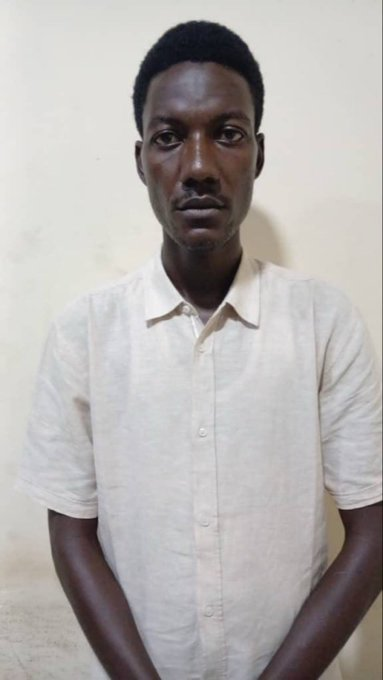
The Department of State Services (DSS) has taken legal action against Mubarak Abdullahi, a supporter of former Vice President Atiku Abubakar, over his alleged circulation of a fabricated letter attributed to President Bola Tinubu. The development follows his arrest in September and subsequent remand by a magistrate court in Kaduna State, while separate federal charges have reportedly been filed against him.
According to a report published on Monday, October 26, 2026, Abdullahi, popularly known as Sardaunan Samari, was brought before Chief Magistrate Court No. 10 in Kabala Doki, Kaduna, following investigations into a document purportedly issued by President Tinubu and addressed to the President of the United States. The court ordered his remand at the Nigerian Correctional Centre in Kaduna, while a date for proceedings at the Federal High Court had not been announced.
The DSS reportedly arrested Abdullahi on September 28 after he shared the disputed document on Facebook with the caption, “ATIKU IS COMING.”
The publication attracted the attention of security authorities because the letter was presented as official presidential correspondence. Subsequent reporting and fact-checking investigations identified serious questions about its authenticity.
According to the latest account, Abdullahi acknowledged sharing the document during questioning and apologised. However, no independently authenticated interview transcript or signed statement confirming the precise circumstances of that reported admission was available in the material reviewed.
The security agency reportedly proceeded with legal action despite the alleged apology, bringing the suspect before the Kaduna magistrate court and obtaining an order for his remand.
The report also stated that the DSS had filed a separate three-count charge involving alleged cybercrime and defamation at the Federal High Court in Kaduna.
A date for Abdullahi's formal arraignment on those federal charges had not been fixed at the time of the report. The precise statutory provisions relied upon and the full wording of the counts were not disclosed.
The development adds to earlier reporting about Abdullahi's detention and court appearance. On October 13, SaharaReporters reported that he had been arraigned before a magistrate court in Kabala Doki and remanded in custody.
At that stage, the available account did not identify the specific offences alleged against him. It linked the investigation to a purported presidential letter concerning a historical drug-related case in the United States.
The earlier report described a document dated September 19, 2026, supposedly addressed to United Nations Secretary-General António Guterres. It allegedly requested diplomatic engagement with the United States over the release or handling of historical law-enforcement records relating to Tinubu.
The latest October 26 account, however, described the disputed letter as being addressed directly to the United States President.
That difference is significant because at least two purported presidential letters circulated online during the controversy: one addressed to the United Nations Secretary-General and another addressed to the American President.
The available reports do not conclusively establish which particular document formed the basis of every allegation against Abdullahi. The precise document identified in the federal charges would need to be confirmed from the charge sheet.
The disputed correspondence emerged against the background of public discussion about historical American law-enforcement records concerning President Tinubu.
A Freedom of Information Act case in the United States has involved requests for records held by federal agencies, including the Federal Bureau of Investigation and the Drug Enforcement Administration.
The existence of proceedings seeking the disclosure of records does not establish the authenticity of the circulated letters or prove criminal wrongdoing by the President.
The purported correspondence claimed that Tinubu had sought assistance from international authorities concerning the handling of those records.
However, fact-checking investigations subsequently found that the documents were not authentic presidential communications.
A report published by Legit.ng on October 1, citing verification work by Dubawa, identified inconsistencies in the letterheads, official insignia and purported presidential signatures.
The investigation also reported that the documents lacked corroboration from credible official records or announcements confirming that Tinubu had written the letters.
Abdulaziz Abdulaziz, Senior Special Assistant to the President on Media and Public Enlightenment, rejected the documents as fake.
“These are fake; the first wrong indicator is the letterhead,” he said, referring to irregularities in the circulated correspondence.
The presidential response and independent verification findings support the conclusion that the letters were fabricated. They do not, however, establish who created the documents or whether Abdullahi was involved in their production.
That distinction is central to the criminal proceedings.
Sharing a document online, creating a forged document and knowingly presenting fabricated information as genuine may involve different questions of evidence and legal responsibility.
Investigators would need to establish the conduct alleged against Abdullahi, the relevant legal provisions and the evidence supporting each charge.
His reported acknowledgement that he shared the letter does not, by itself, establish that he created it or that all elements of any alleged offence have been proved.
The prosecution would also need to demonstrate the basis for its cybercrime and defamation allegations through admissible evidence.
Abdullahi's political support for Atiku Abubakar has featured prominently in reports of the case, particularly because his Facebook caption referred directly to the former vice president.
However, political affiliation alone does not establish criminal responsibility. The legal questions concern the defendant's alleged conduct and the evidence supporting the charges, rather than his preference for a political figure.
The distinction is particularly important as Nigeria approaches the 2027 general elections, when political statements, campaign material and disputed online content are likely to receive increased public attention.
The proceedings also raise questions about the handling of allegedly fabricated political documents and the appropriate application of laws governing online communications.
Nigeria's Constitution protects freedom of expression, subject to applicable legal restrictions. Criminal allegations arising from online publications must nevertheless be determined through lawful judicial proceedings.
The magistrate court's remand order is a procedural development and does not amount to a conviction.
Similarly, the reported filing of federal charges does not establish guilt. Abdullahi remains entitled to the presumption of innocence unless a competent court determines otherwise.
The available reporting does not establish whether he has entered a plea to the federal charges, whether an application for bail has been filed or when the Federal High Court will begin hearing the matter.
Further information from the DSS, the defendant's legal representatives and the relevant court records would be necessary to clarify those outstanding issues.
For now, the confirmed development in published reporting is that Abdullahi has been remanded following proceedings in Kaduna, while additional charges are reportedly awaiting formal arraignment at the Federal High Court.
The case remains before the judicial process, where the allegations concerning the disputed presidential correspondence must be established through evidence.
📩 Stone Reporters News | 🌍 stonereportersnews.com
✉️ info@stonereportersnews.com | 📘 Facebook: Stone Reporters News | 🐦 X (Twitter): @StoneReportNew | 📸 Instagram: @stonereportersnews
Add comment
Comments