

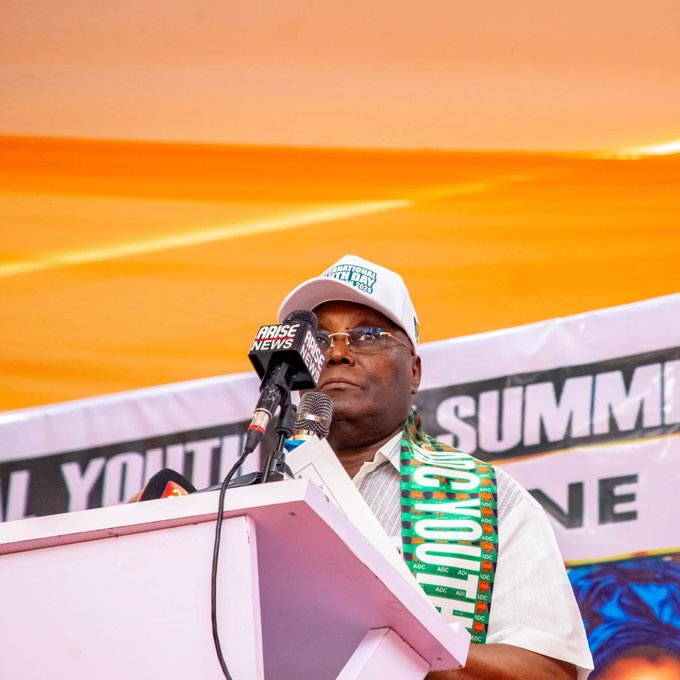
Former Vice President Atiku Abubakar has criticised the distribution of luxury sports utility vehicles to youth leaders of the ruling All Progressives Congress (APC), describing the gifts as an insult to Nigerians struggling with rising living costs. He demanded that President Bola Tinubu's administration disclose who financed the vehicles and whether public resources were involved in their purchase.
In a statement issued on Monday, October 26, 2026, by Phrank Shaibu, Director of Strategic Communication of the African Democratic Congress (ADC) Presidential Campaign Council, Atiku questioned the distribution of 2026 Toyota Land Cruiser Prado SUVs to selected APC youth leaders. The controversy followed an announcement by APC National Youth Leader Dayo Israel, who credited First Lady Oluremi Tinubu with supporting the initiative ahead of the 2027 general elections.
Atiku argued that the presentation of expensive vehicles to political party officials was difficult to justify when many households were struggling to afford food, transportation and other essential needs. He called for a public explanation of the source of the money and the total amount spent.
“These gifts are a brazen insult to the people,” Atiku said, criticising what he regarded as a contrast between the privileges enjoyed by political figures and the economic difficulties confronting ordinary Nigerians.
The former vice president said reports that the vehicles were worth more than ₦150 million each raised questions about the scale and financing of the distribution. He asked whether they were purchased using the First Lady's personal funds, private donations or public resources.
Atiku maintained that Nigerians were entitled to know who authorised the expenditure if government money was involved. He also demanded clarification of the legal basis for any public spending used to support party political activities.
The controversy began after Israel announced on social media that he had presented brand-new 2026 Prado vehicles to selected APC youth leaders to assist their election mobilisation activities.
In the announcement, which was subsequently deleted, Israel thanked Oluremi Tinubu for her continued support of the party's youth structure. He said the vehicles would help officials carry out political mobilisation ahead of the next general election.
His statement did not disclose the total purchase price, the precise number of vehicles acquired or the financial arrangements behind their procurement.
BusinessDay reported that seven SUVs were visible in a video accompanying the announcement. Its market assessment placed the price of a new 2026 Toyota Prado between ₦120 million and ₦160 million, depending on the model and specifications.
Based on the lower end of that range, seven vehicles would have an estimated market value of approximately ₦840 million. That calculation is an estimate rather than a verified record of what the vehicles actually cost.
Atiku's statement placed the reported distribution within a broader criticism of the Tinubu administration's economic priorities.
He argued that Nigerians had been asked to endure difficult economic reforms while political figures appeared to enjoy expensive privileges.
The former vice president particularly questioned how savings arising from the removal of petrol subsidy were being managed. He said the government should provide greater transparency about the use of public resources and the financing of political activities.
Atiku also referred to earlier reports of luxury vehicle gifts to APC women leaders, questioning whether such expenditure reflected appropriate priorities during a period of economic hardship and insecurity.
He warned that the scale of the gifts raised concerns about the possible use of financial resources to secure political loyalty. However, his questions did not establish that public money had been diverted or that any law had been broken.
The source of the funding remains central to the controversy. Although Israel acknowledged the First Lady's support, the available evidence does not establish whether the vehicles were purchased personally by her, funded through donations or financed through another arrangement.
Atiku also criticised reports of expensive lifestyles among individuals associated with the President and the APC leadership.
He referred to social media accounts of Israel travelling on private aircraft and to photographs said to show the President's son, Seyi Tinubu, wearing an expensive luxury wristwatch.
The former vice president presented those examples as evidence of what he considered a growing disconnect between political privilege and the financial pressures experienced by ordinary Nigerians.
His claims about the value of individual luxury possessions and the sources of funding for private travel were not accompanied by independently verified financial records in the reports examined.
Other opposition figures also criticised the vehicle distribution.
Omoyele Sowore of the African Action Congress questioned the spending priorities involved, comparing the reported cost of the SUVs with the potential wages of Nigerian workers.
Political economist Pat Utomi similarly questioned whether the money could have been directed towards essential public services, including emergency healthcare equipment.
Their interventions broadened the debate beyond the APC's internal political arrangements to questions about public accountability, party financing and the economic circumstances of Nigerian households.
The Tinubu administration has defended its economic reforms, including petrol subsidy removal and changes to the foreign exchange system, as necessary measures intended to address structural problems and improve the country's finances.
However, the cost of food, transport and other necessities has remained an important subject of public concern, with opposition politicians questioning whether the benefits of those reforms are reaching households.
The APC has also continued preparations for the 2027 elections, with party officials undertaking mobilisation activities across the country.
Israel's explanation presented the vehicles as resources intended to strengthen that political mobilisation. The announcement did not establish that the vehicles were purchased with government funds.
The distinction matters because the use of private or lawfully donated resources for party activities raises different legal and accountability questions from the expenditure of public funds.
Atiku insisted that the Presidency should address the controversy by identifying the funding source and explaining the total expenditure.
He also pledged that, if elected president, he would investigate any public resources found to have been spent illegally and seek accountability through appropriate legal processes.
His intervention has intensified scrutiny of the reported vehicle gifts, particularly their cost, ownership and purpose.
At the time of reporting, no verified breakdown of the vehicles' purchase costs or funding arrangements had been publicly established in the sources examined.
The outstanding issue is whether the APC leadership or Presidency will provide further documentation explaining how the SUVs were acquired and financed.
For now, Atiku's criticism remains a political challenge to the reported distribution, while the allegation that public resources may have been involved remains unproven.
📩 Stone Reporters News | 🌍 stonereportersnews.com
✉️ info@stonereportersnews.com | 📘 Facebook: Stone Reporters News | 🐦 X (Twitter): @StoneReportNew | 📸 Instagram: @stonereportersnews
Add comment
Comments