

Sheikh Abdulrahman Al-Sudais, President of Religious Affairs at the Grand Mosque in Makkah and the Prophet’s Mosque in Madinah, has condemned repeated missile and drone attacks attributed to Yemen’s Houthi militia, warning that the security and sanctity of Islam’s two holiest mosques must never be violated. He described the attacks as a serious threat to religious sites and the millions of Muslims who regard them as central to their faith.
In a statement carried by the Saudi Press Agency on Sunday, Al-Sudais criticised what he described as repeated ballistic missile and unmanned aerial vehicle attacks targeting Saudi Arabia. His condemnation followed reports that Saudi air defence systems had intercepted missiles directed towards the Makkah and Madinah regions, alongside other aerial threats affecting Riyadh and parts of the Kingdom’s western and southern regions.
Al-Sudais said the attacks demonstrated what he characterised as the militia’s criminal approach and malicious intentions towards Muslims and their sacred places. He maintained that threatening the security of the Two Holy Mosques constituted an unacceptable violation of religious principles and the obligation to protect places of worship.
The senior cleric described the protection of the Two Holy Mosques as a red line that must not be breached. He argued that safeguarding the holy sites was a responsibility extending beyond Saudi Arabia because of their significance to Muslims throughout the world.
His statement also invoked Islamic Shariah, which he said required respect for sacred places and the protection of worshippers. He described the reported attacks as violations of religious principles and international humanitarian norms, while praising Saudi authorities for their efforts to intercept incoming threats.
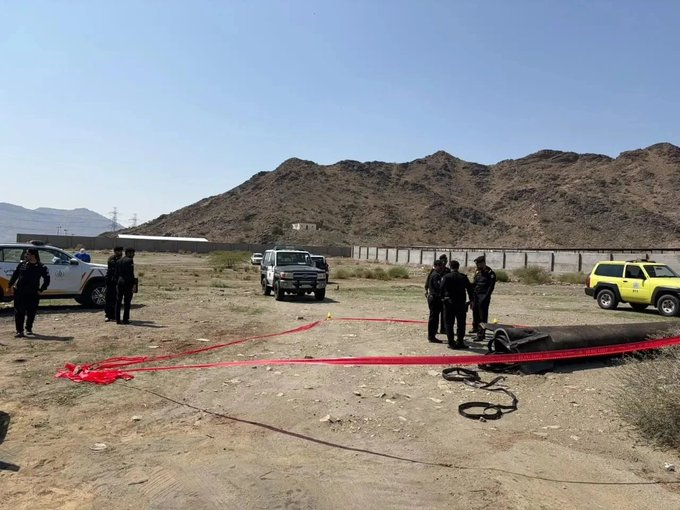
According to the Saudi account, air defence systems intercepted two ballistic missiles launched towards the Makkah and Madinah regions on Saturday. Emergency response teams subsequently attended locations where debris was reported to have fallen following the interceptions.
The affected areas were identified as Wadi Al-Mughammas in Makkah, the Al-Nuzha neighbourhood of Jeddah, Wadi Jalil in Taif and Masturah Centre in Rabigh. The reports did not establish that either of the Two Holy Mosques had been struck.
The incidents prompted further security precautions as Saudi authorities continued monitoring aerial threats across several regions. Defence personnel remained on alert into Sunday following reports of additional drones directed towards the Riyadh region.
Major General Turki Al-Maliki, spokesperson for the Coalition to Restore Legitimacy in Yemen, said the drones had been intercepted and destroyed before reaching their intended targets. He subsequently announced the interception of a ballistic missile launched towards Riyadh.
Further military updates reported the interception of a cruise missile directed towards Khamis Mushayt and ten ballistic missiles targeting the Kingdom’s southern region. Saudi authorities presented the interceptions as evidence of their continuing efforts to protect populated areas and critical infrastructure.
Saudi Civil Defence also issued precautionary warnings in parts of Jazan and Taif following reports of possible aerial threats. The alerts were subsequently lifted, although the incidents underscored the operational demands placed on emergency services during periods of heightened security concern.
The latest reported interceptions followed a series of aerial threats on Saturday involving ballistic missiles and an unmanned aircraft directed towards different parts of Saudi Arabia. The Saudi statements described the incidents as part of continuing hostile activity, although independent confirmation of every launch location and the identity of those responsible was not established in the information available.
Al-Sudais welcomed the response of Saudi air defence personnel and praised the Kingdom’s leadership and armed forces for maintaining security. He argued that continued vigilance was necessary to protect residents, visitors and pilgrims, particularly in the cities of Makkah and Madinah.
His remarks reflected the religious importance of the Two Holy Mosques. The Grand Mosque in Makkah surrounds the Kaaba, towards which Muslims worldwide turn during their daily prayers. The Prophet’s Mosque in Madinah is another major destination for worshippers and pilgrims, holding a central place in Islamic history and religious practice.
Saudi Arabia receives millions of Muslims annually for Hajj, Umrah and visits to religious sites. The security of the holy cities is therefore an issue of international religious significance, extending beyond the immediate interests of Saudi citizens and residents.
The reported attacks also coincided with adjustments to aviation operations in Riyadh. Authorities announced the partial reopening of King Khalid International Airport on Sunday, allowing limited passenger services to resume after disruptions associated with the security situation.
Airport officials said Terminal 1 would accommodate domestic flights, while Terminal 2 would handle international flights operated by national carriers. Travellers were advised to verify their flight arrangements with airlines before proceeding to the airport.
The partial reopening indicated an effort to restore essential transport services while security agencies continued responding to reported aerial threats. The available information did not establish when full airport operations would resume or whether further adjustments would be necessary.
The renewed security concerns also drew attention to the continuing conflict involving Yemen’s Houthi movement and Saudi Arabia. The Houthis, formally known as Ansar Allah, emerged as a major force in Yemen’s conflict and have previously conducted missile and drone attacks against Saudi territory.
Saudi Arabia led a military coalition that intervened in Yemen in 2015 in support of the internationally recognised Yemeni government. The conflict subsequently developed into a prolonged humanitarian and security crisis involving domestic factions and regional interests.
The Houthis have previously claimed responsibility for attacks on Saudi infrastructure, including energy facilities and airports. However, the movement’s historical involvement in such operations does not independently establish responsibility for every recent interception reported by Saudi authorities.
No independently verified Houthi statement accepting responsibility for the specific incidents described in the latest Saudi reports was established in the material reviewed. The attribution therefore remains based on the Saudi account rather than a separately confirmed identification of the launchers.
Al-Sudais nevertheless maintained that attacks threatening the holy cities were unacceptable, arguing that the safety of worshippers and the protection of sacred places should remain paramount. He expressed confidence in the Kingdom’s security arrangements and praised those responsible for responding to the reported threats.
The incidents have placed renewed attention on the security of Saudi Arabia’s religious centres, civilian communities and transport infrastructure. While Saudi authorities reported intercepting the incoming missiles and drones, the available accounts did not establish confirmed strikes against the Grand Mosque in Makkah or the Prophet’s Mosque in Madinah.
Al-Sudais concluded by reaffirming the importance of protecting the Two Holy Mosques, insisting that their sanctity must remain beyond violation and that Saudi Arabia would continue safeguarding the religious sites visited by Muslims from around the world.
📩 Stone Reporters News | 🌍 stonereportersnews.com
✉️ info@stonereportersnews.com | 📘 Facebook: Stone Reporters News | 🐦 X (Twitter): @StoneReportNew | 📸 Instagram: @stonereportersnews
Add comment
Comments