

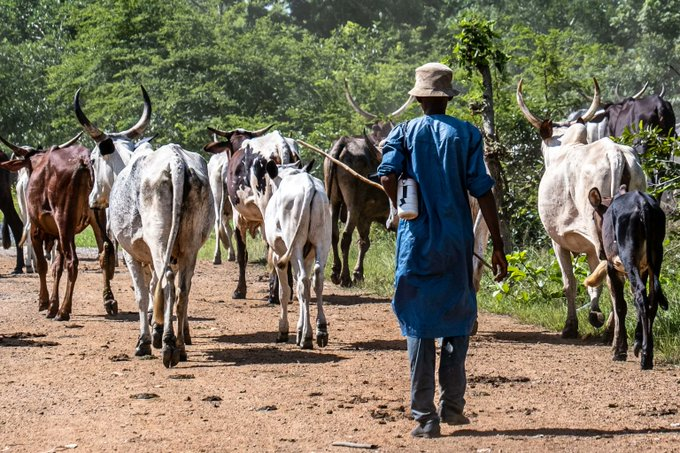
Fulani pastoralist leaders have called on President Bola Ahmed Tinubu and the National Assembly to allocate at least 30 per cent of Nigeria's agricultural budget to the Federal Ministry of Livestock Development, protect designated grazing reserves and establish pilot ranches nationwide. The coalition also demanded investigations into alleged attacks against pastoralist communities, warning against associating an entire ethnic group with criminal activities.
The demands were presented on Sunday, October 25, 2026, during a press conference in Abuja organised by the Confederation of Pastoralist Non-Governmental Organisations (CONPA). Abdullahi Ardo, General Secretary of the Kautal Pulaaku Fulbe Association of Nigeria, delivered the address on behalf of the association's president, Dr Huseini Buzaye, and a coalition representing more than 30 pastoralist organisations.
The leaders proposed allocating at least 30 per cent of the agricultural budget to livestock development, formally gazetting and protecting 417 grazing reserves, and establishing pilot ranches and fodder production projects across Nigeria's six geopolitical zones. They argued that these measures would strengthen livestock production and address longstanding challenges affecting pastoralist communities.
Ardo welcomed Tinubu's establishment of the Ministry of Livestock Development in 2024, describing it as an important response to decades of demands for a dedicated institution overseeing the sector. However, he criticised what the coalition considered inadequate funding and the absence of a sufficiently developed operational framework.
The association said the ministry needed to become more active at the community level, where pastoralists face difficulties involving grazing land, animal health, infrastructure and access to services. Its proposed budget allocation was intended to translate the ministry's creation into practical programmes.
The coalition described livestock as a ₦30 trillion economy deserving greater government attention. That valuation was presented by the pastoralist leaders and was not accompanied by an independently verified calculation establishing the sector's current economic value.
Beyond funding, the organisations called for the immediate protection of the 417 grazing reserves they identified across Nigeria. Their proposal included formal legal recognition and measures to prevent encroachment, alongside investment in modern ranching and fodder production.
The request comes amid longstanding disagreements over land use, grazing access and relations between livestock producers and farming communities. Such disputes have contributed to insecurity in different parts of Nigeria, although individual incidents have involved varying circumstances and perpetrators.
The coalition also demanded an independent investigation into alleged killings of pastoralists in Plateau, Niger, Sokoto, Kebbi, Zamfara and other states. It claimed that hundreds of people, including women, children and elderly residents, had been killed in recent attacks.
According to the association, cattle had also been rustled or killed, while settlements known as rugas had been destroyed. The coalition complained that attacks against pastoralist communities received insufficient public attention and that affected families had not received adequate justice or compensation.
Those allegations were presented by the organisations and were not independently verified through comprehensive casualty records or investigations establishing responsibility for the reported incidents.
The leaders urged the Federal Government to direct the National Emergency Management Agency and the National Commission for Refugees, Migrants and Internally Displaced Persons to provide relief materials to displaced pastoralists.
They also appealed to security agencies to protect pastoralists as Nigerian citizens, citing constitutional provisions concerning government responsibility for public security and the protection of life.
A central element of the statement was the rejection of ethnic profiling. The coalition argued that treating Fulani pastoralists collectively as bandits, kidnappers or terrorists endangered innocent people and encouraged discrimination.
Ardo maintained that criminal responsibility should be determined through individual conduct rather than ethnicity. The organisations called on security agencies and the media to avoid generalisations and support the investigation and prosecution of identifiable offenders.
The leaders also acknowledged responsibilities within pastoralist communities. They urged herders to respect farmers' property, prevent livestock from entering cultivated farmland and cooperate with lawful security investigations.
They encouraged community members to report cattle rustling, kidnapping and other criminal activities, while rejecting banditry, retaliatory violence and the protection of suspected offenders.
The statement therefore combined demands for government intervention with commitments aimed at improving relations between farmers and pastoralists.
The coalition further called on Tinubu to initiate a national dialogue addressing farmer-herder conflicts, arguing that military operations alone could not resolve the underlying disagreements.
It proposed involving Miyetti Allah organisations, traditional rulers, the Christian Association of Nigeria, Jama'atu Nasril Islam, security agencies and state governments in discussions focused on reconciliation.
The proposed dialogue would address justice, compensation, forgiveness and arrangements for peaceful coexistence. The leaders said cooperation among affected communities and public institutions was necessary to develop lasting solutions.
The coalition claimed that farmer-herder conflicts had caused more than 20,000 deaths over the preceding decade. The figure remains the organisation's estimate and should not be interpreted as an independently established national casualty total.
Nigeria's Ministry of Livestock Development was established as part of the Federal Government's efforts to modernise animal production, improve livestock infrastructure and address persistent conflicts involving farmers and herders.
Its creation reflected recognition that livestock production required a dedicated policy framework covering ranching, pasture development, animal health and commercial opportunities.
However, the pastoralist organisations argued that establishing a ministry was insufficient without adequate resources and implementation at the grassroots level.
Their demand for ranches across the six geopolitical zones also highlighted the importance they attached to expanding livestock infrastructure beyond particular regions.
The proposals would require decisions concerning public expenditure, land administration and cooperation between federal and state authorities. The coalition's statement did not establish that the requested budget allocation or grazing reserve protections had received government approval.
No confirmed response from the Presidency or National Assembly specifically accepting or rejecting the demands was established in the reports available following the conference.
The leaders announced plans for awareness and sensitisation activities across the geopolitical zones, intended to encourage peaceful coexistence and cooperation among pastoralist communities and other stakeholders.
They also called on farmers' associations, traditional institutions, security agencies and development partners to participate in efforts addressing violence, displacement and disputes over agricultural resources.
The latest intervention places livestock funding, grazing reserve protection and the treatment of pastoralist communities at the centre of renewed demands for government action.
For the coalition, the immediate priorities are greater investment in livestock development, independent investigations into alleged attacks and a national reconciliation process involving communities affected by farmer-herder disputes.
Whether the Federal Government adopts the proposals remains unresolved. The pastoralist leaders have nevertheless maintained that protecting lives, addressing criminal conduct individually and improving livestock production should form part of a coordinated national response.
📩 Stone Reporters News | 🌍 stonereportersnews.com
✉️ info@stonereportersnews.com | 📘 Facebook: Stone Reporters News | 🐦 X (Twitter): @StoneReportNew | 📸 Instagram: @stonereportersnews
Add comment
Comments