

Published by Osasere Edomwonyi Ikpoba
The Independent National Electoral Commission has issued a stark warning that artificial intelligence-driven disinformation poses one of the most serious threats to the credibility of Nigeria's 2027 general elections, as generative AI makes manipulated content cheaper to produce and increasingly difficult to detect. INEC Chairman, Prof. Joash Amupitan, SAN, who spoke on Wednesday in Abuja at the 13th Annual International Conference of the Association of Communication Scholars and Professionals of Nigeria, also disclosed that the commission was conducting a comprehensive audit of its electoral technology systems and considering a mock presidential election to test its readiness ahead of the polls.
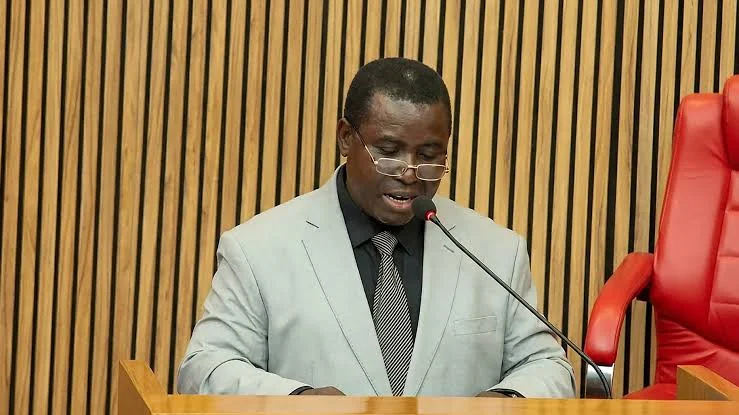
Amupitan, whose keynote address was delivered on his behalf by National Commissioner Sani Adam, SAN, said the credibility of the electoral commission increasingly depended not only on the integrity of the ballot, the Bimodal Voter Accreditation System and result sheets, but also on how information about electoral processes was understood and trusted by voters. He noted that the deployment of BVAS and the INEC Result Viewing Portal was intended to address longstanding concerns about the transparency of elections by allowing citizens to view polling-unit results before their movement to collation centres. However, he acknowledged that the 2023 General Election showed that such technology could become a source of public doubt when it underperformed, stressing that legitimacy is earned only when systems perform reliably, are well understood, and are explained honestly when they fall short.
The INEC chairman raised particular concern about the growing use of generative artificial intelligence to create synthetic audio, video and images capable of misleading voters. He warned that fabricated political content had already circulated during recent electoral cycles in West and East Africa, and that the threat extended beyond outright fabrication to algorithmic microtargeting, which allows different and even contradictory political messages to be directed at narrow segments of the electorate. Such content, he cautioned, could reach millions of social media users before fact-checkers or electoral authorities were able to verify it. "The danger lies not only in outright fabrication but also in algorithmic microtargeting, which allows conflicting messages to reach narrow segments of the electorate without a shared factual foundation," Amupitan warned.
The threat landscape is further complicated by what Amupitan described as a "sophisticated triad" of electoral challenges: the convergence of social media volatility, the weaponisation of AI-driven disinformation, Foreign Information Manipulation, and logistic deficits. He stressed that when these digital threats intersect with physical challenges like insurgency and communal strife, the trust deficit widens. "Without a secure environment, the sovereign will of the people is not just threatened; it would be silenced," Amupitan declared. He noted that with the Presidential and National Assembly elections set for January 16, 2027, and Governorship and State Houses of Assembly elections for February 6, 2027, the electoral roadmap was no longer just an administrative timeline but a security trigger.
Amupitan also disclosed that INEC had proposed a substantial budget for technology and election operations, including new accreditation devices to replace those lost or damaged in the last cycle. While the commission was still awaiting full release of the funds, its ICT team had begun engagements with manufacturers, and preparations for the technology audit and proposed mock election were proceeding alongside budget finalisation. The commission was exploring the possibility of conducting a mock presidential election ahead of the 2027 polls to test voter accreditation, result transmission and result viewing under conditions similar to election day.
The dangers posed by AI-driven disinformation are not hypothetical. A recent report by SBM Intelligence found that 66.5 percent of Nigerians are concerned that AI-generated misinformation could undermine the credibility of the 2027 election. Experts warn that deepfake videos, cloned voices, fabricated photographs and bogus INEC notices could flood social media and messaging platforms, confusing voters and deepening distrust in the electoral process. A fake video showing an INEC official announcing a change in voting arrangements could reach millions before the commission responds, while a fabricated result sheet could trigger rigging allegations and a cloned voice could falsely appear to belong to a candidate or electoral officer. Candidates are also vulnerable—AI-generated recordings could falsely depict a politician withdrawing from the race, endorsing an opponent or making inflammatory statements.
The challenge for INEC, therefore, extends beyond counting votes. It must win the information war quickly enough to remain the most trusted source of election information. To that end, Amupitan outlined a five-point strategy for strengthening the commission's response to emerging electoral communication challenges: integrating technology and communication planning; establishing a rapid-response mechanism to counter falsehoods within the same news cycle; proactively communicating known vulnerabilities and safeguards; deepening collaboration with media scholars, fact-checkers and technology platforms; and sustaining investment in public media literacy. He emphasised that Nigeria's 2027 electorate would be younger and more mobile-first than any before it, with the smartphone serving as the primary window through which many voters will experience the election. "Solutions adopted elsewhere must be adapted to Nigeria's own realities of internet access, language diversity and institutional trust," Amupitan said.
INEC has also taken institutional steps to address the threat. In August 2026, the commission established a dedicated Artificial Intelligence Unit to explore the responsible use of AI in areas such as data management, voter registration and results transmission while developing safeguards against emerging threats, including deepfakes and AI-generated disinformation. The commission has also warned that identity theft and the dissemination of deepfake or forged social media interactions are criminal offenses under the Cybercrimes Act. As Nigeria prepares for what promises to be a fiercely contested election, the battle for public trust may be decided not just at polling units but on millions of mobile-phone screens. The INEC chairman's warning is clear: without urgent and sustained action to counter AI-driven disinformation, the legitimacy of the 2027 elections—and by extension, the stability of the nation—hangs in the balance.
📩 Stone Reporters News | 🌍 stonereportersnews.com
✉️ info@stonereportersnews.com | 📘 Facebook: Stone Reporters News | 🐦 X (Twitter): @StoneReportNew | 📸 Instagram: @stonereportersnews
Add comment
Comments