

Published by Osasere Edomwonyi Ikpoba
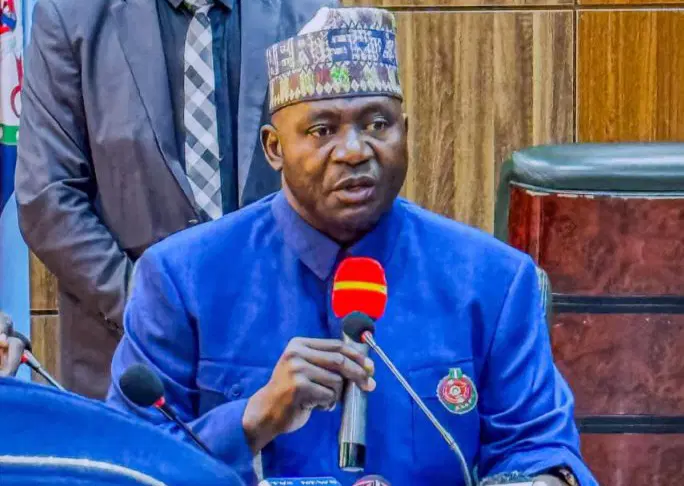
The Minister of Defence, retired General Christopher Musa, has issued a stark warning to state governors and lawmakers across Nigeria, urging them to halt the distribution of motorcycles as palliatives, citing intelligence that such vehicles are increasingly falling into the hands of terrorists and bandits who use them to facilitate attacks and evade security forces.
Musa made the call on Thursday during an appearance on Channels Television's Politics Today, where he addressed the operational challenges confronting the country's security forces and the unintended consequences of well-meaning government interventions. According to the minister, motorcycles provided as palliatives give terrorists the mobility to move quickly through difficult terrain and escape security operatives.
"We try to appeal to even governors to stop giving motorcycles out as palliatives. Because these motorcycles are the same ones that still end up with these terrorists," Musa said. He further advised that if governments must distribute motorcycles, they should opt for smaller-capacity models that would limit the ability of criminals to use them for high-speed getaways. "Even if you have to give, don't give them the big capacity motorcycles, give them the small capacity ones that they won't be able to use to run around, because that gives them leverage. They can easily enter and then disappear…" he warned.
The Defence Minister's warning extends beyond state government palliatives to include motorcycles distributed through constituency projects and other programmes by lawmakers. He lamented that such vehicles often find their way back to bandits and terrorists, who use them as primary means of transportation in areas where security forces struggle to maintain a presence. "Those bikes… before you know it, it's already get back to the bandits and that's what they're using. So we must stop that, we must be able to identify markets," Musa said.
The minister also disclosed that security agencies had identified illegal markets and motor parks as key channels through which terrorists move arms and ammunition into operational areas. "What we realize from experience is they establish illegal markets or illicit motor parks. They go to those motor parks, that's where they move arms and ammunition into those areas," he explained. He called for stronger monitoring of these locations, as well as markets where drugs and weapons are trafficked, stressing that cutting off these supply lines would significantly weaken terrorist networks.
In a broader appeal, Musa called for greater involvement of local governments in tackling insecurity, arguing that their proximity to communities gives them an advantage in identifying criminals and preventing crime. "Failure of local government is what is aggravating what we're dealing with, and if we want better solution, quick fix, our local governments must work. Because crime and development is local. If every local government chairman is dealing with criminals within his locality, it's easier to manage them than leaving it to the state or to the federal," he said. He urged council chairmen to hold weekly security meetings and report developments in their areas, noting that they know the criminals, their hideouts, and their patterns.
The Defence Minister's warning comes amid ongoing efforts by the Federal Government and state authorities to provide relief to Nigerians grappling with economic hardship. Palliative distributions, including food items, cash transfers, and motorcycles, have been a common feature of government interventions aimed at cushioning the impact of subsidy removal and rising living costs. However, Musa's revelation suggests that some of these measures may be inadvertently arming the very criminals the government is fighting.
The minister's comments also underscore the growing sophistication of terrorist networks, which have adapted to exploit gaps in security and governance. The use of motorcycles by insurgents and bandits is not new; Boko Haram and other armed groups have long relied on motorcycles for their operations in the North-East and North-West, where vast, poorly policed terrain makes them ideal for rapid movement and surprise attacks. What is new is the scale of the problem—and the possibility that government palliatives are feeding directly into the supply chain.
Musa's appeal to state governors and lawmakers is unlikely to be the last word on the matter. With the 2027 elections on the horizon and security remaining a top concern for voters, the issue of how palliatives are distributed—and who ultimately benefits—could become a political flashpoint. For now, the Defence Minister has made his position clear: the war against terror cannot be won if the government is unwittingly fuelling the enemy's mobility. The question is whether those in power will heed his warning before more motorcycles fall into the wrong hands.
📩 Stone Reporters News | 🌍 stonereportersnews.com
✉️ info@stonereportersnews.com | 📘 Facebook: Stone Reporters News | 🐦 X (Twitter): @StoneReportNew | 📸 Instagram: @stonereportersnews
Add comment
Comments