

Reported by: Ijeoma G | Edited by: Oravbiere Osayomore Promise.
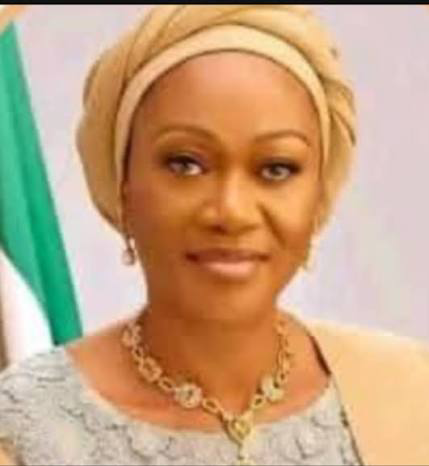
The First Lady of Nigeria, Senator Oluremi Tinubu, has made an emotional and unusually personal appeal to voters in the South-East to support the re-election of her husband, President Bola Ahmed Tinubu, in the 2027 presidential election, telling a gathering of women in Owerri that she wants to enjoy Nigeria at old age and is therefore working for the country's future. The appeal, delivered on Wednesday, September 9, 2026, during an official visit to Imo State to empower women, has sparked widespread debate about the intersection of personal ambition, public service, and the political calculus of a second term.
Speaking in Owerri, the Imo State capital, Mrs Tinubu was unequivocal in her message. "Make una vote for Mr President, we go work for una and Nigeria go better," she said, switching to Pidgin English to connect with the crowd. "I want to enjoy Nigeria at old age, so I will work for Nigeria, for my old age." The First Lady framed her appeal as a mutual commitment between the government and the people, promising that a second term would deliver a better Nigeria for all. She said the empowerment programme that brought her to the South-East was being implemented through the Office of the Senior Special Assistant to the President on Sustainable Development Goals and would benefit 18,500 women across the country when completed.
The First Lady's visit was not merely a political rally but a carefully choreographed display of the administration's commitment to women's economic empowerment. She announced that 500 women from each of the five South-East states would receive various items, including generators, industrial grinding machines, gas cylinders and ovens, to support their businesses. In a gesture that underscored the political weight of the occasion, she disclosed that Imo State Governor Hope Uzodimma had provided additional empowerment items for 2,000 women in the state, bringing the total number of beneficiaries in Imo to 2,500. In response to the governor's gesture, Mrs Tinubu announced an additional N100,000 cash support for each beneficiary of the empowerment programme, a move that drew rapturous applause from the crowd.
The First Lady's remarks went beyond the standard political rhetoric. She acknowledged the constitutional limit on presidential terms and sought to reassure Nigerians that her husband's ambition was not for indefinite rule. "By the grace of God, we will all finish our eight years," she said. "Because they will say, I want to be there forever. There is no third term. Just give us a second term. We are good. Because we need to rest." The statement, delivered with a mix of humour and conviction, was a direct response to critics who have accused the President of harbouring ambitions to extend his stay in office beyond the constitutionally permitted two terms. She also disclosed that she would turn 66 this month, adding a personal dimension to her appeal. "Make una dey pray for me," she said.
Governor Uzodimma, who hosted the First Lady, used the occasion to reaffirm the South-East's support for the President. He praised the Federal Government's infrastructural and developmental interventions in Imo State and declared that the people of the state were happy with the President's performance. "Let him know that Imo people are happy with him, that we are happy with his performance," Uzodimma said. "We will stand firmly behind our beloved President in January 2027. We will speak with one united, unequivocal voice to stand by those who have consistently stood by us." The governor's endorsement was not unexpected, given his longstanding alliance with the President, but it added significant political weight to the First Lady's appeal. The First Lady was also conferred with the chieftaincy title of Osodieme by the traditional institution in Imo State.
The First Lady's appeal, however, has not been universally welcomed. Critics have questioned the logic of a First Lady asking voters to re-elect her husband so that she can enjoy Nigeria at old age, arguing that the statement betrays a sense of entitlement that is disconnected from the harsh realities facing ordinary Nigerians. Some have pointed out that while the First Lady speaks of enjoying Nigeria at old age, millions of Nigerians are struggling to survive the day, with food inflation, unemployment and insecurity making life increasingly unbearable. Others have questioned why the empowerment programme, which is funded by taxpayers, is being used as a campaign tool ahead of the 2027 election.
The political context of the First Lady's appeal is significant. President Tinubu's administration has faced mounting criticism over its handling of the economy, particularly the removal of the fuel subsidy, which triggered a sharp increase in the cost of living. The administration has defended the policy as necessary for long-term economic stability, but the immediate impact on ordinary Nigerians has been severe. The First Lady's appeal for a second term is therefore not just a plea for political continuity but a request for more time to deliver on promises that have yet to materialise for many Nigerians.
The First Lady's remarks also raise broader questions about the role of political spouses in Nigeria's democracy. While First Ladies have historically played a ceremonial role, they have increasingly become active participants in political campaigns, using their platforms to mobilise women and advocate for social causes. Mrs Tinubu's tenure has been marked by a focus on women's empowerment, but her latest intervention has blurred the line between advocacy and campaigning, raising questions about the appropriate use of public resources and the role of unelected officials in electoral politics.
As the 2027 election approaches, the First Lady's appeal is likely to be remembered as one of the most candid statements of the campaign season. It was a moment that laid bare the personal stakes of political power, revealing that for the First Lady, the re-election of her husband is not just a political project but a personal investment in her own future. Whether that message resonates with voters in the South-East and beyond remains to be seen, but it has certainly sparked a conversation about the nature of political ambition, the limits of public service, and the often uncomfortable intersection of the personal and the political.
📩 Stone Reporters News | 🌍 stonereportersnews.com
✉️ info@stonereportersnews.com | 📘 Facebook: Stone Reporters News | 🐦 X (Twitter): @StoneReportNew | 📸 Instagram: @stonereportersnews
Add comment
Comments