

Reported by: Oahimire Omone Precious | Edited by: Oravbiere Osayomore Promise.
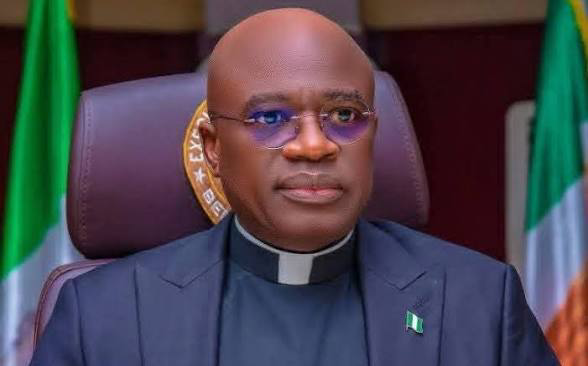
The Benue State Government has drawn a line in the sand. On Monday, September 14, 2026, the Commissioner for Information and Orientation, Chief Solomon Iorpev, announced that the government has commenced the arrest and prosecution of individuals and groups involved in what it described as the wanton destruction of public utilities and billboards across the state. The statement, which was terse but unambiguous, declared that the reckless and criminal conduct—which has resulted in the loss of valuable public and private investments—will no longer be tolerated under any guise whatsoever. The government vowed that anyone found culpable of vandalising, defacing, or destroying public utilities, billboards, or any other state or private infrastructure will face the full weight of the law.
The crackdown follows weeks of escalating tensions in Benue State, where political clashes have spiralled into the destruction of public assets. The government's statement did not identify specific incidents, but the timing is impossible to ignore. It comes less than a week after the convoy of Nigeria Democratic Congress presidential candidate Peter Obi was violently blocked in Makurdi, an incident that left more than ten youths hospitalised and sparked nationwide condemnation. The government has repeatedly denied any involvement in that attack, but the destruction of billboards and public utilities has continued, with reports of political thuggery targeting opposition symbols across the state.
In its statement, the government made it clear that there will be no sacred cows. No amount of political, social, or personal affiliation will shield any offender from prosecution. Security agencies have been directed to intensify surveillance and to apprehend, without delay, any person or group caught in the act of perpetrating these dastardly acts. Several suspects have already been arrested and are currently in police custody, and they will be arraigned in court shortly to answer for their actions. The commissioner described the destruction as a deliberate attempt by criminal and retrogressive elements to undermine the developmental strides of the Governor Hyacinth Alia-led administration.
The political context of this crackdown cannot be overstated. Benue State has become a flashpoint in the escalating battle between the ruling All Progressives Congress and the opposition, particularly the NDC, whose presidential candidate has been at the centre of a series of controversial incidents in the state. The Obi convoy attack on September 8, 2026, was the second reported disruption of his visit to Benue, and it drew sharp condemnation from civil society groups, including Amnesty International, which demanded a thorough investigation. The police subsequently announced the arrest of 46 suspects in connection with the blockade, but the government's insistence that it had no prior knowledge of Obi's visit has done little to quell suspicions of political motives.
The destruction of billboards is not merely an act of vandalism; it is a form of political warfare. In Nigeria's highly charged electoral environment, billboards serve as symbols of presence, visibility, and legitimacy. Their destruction is often a calculated move to erase an opponent's visibility and intimidate their supporters. The government's decision to crack down on this practice is a necessary step to protect public and private investments, but it also raises questions about selective enforcement. Will the crackdown target only opposition supporters, or will it also hold accountable those who may have orchestrated the destruction of opposition billboards and public utilities? The government's promise of no sacred cows will be tested in the coming weeks.
The government has also constituted a dedicated Task Force charged with the responsibility of monitoring, protecting, and securing all public utilities and billboards across the state. The Task Force has been mandated to work in close collaboration with security agencies to identify, apprehend, and ensure the prosecution of all persons found engaging in these criminal acts. The government has urged members of the public to remain vigilant and to promptly report any suspicious activity around public installations to the appropriate security agencies or the Task Force. This call for collective responsibility is a recognition that the state cannot protect every billboard and utility pole on its own, and that community vigilance is essential to safeguarding public infrastructure.
The crackdown has been met with a mix of support and skepticism. Supporters of the government argue that the destruction of public utilities and billboards is a crime that undermines democracy and economic development, and that those responsible must face the consequences. Critics, however, see it as a politically motivated move to silence opposition voices and consolidate power ahead of the 2027 elections. They point to the government's handling of the Obi convoy attack, which they say was marked by complicity and indifference, as evidence that the crackdown is selective and aimed at protecting the ruling party's interests.
The truth, as is often the case in Nigerian politics, likely lies somewhere in between. The destruction of public utilities and billboards is a genuine problem that demands a robust response. But the credibility of that response depends on its impartiality. If the government is seen to be targeting only opposition supporters while turning a blind eye to its own, the crackdown will be dismissed as political theatre and will do little to deter future acts of vandalism. The government's promise of no sacred cows is a step in the right direction, but it must be matched by action. The coming weeks will reveal whether the Benue State Government is serious about protecting public infrastructure, or whether it is simply using the crackdown as another weapon in the political battle ahead.
The people of Benue State deserve a government that protects their public utilities and billboards, not one that uses the destruction of these assets as a pretext for political persecution. The government's crackdown is a necessary step, but it must be conducted with transparency, fairness, and a genuine commitment to the rule of law. Anything less will only deepen the cynicism and distrust that have come to define the state's political landscape.
📩 Stone Reporters News | 🌍 stonereportersnews.com
✉️ info@stonereportersnews.com | 📘 Facebook: Stone Reporters News | 🐦 X (Twitter): @StoneReportNew | 📸 Instagram: @stonereportersnews
Add comment
Comments