

Reported by: Ijeoma G | Edited by: Oravbiere Osayomore Promise.
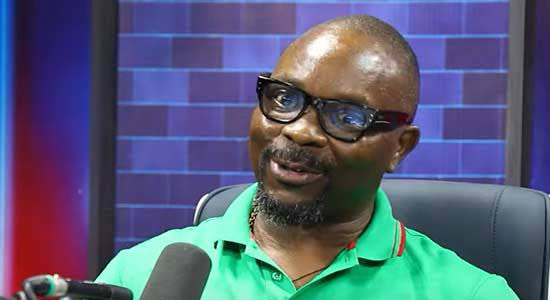
The message was blunt, unsparing, and unmistakably Nigerian in its delivery. Isaac Fayose, the younger brother of former Ekiti State Governor Ayodele Fayose and a well-known businessman and social commentator, took to his social media platforms on Sunday, September 13, 2026, to deliver a warning that has since sparked a fierce national conversation. "Nigeria is not a burial ground," he declared. "If any of the so-called wicked leaders that go abroad for medicals kpa! for abroad, abeg make sure you instruct your families not to bring your dead body here for burial o."
Fayose's statement was not a casual remark. It was a calculated provocation, designed to force Nigerians to confront a contradiction that has become a defining feature of their political class. The same leaders who preside over a crumbling healthcare system at home routinely jet off to London, Paris, Dubai, and beyond for medical treatment. They spend billions of naira on foreign hospitals while Nigerian doctors emigrate in droves and public hospitals lack basic equipment. And when they die abroad, their bodies are flown back home for elaborate state burials, as if the nation they neglected in life owes them a final honour in death.
The roots of Fayose's frustration are not difficult to trace. Nigeria loses an estimated $2.39 billion annually to medical tourism, according to data cited by the Nigerian Medical Association and other health sector stakeholders. The country's elite, including presidents, governors, senators, and their families, are among the biggest patrons of foreign hospitals. Former President Muhammadu Buhari spent months in London receiving treatment for an undisclosed ailment during his tenure, a period that coincided with a strike by the National Association of Resident Doctors over unpaid allowances. President Bola Tinubu's overseas trips have frequently been linked to medicals, though he has denied that treatment is the primary purpose. In July 2025, Fayose himself alleged that two former Nigerian presidents, Buhari and General Abdulsalami Abubakar, were both receiving treatment in London, a claim that drew attention to the scale of the problem.
Fayose's warning is, at its core, a question of accountability and shame. He is not asking Nigerian leaders to die. He is asking them to consider the message they send when they spend their final days in foreign hospitals and their final naira on foreign doctors, while the citizens they govern are forced to rely on a healthcare system that has been starved of investment. The World Health Organisation and Nigerian medical experts have repeatedly warned that medical tourism by the elite is both a symptom and a cause of the country's healthcare crisis. When leaders do not use the same hospitals as the people they govern, they have no incentive to fix them. When they fly abroad at the first sign of illness, they signal that Nigerian hospitals are good enough for the poor but not for the powerful.
The reaction to Fayose's statement has been predictably divided. Some Nigerians have applauded him for speaking a truth that many have long felt but few have articulated so forcefully. Others have argued that his comments are insensitive, particularly to families grieving the loss of loved ones, and that the decision of where to be buried is a personal matter that should not be politicised. Still others have pointed out that the problem is not the leaders who seek treatment abroad, but the system that makes them feel they have no choice. The Federal Government has defended foreign medical trips by political leaders, arguing that individuals are free to seek treatment anywhere in the world. Critics counter that this freedom is a luxury that only the elite can afford, and that it comes at the expense of the public healthcare system that ordinary Nigerians depend on.
Fayose's intervention is not merely a critique of individual leaders. It is a challenge to a political culture that has normalised the abandonment of public services by those who are supposed to be their custodians. The same logic that applies to healthcare applies to education, infrastructure, and security. Nigerian leaders who send their children to schools in Europe and the United States have little incentive to fix the public schools that serve the vast majority of Nigerian children. Those who travel abroad for medical treatment have little incentive to invest in the hospitals that serve the masses. And those who fly home in coffins after spending their final days in foreign hospitals send a message that Nigeria is good enough to govern, but not good enough to live in, and certainly not good enough to die in.
Whether Fayose's warning will change anything is another matter. The practice of seeking medical treatment abroad is deeply entrenched, and the factors that drive it, including the poor state of Nigerian hospitals, the availability of specialised care elsewhere, and the sheer convenience of foreign medical tourism, are not easily addressed. But his words have at least forced a conversation that many would prefer to avoid. In a country where the gap between the rulers and the ruled has never been wider, the question of where a leader chooses to be treated, and where a leader chooses to be buried, is not just a matter of personal preference. It is a statement about what kind of nation Nigeria is, and what kind of nation it aspires to become.
Fayose's message is simple: if Nigeria is not good enough for you to live in, do not expect it to be good enough for you to be buried in. It is a harsh message, delivered in a harsh tone. But for millions of Nigerians who have watched their leaders fly off to foreign hospitals while their own hospitals remain without basic equipment, it is a message that resonates. Whether the political class will listen is another question entirely.
📩 Stone Reporters News | 🌍 stonereportersnews.com
✉️ info@stonereportersnews.com | 📘 Facebook: Stone Reporters News | 🐦 X (Twitter): @StoneReportNew | 📸 Instagram: @stonereportersnews
Add comment
Comments