

Reported by: Ijeoma G | Edited by: Oravbiere Osayomore Promise.
The Airport Police Command has moved decisively to quell rising anxiety and put an end to a wave of misinformation that swept through social media over the weekend, dismissing reports of a terrorist attack or security breach at the Asaba International Airport in Delta State. The command clarified that the heavy security presence and dramatic scenes witnessed at the facility were not the result of an armed invasion or a genuine emergency, but rather the product of a planned and authorised security simulation exercise conducted by the Office of the National Security Adviser. The clarification, contained in a statement issued on Monday, September 14, 2026, by the Police Public Relations Officer of the Airport Police Command, ASP Mohammed Adeola, put to rest a tense 72-hour period that had seen travellers, aviation workers, and residents in the surrounding communities gripped by fear and uncertainty.
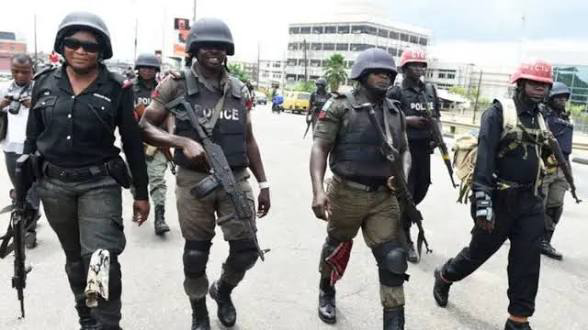
The confusion began on Thursday, September 10, 2026, when personnel from various security and emergency-response agencies were deployed around the airport in what appeared to be a coordinated response to a serious security incident. Videos and unverified posts began circulating on social media platforms, claiming that armed men had invaded the facility and that a full-scale security operation was underway. The narrative spread rapidly, fuelled by the visible presence of armed personnel, the movement of emergency vehicles, and the general atmosphere of tension that hung over the airport environment. For a country already scarred by years of terrorist attacks, banditry, and kidnapping, the reports struck a raw nerve. Travellers scheduled to fly through Asaba began making frantic calls to loved ones. Airport workers were gripped by anxiety. And the public, already weary of insecurity, prepared for the worst.
But the police have now confirmed that there was no attack, no breach, and no invasion. According to the command, the exercise was designed to test and strengthen the preparedness, response capabilities, and inter-agency coordination of security and emergency-response agencies in the event of a real threat. Personnel were deployed to recreate a simulated security incident within the airport environment, with the goal of assessing existing response mechanisms, communication channels, and command and control structures. The exercise also provided an opportunity to evaluate the ability of the participating agencies to work together seamlessly during an emergency, identify areas requiring improvement, and enhance the overall security architecture of one of Nigeria's critical aviation assets. The command described the exercise as a controlled and authorised activity, stressing that it should never have been mistaken for an actual terrorist attack or an invasion of the airport.
The Police Public Relations Officer, ASP Mohammed Adeola, urged members of the public, particularly travellers and airport users, to disregard the false narratives that had circulated on social media and other platforms. He warned against the spread of unverified information capable of creating unnecessary fear and panic, stressing that misinformation could undermine public confidence in the nation's security institutions and disrupt the smooth operation of critical infrastructure. The command also advised the public to seek clarification on security incidents from authorised government and security agencies rather than relying on unverified posts or rumours. It emphasised that accurate information was essential to preventing confusion and supporting efforts to protect airports and other strategic assets.
The incident at Asaba is not an isolated case. It reflects a broader and increasingly troubling pattern in Nigeria's information ecosystem, where unverified reports of security incidents spread faster than official clarifications, creating unnecessary panic and eroding public trust. The country has witnessed repeated instances where rumours of attacks, kidnappings, and invasions have caused stampedes, disrupted businesses, and heightened ethnic and religious tensions. In an environment where genuine security threats are real and recurring, the line between legitimate reporting and dangerous misinformation has become dangerously blurred. The Asaba incident serves as a stark reminder that the consequences of spreading unverified claims are not merely digital; they have real-world impacts on travellers, businesses, and communities.
For the police, the challenge extends beyond debunking false reports. The command must also address the underlying reasons why so many Nigerians were willing to believe that their airport had been attacked. The answer lies in the country's troubling security reality. Nigerians have watched as terrorists attacked airports in Kaduna and Maiduguri, as gunmen stormed schools and places of worship, and as bandits overran military formations. When armed men are spotted at a strategic facility, the instinct to assume the worst is not irrational; it is a product of lived experience. The police have promised that the security situation at the airport remains under control and that all relevant security agencies remain vigilant and committed to safeguarding passengers, personnel, and facilities. But trust must be earned, not simply declared.
The Airport Police Command has also stressed that the simulation exercise was part of ongoing efforts to strengthen national security preparedness and protect critical airport infrastructure. It reassured the public that the agencies involved were fully committed to ensuring the safety and security of all stakeholders and that the exercise would contribute to a more robust and coordinated response capability in the future. The command urged the public to support these efforts by relying on verified information and refraining from the circulation of unverified reports. As Nigeria continues to grapple with complex and evolving security challenges, the ability of security agencies to communicate effectively with the public will be as critical as their operational capacity. The Asaba incident has provided a valuable lesson in that regard, and the hope is that it will lead to better coordination and more transparent communication in the future.
📩 Stone Reporters News | 🌍 stonereportersnews.com
✉️ info@stonereportersnews.com | 📘 Facebook: Stone Reporters News | 🐦 X (Twitter): @StoneReportNew | 📸 Instagram: @stonereportersnews
Add comment
Comments