

Reported by Ariajegbe Sylvia Esezobor
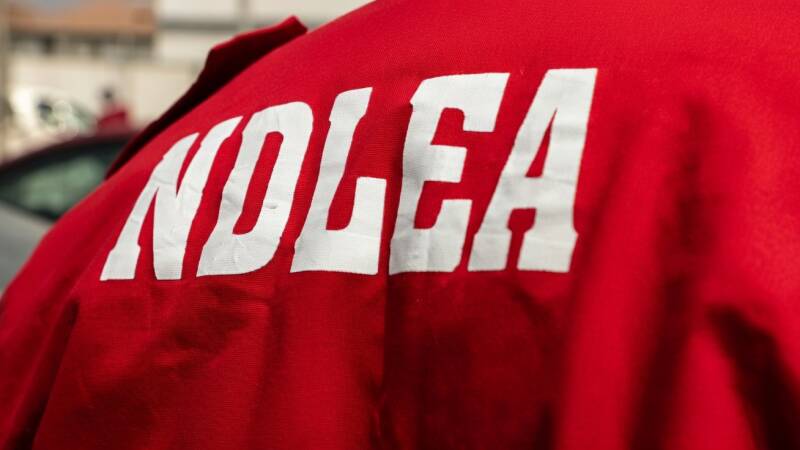
The National Drug Law Enforcement Agency in Delta State has seized illicit drugs with an estimated street value of more than ₦2 billion and destroyed 36.2 hectares of Cannabis Sativa farmland in three separate operations, the command’s commander, Halilu Hamidi, announced on Tuesday, September 15, 2026, at a press briefing in Ogwashi-Uku. The seizures and farm destructions occurred between July 2025 and September 2026, according to the commander, who presented the command’s operational achievements since assuming office in July 2025. Hamidi said the command had concentrated on two objectives: reducing the supply of illicit drugs and preventing people, particularly young Nigerians, from becoming drug users. The figures represent one of the largest single-command seizures reported in Nigeria in recent years and signal the scale of the drug trafficking challenge facing Delta State.
The command’s seizures during the period included 2.446497 tonnes of solid drug exhibits, comprising different categories of narcotics and psychotropic substances. Among the substances recovered were 1.387751 tonnes of Cannabis Sativa, 81.023kg of cannabis seeds, 0.1511kg of cocaine, 0.0317kg of heroin, 0.8906kg of methamphetamine and 2.303kg of Molly. Others included 666.295kg of Tramadol, 16.113kg of Swinol and Rohypnol, 52.940kg of Diazepam and Bromazepam, 5,190.8kg of Exol, 0.7395kg of Cocodamol and 47.560kg of nitrous oxide, popularly known as laughing gas. The commander further disclosed that operatives recovered 1,304.630 litres of liquid drug exhibits, including 819.327 litres of Codeine, 14.310 litres of Pentazocine Injection, 0.013 litres of Diazepam Injection and 0.403 litres of Tramadol Injection. Also recovered was 54.993 litres of a mixture of cannabis and dry gin.
The destruction of cannabis farms was carried out in three locations across the state. Operatives destroyed 10.2 hectares of suspected cannabis plantation in Emu-Obiogo community in Ndokwa West Local Government Area, 11 hectares in Obiaruku in Ukwani Local Government Area and 15 hectares in Orogun in Ughelli North Local Government Area. The three operations brought the total suspected cannabis plantations destroyed within the period to 36.2 hectares. The command said the operations were part of an intensified effort to prevent Delta State from becoming a major transit route, cultivation centre, storage point and distribution hub for illicit drugs.
Hamidi said the command’s operations had uncovered the extent to which traffickers were attempting to exploit Delta’s major highways and commercial centres to move illicit substances. One of the major operations involved a raid on a warehouse at Oko Market in Asaba, where illicit substances allegedly meant for distribution were stored. The exhibits recovered from the warehouse were estimated to have a street value of more than ₦150 million. In another operation, NDLEA operatives intercepted a truck conveying illicit substances along the Benin–Asaba Expressway. At Issele-Uku, the operatives intercepted a truck loaded with Codeine worth an estimated ₦150 million on the illicit market. Another truck was intercepted at Agbor, along the Asaba–Benin Expressway, carrying various psychotropic substances estimated at ₦100 million. The command also intercepted two commercial buses along the Onitsha–Asaba Expressway, recovering different psychotropic substances with an estimated street value of more than ₦300 million. The seizures, according to the NDLEA, point to the increasing attempts by drug trafficking networks to exploit Delta’s position as a major commercial corridor.
The command’s enforcement efforts have also produced convictions. Hamidi said the command secured 235 convictions within the period under review, with 204 cases still pending before the Federal High Court in Asaba and Warri. The command counselled 623 drug users and rehabilitated 14 persons. The commander expressed concern over the involvement of women in drug trafficking, revealing that women constituted a significant proportion of persons arrested in connection with illicit drug activities in the state. He said the development required a stronger and more coordinated response from government agencies, families, schools, non-governmental organisations, community leaders and other stakeholders. He called for sustained collaboration between the NDLEA and the Delta State Government, civil society organisations and other relevant institutions to intensify the campaign against substance abuse and trafficking.
The Delta State Government has aligned its own efforts with the NDLEA’s enforcement work. The Director-General of the Delta State Bureau for Orientation and Communications, Dr Fred Latimore Oghenesivbe, who led a management team on a working visit to the command in Ogwashi-Uku, commended the NDLEA for its efforts in combating drug trafficking and substance abuse. He briefed the command on preparations for the second phase of the Drug-Free Delta Campaign, which is being implemented by the bureau in collaboration with the NDLEA. The second phase will be formally flagged off at Dennis Osadebay University, Asaba, on September 21, 2026, with activities expected to take place across the three senatorial districts of the state. Oghenesivbe described the campaign as a major public enlightenment and behavioural-change initiative designed to raise awareness of the dangers associated with drug abuse and promote healthier choices, particularly among young people.
The state government is also considering the introduction of Drug Integrity Tests in tertiary institutions as a possible precondition for admission and graduation, subject to necessary approvals and policy considerations. Oghenesivbe said the NDLEA’s Drug Integrity Test initiative should be viewed beyond routine screening, describing it as an important mechanism for the early detection of drug use, intervention, counselling and rehabilitation. He said the initiative, alongside the NDLEA’s Visa Clearance programme, would contribute to broader efforts to discourage drug use and trafficking, promote responsible behaviour and protect Nigeria’s international image. The bureau chief noted that young people remained particularly vulnerable to the damaging effects of substance abuse and therefore required early intervention, guidance and support to prevent drug use from undermining their education, health, relationships and future prospects.
The command’s preventive efforts have also extended to schools and communities. Hamidi said the agency had strengthened preventive drug education through the establishment of War Against Drug Abuse Clubs in secondary schools across the state. The command is also partnering with the State Drug Control Committee to stamp out drug abuse among students. These clubs provide safe platforms where students are equipped with the knowledge, values and life skills needed to resist drug use and make informed decisions about their future. In partnership with the MTN Foundation, the command carried out a sensitisation walk which served as a reminder that the fight against drug abuse requires the active participation of every member of society. The advocacy programme has been extended to tertiary institutions, religious organisations, workplaces and community gatherings.
The figures released by the Delta command are striking, but they also raise questions about the scale of the challenge. In July 2026, the command had reported seizing ₦450 million worth of illicit drugs and destroying the same 36.2 hectares of cannabis farms over a one-year period ending in June 2026. The September 2026 briefing updates those figures to more than ₦2 billion, covering a slightly longer period through September 2026. The discrepancy reflects the difference between the June 2026 reporting period and the expanded timeframe disclosed in September. The command has not explained the specific operations that contributed to the additional ₦1.55 billion in seizures, but the briefing’s detailed breakdown of exhibits and interceptions provides a clear picture of the enforcement activity that produced the higher figure.
For the people of Delta State, the seizures represent both a success and a warning. The removal of more than ₦2 billion worth of illicit drugs from circulation is a significant blow to trafficking networks operating in the state. The destruction of 36.2 hectares of cannabis farms disrupts the supply chain at its source. But the involvement of women in trafficking, the persistence of major trafficking routes through Delta’s highways and the scale of the seizures suggest that the drug trade remains deeply entrenched. The command’s emphasis on prevention, counselling and rehabilitation, alongside enforcement, reflects a recognition that arrests and seizures alone cannot solve the problem. The Drug-Free Delta Campaign, the War Against Drug Abuse Clubs and the proposed Drug Integrity Tests in tertiary institutions are all part of a broader strategy to reduce demand and build resilience in communities.
The coming months will test whether that strategy produces results. The second phase of the Drug-Free Delta Campaign begins on September 21, and the command will continue its intelligence-led operations across the state. Hamidi said the command would continue to work closely with all stakeholders to build communities where drugs are more difficult to access and less attractive to potential users. For now, the figures speak for themselves: more than ₦2 billion in seizures, 36.2 hectares of cannabis farms destroyed, 235 convictions secured, 204 cases pending, 623 drug users counselled and 14 rehabilitated. The war on drugs in Delta State is far from won, but the command has made its position clear. It will keep pressing.
📩 Stone Reporters News | 🌍 stonereportersnews.com
✉️ info@stonereportersnews.com | 📘 Facebook: Stone Reporters News | 🐦 X (Twitter): @StoneReportNew | 📸 Instagram: @stonereportersnews
Add comment
Comments