

Reported by Ariajegbe Sylvia Esezobor
Police in Akwa Ibom State, in Nigeria's oil-rich South-South region, have issued a series of firm warnings against electoral violence as political activity intensifies ahead of the 2027 general elections, signaling growing concern among security agencies over the risk of unrest in one of the country's most politically competitive states.
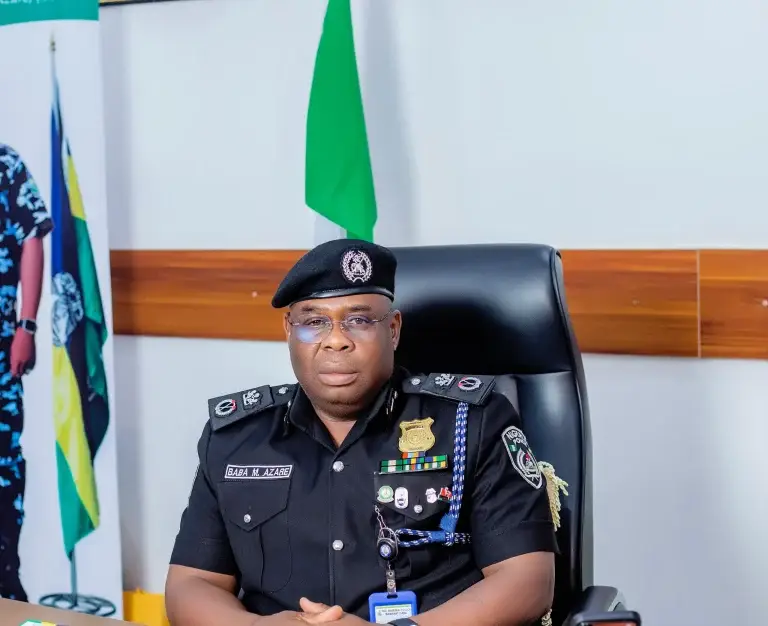
The warnings have come from the Commissioner of Police, Baba Mohammed Azare, in a coordinated push that has included a directive requiring political parties to notify the police before holding rallies, an intelligence-driven crackdown on illegal weapons, a televised show of force in the state capital Uyo, and a peace accord signed by political parties, election officials, traditional rulers and civil society groups. Taken together, the measures reflect an effort by the Akwa Ibom Police Command to get ahead of tensions before campaigning reaches its peak, rather than responding after violence has already occurred.
Speaking at a security forum held at the Command Headquarters in Ikot Akpan Abia, Uyo, which coincided with International Youth Day commemorations, Azare directly addressed the state's youth population, urging them not to allow themselves to be recruited as instruments of political violence. He described political thuggery, cultism and vote-related criminality as threats to the state's future and appealed to young people to instead channel their energy into civic participation and protecting public infrastructure. He also called on political actors and community leaders to stop exploiting young people as foot soldiers during campaign season, arguing that electoral contests should be won through ideas and public service rather than intimidation.
That appeal has been backed by more tangible enforcement action. In early September, police in Ikot Ekpene Local Government Area arrested a 23-year-old suspected cult leader, identified as Mfon Essien of Ikot Inyang Itak in neighboring Ikono Local Government Area, after he was found in possession of a locally made shotgun and live ammunition. Police said the arrest followed intelligence supplied by residents and formed part of a broader operation to recover illegal firearms across crime-prone communities before the election season escalates. Officials framed the raids as both a deterrent and an early-warning mechanism, designed to intercept weapons before they can be used to disrupt campaign events or polling activities.
In late August, the Command formalized its posture toward political gatherings with a written directive requiring all parties, support groups and organized bodies to notify police in advance of any rally, procession or large public meeting. According to the police, the rule is not intended to restrict lawful political activity but to prevent scheduling clashes between rival groups, manage traffic, and allow for adequate security deployment. Area commanders, divisional police officers and tactical commanders across all 31 local government areas in the state have reportedly been instructed to step up intelligence gathering and maintain visible security around political events. The Command has stated plainly that any action capable of triggering a breakdown of law and order would be met with a firm response.
To reinforce that message publicly, the police staged a large-scale "show of force" operation across Uyo, deploying personnel, patrol vehicles and other assets to major roads and strategic locations in the state capital. Officials described the exercise as a confidence-building measure meant to reassure residents, political parties and candidates that the Command is prepared to maintain order throughout the campaign period. Azare reiterated that the police would remain professional, neutral and non-partisan, insisting that no political ambition justifies the loss of a citizen's life, while warning thugs and sponsors of violence that the Command would not tolerate attempts to disturb the state's peace.
The security push culminated in a peace accord signing in Uyo, bringing together political party leaders, representatives of the Independent National Electoral Commission, sister security agencies, traditional and religious leaders, civil society organizations and journalists. Azare described the accord as a demonstration of collective commitment to protecting peace and democratic stability, urging parties to embrace tolerance and issue-based campaigning. He acknowledged that political competition is a natural feature of democracy but stressed that it must be conducted within legal bounds.
These state-level efforts mirror a broader national pattern. At a similar signing in the capital, INEC chairman Joash Amupitan told political figures, including President Bola Tinubu's representatives and other national candidates, that campaigns should function as competitive contests rather than confrontations, while flagging rising concerns over hate speech, misinformation and identity-based attacks in Nigerian politics. Nigeria's police leadership has separately pledged nationwide security deployments to protect electoral commission staff and facilities as the country heads toward a packed election calendar that includes area council polls in the capital territory, by-elections in Rivers and Kano states, and off-cycle governorship elections.
Governor Umo Eno has echoed the police's message at the state level, warning during a church service in Uyo that Akwa Ibom must not return to earlier periods of political division and violence, and calling on residents to work together peacefully as the state approaches a competitive re-election cycle. Political analysts note that Akwa Ibom's elections have historically drawn close contests between the ruling party and opposition groups, and that past election cycles in the state have not been free of tension, including a previous incident in which some major party candidates declined to attend a scheduled peace accord ceremony.
Despite the accord and the police's assurances, questions remain about how consistently such commitments are enforced once campaigning intensifies. Reports of voter intimidation and unresolved cases of election-related violence in parts of the country, including an earlier incident in Akwa Ibom's Etim Ekpo area involving armed attacks on election officials, have raised concerns among observers about accountability gaps. For now, however, Akwa Ibom's police leadership has signaled that it intends to treat the run-up to 2027 as a test of whether early intervention, sustained visibility and public commitments from political stakeholders can keep the state's campaign season peaceful.
📩 Stone Reporters News | 🌍 stonereportersnews.com
✉️ info@stonereportersnews.com | 📘 Facebook: Stone Reporters News | 🐦 X (Twitter): @StoneReportNew | 📸 Instagram: @stonereportersnews
Add comment
Comments