

Reported by Ariajegbe Sylvia Esezobor
All On, a renewable energy investment firm backed by Shell, has committed five million dollars to PowerGen Renewable Energy Nigeria Limited to expand mini-grid projects across Nigeria, a move expected to deliver electricity to about 41,000 people and create roughly 470 jobs in underserved communities. The investment, structured as mezzanine funding, was announced on Tuesday, September 15, 2026, and completes PowerGen’s Series C capital raise, which also attracted contributions from ElectriFI, Impact Fund Denmark, the Sustainable Energy Fund for Africa and InfraCo. The deal is the latest in a growing wave of private capital flowing into Nigeria’s decentralised renewable energy sector, as investors and development finance institutions race to close one of the world’s largest electricity access gaps.
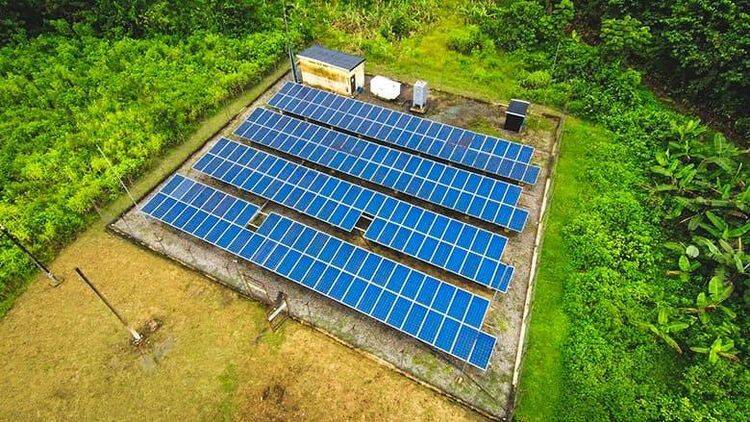
The funding will support the development of isolated and interconnected mini-grid projects serving households, commercial establishments and industrial customers. According to All On, the investment is expected to facilitate up to 6,000 new electricity connections, generate up to nine megawatts of capacity and deliver a combined energy impact exceeding 17 megawatts and megawatt-hours. PowerGen, which operates in Nigeria, Kenya, Sierra Leone and the Democratic Republic of Congo, has already demonstrated its capacity in Nigeria through the Toto Community Mini Grid Project in Nasarawa State, described as the country’s first interconnected hybrid solar mini-grid. That project, which won Mini-Grid Project of the Year in 2023, serves as a proof of concept for the model the company now intends to scale.
Caroline Eboumbou, Chief Executive Officer of All On, framed the investment as a vote of confidence in a proven platform. “PowerGen has demonstrated that renewable energy solutions can be efficiently deployed to serve communities and businesses where reliable electricity remains a challenge,” she said. “This investment reflects our confidence in the company’s ability to build on that experience and take its model further across Nigeria.” Oluseye Bassir, Investment Manager at All On, added that what stood out was the depth of experience behind PowerGen and its ability to operate across different renewable energy models. “Our investment alongside the Series C investors gives PowerGen additional capital to move more projects from development into delivery, which of course is where real impact is created,” he said. Aaron Cheng, CEO of PowerGen, said Nigeria remained a key market for the company and that the funding would support its efforts to expand access to clean, reliable and affordable electricity.
The investment lands against a stark backdrop. Nigeria has the world’s largest electricity access deficit, with more than 85 million people, roughly 40 per cent of the population, lacking reliable grid electricity. Even those connected to the national grid endure frequent outages, forcing households and businesses to rely on expensive and polluting diesel generators. A 2026 African Economic Outlook report found that 70.7 per cent of Nigerian companies depend on generators for their power needs, spending over three per cent of annual sales on alternative sources. The Rural Electrification Agency has estimated that unreliable electricity costs Nigeria about 29 billion dollars annually, roughly two per cent of GDP. In this context, decentralised renewable energy systems such as solar hybrid mini-grids have moved from niche solutions to central pillars of the country’s electrification strategy.
The regulatory environment has also shifted in favour of larger mini-grid projects. In April 2026, the Nigerian Electricity Regulatory Commission issued the Mini-Grid Regulations 2026, raising the threshold for isolated mini-grids from one megawatt to five megawatts, and allowing interconnected mini-grids of up to ten megawatts. The reforms, which the Renewable Energy Association of Nigeria described as crucial drivers for expanding energy access, have unlocked larger-scale projects and attracted fresh capital. The Rural Electrification Agency has since reported that 48 interconnected mini-grid projects are under construction across 19 states. In August 2026, President Bola Tinubu approved 750 million dollars for the deployment of 1,350 mini-grids to electrify over 2.5 million Nigerians, while the REA secured a 50 billion naira financing agreement with Alpha Morgan Bank to support renewable energy projects in communities with limited or no access to electricity. Development finance institutions have moved in tandem. The International Finance Corporation, with support from the Government of Canada, announced a five million dollar investment in Husk Power Energy Systems Nigeria Limited to support up to 108 solar hybrid mini-grids in Northern Nigeria, expected to deliver approximately 28,750 connections and reach around 115,000 people. All On and Energise Africa have also jointly invested four million dollars in solar-powered mini-grids across 19 communities in Jigawa and Bauchi States, a project expected to impact 100,000 people.
The PowerGen investment is smaller in scale than some of these programmes, but its significance lies in what it represents: the completion of a Series C capital raise that brings together a mix of impact investors, development finance institutions and private capital. The involvement of ElectriFI, Impact Fund Denmark, SEFA and InfraCo alongside All On suggests that PowerGen has cleared the due diligence and commercial thresholds required to attract a syndicate of credible investors. For a sector that has historically struggled to move from pilot projects to bankable pipelines, the ability to close a Series C round is a meaningful signal. It indicates that investors see a viable path to scale in Nigeria’s mini-grid market, even amid currency volatility, regulatory uncertainty and the logistical challenges of serving remote communities.
The job creation projection of approximately 470 positions is modest but locally significant. Mini-grid projects generate employment in construction, operation, maintenance, metering, customer service and small-business development. The productive use of energy, such as powering agro-processing equipment, welding machines, refrigerators and sewing machines, can stimulate local economic activity beyond the direct footprint of the mini-grid itself. For communities that have never had reliable electricity, the arrival of a mini-grid can transform education, healthcare and enterprise. Students can study after dark, clinics can refrigerate vaccines, and small businesses can extend operating hours. These are the tangible benefits that investors and policymakers cite when making the case for decentralised renewable energy.
Challenges remain. Mini-grid developers in Nigeria face persistent hurdles, including access to long-term local currency financing, tariff affordability for low-income customers, grid encroachment into mini-grid territories, and the logistical difficulty of deploying equipment in remote areas. The NERC 2026 regulations address some of these issues by creating clearer frameworks for interconnection and compensation, but implementation will determine whether the reforms deliver. All On’s investment in PowerGen is a bet that the company’s operational experience, combined with a more supportive regulatory environment, can overcome these obstacles. If PowerGen delivers on its targets, the project will strengthen the case for further investment. If it stumbles, the sector’s credibility with investors could suffer. The coming months will show which outcome prevails.
📩 Stone Reporters News | 🌍 stonereportersnews.com
✉️ info@stonereportersnews.com | 📘 Facebook: Stone Reporters News | 🐦 X (Twitter): @StoneReportNew | 📸 Instagram: @stonereportersnews
Add comment
Comments