

Reported by Ariajegbe Sylvia Esezobor
A political endorsement issued by more than 600 university lecturers in Northern Nigeria has ignited a national debate over academic neutrality, drawing sharp criticism from opposition figures and prompting the country's main university lecturers' union to publicly distance itself from the declaration, even as the academic who read the communiqué has defended it as a fact-based assessment rather than a partisan gesture.
The endorsement emerged from a closed-door meeting held on September 10 at the Umaru Musa Yar'Adua Centre in Kaduna, convened by Ibrahim Masari, the Special Adviser to President Bola Ahmed Tinubu on Political Matters. Organizers said the gathering brought together senior academics from public universities across all 19 northern states and the Federal Capital Territory to deliberate on the country's political direction ahead of the 2027 general elections. Journalists were initially barred from the hall but were later allowed in to witness the reading of the communiqué at the conclusion of the meeting.
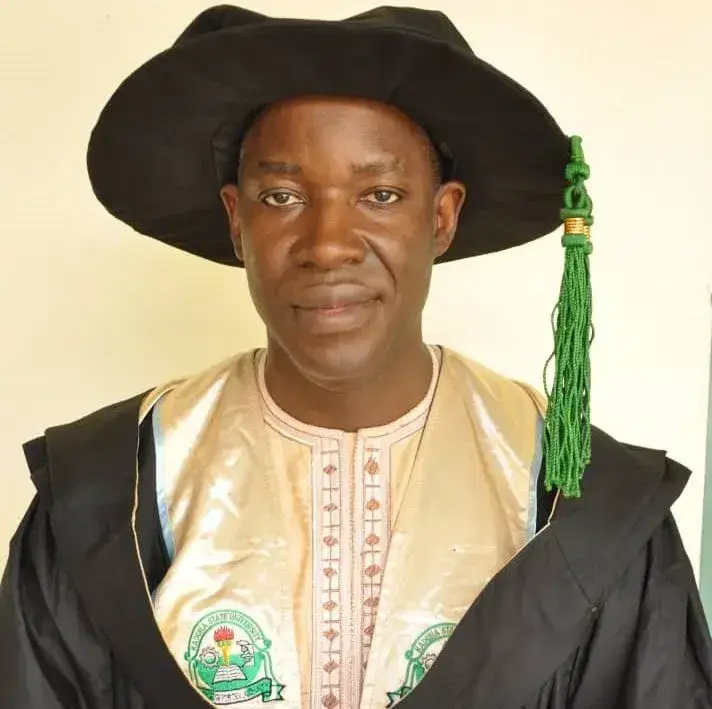
That communiqué was read by Professor Abdullahi Ibrahim Musa, Vice Chancellor of Kaduna State University, who told reporters the academics had critically examined the Tinubu administration's record since it took office in May 2023, focusing on economic, security, infrastructural and social conditions, with particular attention to the situation in Northern Nigeria. According to Musa, the scholars acknowledged that Tinubu inherited an economy already facing fiscal, monetary and structural strain, alongside insecurity, infrastructure gaps and shortfalls in human capital development. The communiqué reportedly conceded that some of the administration's economic reforms had deepened short-term hardship for ordinary Nigerians, citing higher living and transportation costs and persistent inflationary pressure.
Despite those acknowledged difficulties, the academics concluded that the balance of evidence favored a second term for the president. In a follow-up interview, Musa said the endorsement rested on data and figures rather than sentiment, pointing to ongoing infrastructure projects such as the Abuja-Kaduna-Kano Expressway and related railway construction, expanded student loan disbursements through NELFUND, and increased intervention funding channeled through the Tertiary Education Trust Fund. He also argued that food prices had eased compared with levels recorded when Tinubu assumed office. Musa framed the process as a data-driven exercise carried out by scholars accustomed to basing conclusions on evidence, and said the group remained open to differing interpretations of the same figures. He confirmed that the final tally of participating academics exceeded 600 across the affected states and the capital territory.
The meeting was attended by a notable roster of political figures, including Kaduna State Governor Uba Sani, Zamfara State Governor Dauda Lawal, Yobe State Governor Mai Mala Buni, Borno State Governor Babagana Zulum, and Gombe State Governor Inuwa Yahaya. Also present were the Minister of Defence, Bello Matawalle, the Minister of Housing, Muttaqha Rabe Darma, and former Katsina State Governor Aminu Bello Masari. The presence of sitting governors and a cabinet minister at what was framed as an academic deliberation has since become a central point of contention in the reaction that followed.
The Academic Staff Union of Universities moved quickly to separate itself from the declaration. Union president Chris Piwuna said the endorsement did not reflect the union's position and could not be attributed to it under any circumstance, stressing that the organization's constitution bars it from taking partisan stances. He acknowledged that individual lecturers retain the legal right to support any political party or candidate but insisted that ASUU as a body has never endorsed a presidential candidate and does not intend to start now. His comments were aimed at preventing the impression that the union collectively backs Tinubu's re-election bid.
Sharper criticism came from the camp of Atiku Abubakar, the presidential candidate of the African Democratic Congress, who raised concerns about the implications of the endorsement for the credibility of the 2027 elections. Speaking through his senior special assistant on public communication, Phrank Shaibu, Atiku argued that academics who have publicly declared partisan allegiance should not later be entrusted with sensitive roles in the Independent National Electoral Commission's process, including positions as returning officers or collation officers. He said electoral credibility depends not only on actual neutrality among those administering elections but also on the public's confidence in that neutrality. Shaibu further argued that the involvement of elected governors and a serving minister in the gathering was troubling, describing it as evidence of the depth of political pressure being applied ahead of the vote. He called on the electoral commission to take note and exclude academics with declared partisan positions from sensitive election-day responsibilities.
The Allied Peoples Movement echoed similar unease. The party's national publicity secretary, Abubakar Yusuf, said academics are expected to serve as independent critics of government performance rather than issue blanket endorsements, comparing the lecturers' declaration to earlier controversial endorsements by religious leaders. He argued that such backing was difficult to reconcile with the everyday hardship, insecurity and policy criticism voiced by ordinary Nigerians, including complaints raised by Catholic and other religious groups over the cost of living.
The controversy unfolds against a broader backdrop of intensifying political maneuvering ahead of the 2027 election, in which the governing All Progressives Congress has been actively courting endorsements from influential blocs across the country, including a separate declaration of support from the party's North West zonal leadership in Kaduna. Political observers have noted that endorsement announcements of this kind have become a recurring feature of the current campaign period, with various professional, religious and community groups issuing similar statements in recent months. For the university lecturers involved, however, the episode has placed an unusual spotlight on the question of where academic independence ends and political participation begins, a debate that is likely to continue as campaigning for the 2027 elections gathers pace across the country.
📩 Stone Reporters News | 🌍 stonereportersnews.com
✉️ info@stonereportersnews.com | 📘 Facebook: Stone Reporters News | 🐦 X (Twitter): @StoneReportNew | 📸 Instagram: @stonereportersnews
Add comment
Comments