

Reported by Ariajegbe Sylvia Esezobor
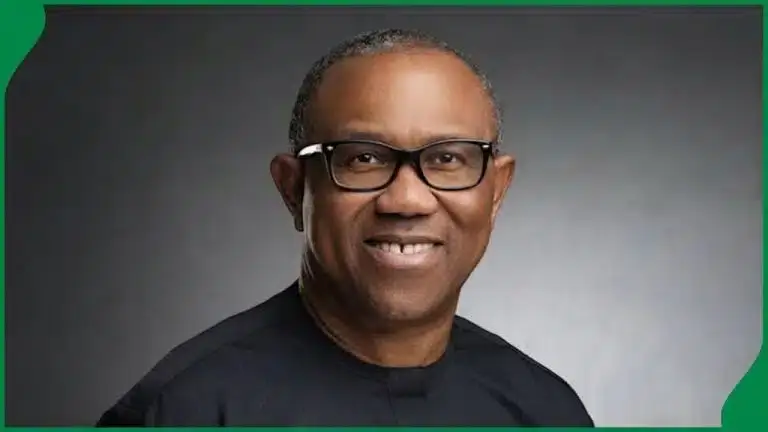
The media office of Labour Party leader Peter Obi has raised alarm over the recent endorsement of President Bola Ahmed Tinubu's re-election bid by more than 600 university academics from Northern Nigeria, describing the development as a potential early move to compromise the credibility of the 2027 presidential election.
In a statement issued on Tuesday and signed by its spokesman, Idris Zekeri Jnr., the Peter Obi Media Office said it had become aware of reports that roughly 600 academics from public universities across the country's northern states had thrown their support behind Tinubu. The office called the endorsement "profoundly troubling," arguing that it signified an attempt to build and legitimize a network of partisan actors well ahead of the vote. It stressed that the individuals involved were not simply private citizens exercising ordinary political rights, but members of an institution that has historically supplied electoral officials, including returning and collation officers, for Nigerian elections. According to the statement, that overlap between academic endorsement and eventual electoral duty raises an unavoidable question about whether groundwork for manipulating the 2027 results is already being laid.
The Obi camp argued that when academics who could later be assigned sensitive roles in the vote-counting process openly organize around a single candidate, the risk of conflict of interest becomes difficult to dismiss. It warned that such circumstances could compromise the integrity of the electoral process and erode public confidence in the neutrality of officials responsible for collating and announcing results. The statement further claimed that electoral rigging is rarely a same-day event, suggesting instead that the identification and positioning of sympathetic individuals can begin months or years in advance of an election.
To address these concerns, the media office called on the Independent National Electoral Commission to publicly disclose the identities of all academics involved in the endorsement and to formally bar them from serving as returning officers, collation officers or in any other electoral capacity during the 2027 elections. It also urged the commission to publish the full list of prospective collation and returning officers well in advance of future elections, arguing that early disclosure would allow political parties, civil society groups and the public to independently assess the neutrality of those set to administer the vote. Beyond INEC, the statement called on university governing councils and academic bodies nationwide to adopt stricter conflict-of-interest rules preventing staff from using their academic positions to facilitate partisan political mobilization. The office closed its statement by urging Nigerians to remain vigilant, saying that preparations for electoral manipulation could begin long before voting day itself.
The endorsement that prompted this reaction emerged from a closed-door meeting held on September 10 at the Umaru Musa Yar'Adua Centre in Kaduna, convened by Ibrahim Masari, the Special Adviser to the President on Political Matters. The gathering, held under a theme centered on the administration's three years in office and the road to 2027, brought together senior academics from universities across the 19 northern states and the Federal Capital Territory. Journalists were kept out of the hall while deliberations took place but were later allowed in to hear the resulting communiqué. That communiqué was read by Professor Abdullahi Ibrahim Musa, Vice Chancellor of Kaduna State University, who said the scholars had reviewed the administration's record since May 2023 across the economy, security, infrastructure and social welfare. The academics reportedly acknowledged that Tinubu inherited significant economic and security challenges and that some of his reforms had deepened short-term hardship, but concluded that achievements in areas such as road and rail infrastructure, student loan disbursement through NELFUND and education intervention funding justified their support. The group stated that its endorsement should not be regarded as unconditional, calling on the government to do more to tackle food prices, unemployment and insecurity. The event was attended by several sitting governors, including those of Kaduna, Zamfara, Yobe, Borno and Gombe states, along with federal ministers and a former state governor.
The endorsement has drawn criticism from multiple directions beyond the Obi camp. The Academic Staff Union of Universities moved quickly to distance itself from the declaration, with union president Chris Piwuna insisting that ASUU remains apolitical under its constitution and has never endorsed, and will never endorse, any political candidate, even though individual members retain the right to support parties of their choosing. Atiku Abubakar, the African Democratic Congress presidential candidate, separately argued through his spokesman that academics who have publicly declared political allegiance should not later be trusted with sensitive electoral responsibilities, and called on INEC to exclude them from returning officer and collation duties. The Allied Peoples Movement voiced similar discomfort, suggesting that academics are expected to serve as independent critics of government rather than issue blanket endorsements.
For its part, the Kaduna State University vice chancellor has maintained that the process behind the endorsement was analytical rather than political, insisting that the conclusions were based on data and performance indicators rather than personal loyalty to the president. He noted that the group remained open to alternative interpretations of the same evidence and framed the exercise as one grounded in the scholarly habit of drawing conclusions from figures rather than sentiment.
The controversy adds to a growing debate in Nigeria over the boundaries between academic independence and political participation as the country heads toward the 2027 general elections, with opposition figures increasingly scrutinizing the role that professional and institutional bodies may play in shaping public perception, and potentially the administration, of the vote. Whether INEC will act on the calls for disclosure and disqualification made by the Obi Media Office and other critics remains to be seen, but the episode has intensified pressure on the commission to clarify its criteria for selecting electoral personnel well ahead of the polls.
📩 Stone Reporters News | 🌍 stonereportersnews.com
✉️ info@stonereportersnews.com | 📘 Facebook: Stone Reporters News | 🐦 X (Twitter): @StoneReportNew | 📸 Instagram: @stonereportersnews
Add comment
Comments