

Reported by Ariajegbe Sylvia Esezobor
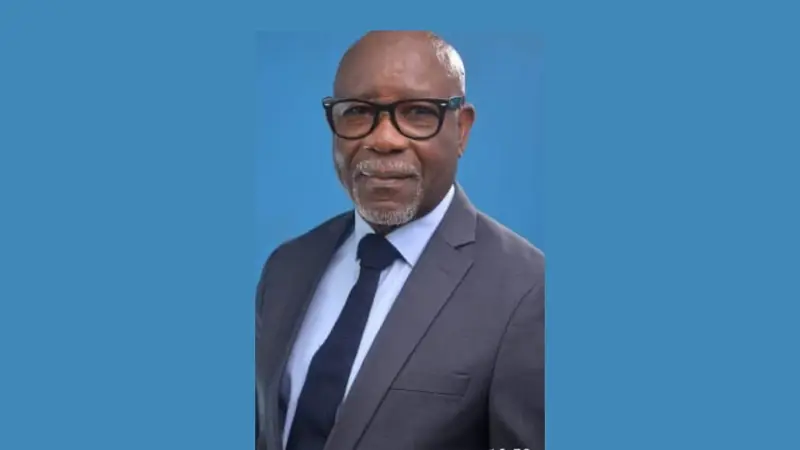
A presidential aspirant of Nigeria's Peoples Redemption Party has thrown down a challenge to the country's political establishment, demanding a fundamental shift in how power and opportunity are shared across Africa's most populous nation. Engr. (Dr.) Yakubu Mohammed Kingsley, who is awaiting a Federal High Court judgment on a dispute over the party's presidential primary, used a statement released in Abuja on Wednesday to outline a vision he calls the YMK Nigeria Project, built around broad-based governance and greater inclusion for communities that have long felt locked out of national decision-making.
Kingsley's intervention comes at a sensitive moment in Nigeria's political calendar. The Independent National Electoral Commission has lifted the ban on campaigns ahead of the 2027 general elections, and political alignments are rapidly taking shape. Yet the country remains gripped by economic hardship, rising inflation, high unemployment, widespread insecurity, and a growing sense among many citizens that government serves a narrow elite rather than the broader population. Into that volatile mix, Kingsley has introduced an argument that is both simple and politically charged: Nigeria belongs to all its citizens, and its government must reflect that reality.
The aspirant's central proposition is that public appointments should be based on competence, integrity and accountability rather than ethnicity, religion, political affiliation or personal loyalty. He warned that public offices should not be used as political rewards, and he insisted that no region, state, community, gender or generation should be systematically excluded from national participation. To achieve this, he proposed a transparent public appointments framework through which Nigerians could assess the geographical, professional and other dimensions of representation in government, a mechanism he said would reduce the accusations and counter-accusations that have long poisoned debates over federal appointments.
Perhaps the most striking element of Kingsley's message is his call to rescue the federal character principle from what he described as its misuse in political arguments. The principle, enshrined in Nigeria's constitution, is meant to ensure equitable representation across the country's diverse regions and ethnic groups. In practice, however, it has often been invoked selectively, weaponised during disputes, and ignored when convenient. Kingsley argued that federal character must become a transparent and measurable instrument of governance, not a rhetorical device. His guiding principle, he said, would be simple: merit, integrity, representation, transparency and accountability.
But Kingsley is not limiting his vision to appointments alone. He argued that inclusion must extend into policymaking and consultation with the full breadth of Nigerian society. He listed political parties, professional bodies, religious organisations, traditional institutions, civil society groups, academia, labour, the private sector, women and youth organisations, persons with disabilities, Nigerians in the diaspora and community groups as legitimate contributors to national development. While government must remain constitutionally neutral, particularly in matters of religion and partisan politics, he said it must maintain structured channels for consultation with these constituencies and draw from their knowledge, experience and reach. The YMK administration, he pledged, would promote a broad-based national consultation mechanism through which these interests could contribute to policymaking, monitor implementation and provide constructive feedback.
The aspirant was equally direct about where governance should not be confined. Governance, he said, must not be limited to Abuja or the political class. Government must listen to the people it serves, who experience the consequences of its decisions. That principle, he argued, should extend to communities where Nigeria's natural resources are extracted. Communities hosting petroleum, gas and solid minerals, he said, should have a greater stake in the development arising from those resources, a position that echoes long-standing grievances in the Niger Delta and other resource-rich regions.
Kingsley reserved particular attention for minority and indigenous communities whose voices, he said, are sometimes lost in Nigeria's larger ethnic and regional politics. He listed communities including the Berom, Gbagyi, Tiv, Idoma, Igala, Ebira, Nupe, Jukun, Tangale, Waja, Bachama and Kanuri in different parts of the North, as well as the Ijaw, Efik, Ibibio, Annang, Ogoni, Itsekiri, Urhobo, Isoko and Esan communities in other parts of the country. No Nigerian is too small to matter, and no community is too small to be heard, he said. It was a line clearly designed to resonate beyond the major ethnic blocs that have historically dominated Nigerian politics.
The statement is the latest in a series of interventions by Kingsley, who has been positioning himself as a voice for issue-based politics ahead of the 2027 elections. He has previously warned against political bloodshed, cautioned against character assassination during campaigns, and called for credible, violence-free polls. But his latest message carries a sharper edge. It is not merely a plea for peaceful conduct. It is a critique of the structure of governance itself, and an argument that Nigeria's diversity, often treated as a source of tension, should be harnessed as a source of national strength, unity, creativity and shared prosperity.
That argument carries particular weight because Kingsley is not speaking from a position of victory. He is currently challenging in court the declaration of former Cross River State Governor Donald Duke as the winner of the PRP's May 25 presidential primary. The Federal High Court has adjourned until November 2 for judgment in the suit, which accuses Duke of failing to meet key requirements, including party membership registration and compliance with screening guidelines. Kingsley's own path to the PRP's presidential ticket remains legally uncertain, yet he has continued to articulate a national vision that extends well beyond his personal ambition.
Whether Kingsley's vision translates into electoral traction is another matter. The PRP is not one of Nigeria's dominant parties, and the 2027 presidential race is already crowded with aspirants from larger political formations. But his message speaks to a real and growing frustration in a country where many citizens feel that government has become a distant, self-serving enterprise. His call for measurable federal character, transparent appointments and structured consultation with excluded communities touches on grievances that transcend party lines. It remains to be seen whether that message will resonate with voters, or whether it will be dismissed as another aspirant's rhetoric. What is clear is that Kingsley has placed a question at the centre of the 2027 conversation that Nigeria's political class would rather avoid: if the country belongs to all its citizens, why does its government so often look like it belongs to only a few?
📩 Stone Reporters News | 🌍 stonereportersnews.com
✉️ info@stonereportersnews.com | 📘 Facebook: Stone Reporters News | 🐦 X (Twitter): @StoneReportNew | 📸 Instagram: @stonereportersnews
Add comment
Comments