

Reported by Ariajegbe Sylvia Esezobor
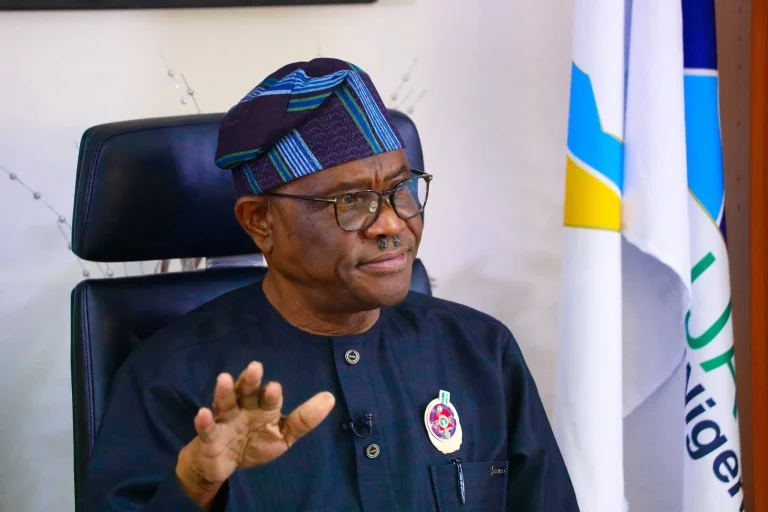
A former South-East spokesman for President Bola Tinubu’s 2023 campaign has offered a detailed explanation for the growing rift between the Minister of the Federal Capital Territory, Nyesom Wike, and governors elected on the platform of the All Progressives Congress. Denge Josef Onoh, who also served as Chairman of the Forum of Former Members of the Enugu State House of Assembly, said the governors’ opposition to Wike stems from what he described as the minister’s long history of using political alliances to weaken established structures. Onoh’s intervention came in a statement made available to journalists on Thursday, September 17, 2026, barely 24 hours after Wike described the governors as “politically lazy” for rejecting his emerging Rainbow Coalition ahead of the 2027 general elections.
At the heart of the dispute is Wike’s Rainbow Coalition, a political arrangement designed to mobilise support for President Tinubu’s re-election. Wike insists the coalition is not an alliance with the APC and does not prevent other parties from fielding candidates. But the Progressive Governors Forum, led by Imo State Governor Hope Uzodimma, declared that it would not participate in, support or endorse any arrangement that could undermine the party or its candidates at any level. The governors’ position drew a sharp response from Wike, who questioned their political records, particularly Uzodimma’s ability to secure support for Tinubu in the 2023 presidential election. The public exchange has exposed a deepening fault line within the ruling party and placed President Tinubu in what analysts describe as a difficult position between his minister and the governors whose support he will need in 2027.
Onoh’s statement seeks to explain why the governors are so alarmed. He said Wike’s political platform previously fielded 405 National Assembly candidates across the 109 Senate and 360 House of Representatives seats, and 23 governorship candidates in states holding gubernatorial elections. “The reason is simple,” Onoh said. “Wike’s PDP fielded 405 National Assembly candidates to contest across the 109 Senate and 360 House of Representatives seats, and 23 governorship candidates across the states holding gubernatorial elections.” He argued that the governors have legitimate reasons to be concerned about an arrangement under which politicians from other parties could support Tinubu while simultaneously fielding candidates against APC candidates in governorship and legislative elections.
Onoh traced Wike’s political career from his tenure as Executive Chairman of Obio-Akpor Local Government Area between 1999 and 2007, to his appointment as Chief of Staff to then-Rivers State Governor Rotimi Amaechi, and later as Minister of State for Education under President Goodluck Jonathan. He described Wike’s role during the Jonathan administration as part of a political confrontation between the presidency and Amaechi, alleging that Wike was deployed to destabilise his former benefactor’s political structure ahead of the 2015 elections. “His political survival has always depended on maintaining a theatre of war,” Onoh said. “Having been absorbed into an APC-led administration while stubbornly trying to hold onto the remnants of the PDP structure in Rivers State, he now finds himself in a friction zone.”
Onoh also pointed to Wike’s performance in the 2022 PDP presidential primary, where he lost to former Vice President Atiku Abubakar, as evidence of the limits of his political machinery. He said the outcome demonstrated that a highly centralised, state-dependent political structure does not automatically translate into national consensus. He further recalled Wike’s role in the G-5 Governors’ opposition to Atiku during the 2023 presidential election, arguing that the development benefited Tinubu’s campaign by deepening divisions within the opposition PDP. Onoh said he was one of the few former PDP members in the Tinubu campaign who suggested bringing Wike into the fold, and that events had vindicated that position.
The former spokesman also criticised Wike’s comments about the electoral performance of South-East governors in the 2023 presidential election, noting that the region’s voting pattern was influenced by the popularity of Peter Obi, the Labour Party presidential candidate and a South-East indigene. On Wike’s administration of the Federal Capital Territory, Onoh warned that politically sensitive actions in Abuja during an election period could attract international attention and affect perceptions of Nigeria’s democratic institutions, particularly given the presence of diplomatic missions, international organisations and foreign media in the capital.
Reactions to the rift have been varied. The PDP faction backed by Wike criticised the APC governors, saying poor governance was their problem, not Wike. The PDP spokesperson faulted the governors for opposing Wike’s ability to support candidates who may challenge APC candidates in 2027. Veteran journalist Reuben Abati said President Tinubu has been put in a tight corner and may be forced to choose between Wike and the APC governors. “The President is in a tight situation,” Abati said. “He cannot be so sure of the full loyalty of the 31 governors who will use Nyesom Wike as an alibi, and Wike, who is quick to defend himself, has now placed the President in a very difficult situation.” Ima Niboro, spokesperson for the APC presidential campaign council, urged both sides to stop talking and focus on mobilising support at the grassroots. “Stop all this high-sounding grammar,” Niboro said. “Go and work.”
Onoh’s statement also warned that Wike’s Rainbow Coalition could create parallel political structures within the ruling party. He described the coalition as a “calculated Greek gift” and declared his support for the Progressive Governors Forum’s position, which he called a “courageous act of political preservation.” He said President Tinubu should carefully consider the implications of any political arrangement that simultaneously supports the President while fielding candidates against APC candidates at the state level. “Higher political forces within the national framework continue to tolerate and utilise Wike to destabilise opposition strongholds and manage geopolitical balances,” Onoh said.
The dispute is not merely a personality clash. It reflects a deeper question about the nature of political alliances in Nigeria and the boundaries between support for a president and loyalty to a party. Wike occupies an unusual position as a PDP member serving in an APC-led Federal Executive Council, with influence over political structures outside the party that appointed him. The APC governors see that arrangement as a threat to their own political survival and to the party’s cohesion. Wike sees their resistance as laziness and an unwillingness to build broad coalitions. President Tinubu has not publicly intervened. The coming weeks will determine whether the rift is managed or whether it deepens into a full-blown crisis that could shape the 2027 electoral landscape. For now, the governors have drawn a line, Wike has drawn a line, and the President is caught in the middle.
📩 Stone Reporters News | 🌍 stonereportersnews.com
✉️ info@stonereportersnews.com | 📘 Facebook: Stone Reporters News | 🐦 X (Twitter): @StoneReportNew | 📸 Instagram: @stonereportersnews
Add comment
Comments