

Reported by: Oahimire Omone Precious | Edited by: Oravbiere Osayomore Promise.
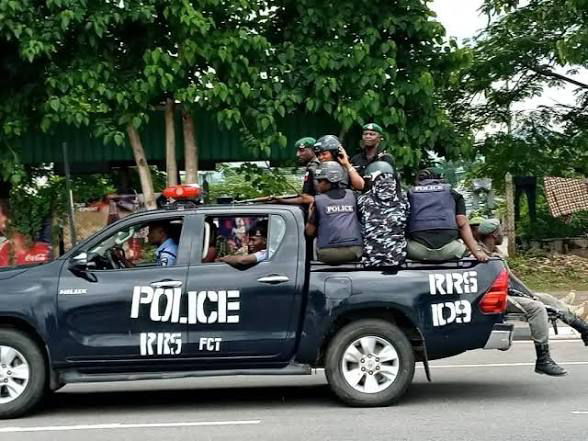
The Federal Capital Territory Police Command has commenced an investigation into an altercation between officials of the Vehicle Inspection Office and commercial motorcyclists in the Life Camp area of Abuja, an incident that has once again exposed the simmering tensions surrounding the enforcement of the ban on commercial motorcycles in the nation's capital. The confrontation occurred on Thursday, September 17, 2026, at about 7:00 p.m., and quickly escalated into a full-blown confrontation that drew the attention of the police command.
According to a press release signed by the Command's Public Relations Officer, SP Josephine Adeh, preliminary investigations revealed that the incident began when a VIO personnel attached to a task force constituted by the Federal Capital Territory Administration to enforce the ban on commercial motorcyclists operating on major roads and routes within the FCT had an altercation with a commercial motorcyclist. What started as a routine enforcement action spiralled into a chaotic scene that left residents and passersby scrambling for safety.
The Commissioner of Police, FCT Command, CP Ahmed Muhammed Sanusi, PhD, FCAI, has ordered an immediate and comprehensive investigation into the incident to establish the circumstances surrounding the matter. The Command has assured members of the public that further information will be made available as the investigation progresses. Normalcy has since been restored in the area, and the police have urged residents to remain calm and go about their lawful activities without fear or apprehension.
The incident is the latest flashpoint in the long-running and deeply contentious enforcement of the Okada ban in the Federal Capital Territory. The ban, which prohibits commercial motorcyclists from operating on major roads and routes within the FCT, has been a source of friction between riders, enforcement officials, and residents since it was introduced. While the government argues that the ban is necessary to curb crime, reduce accidents, and improve traffic management, critics contend that it has pushed many young people out of work and created a cat-and-mouse game between riders and enforcers that often turns violent.
The VIO task force, constituted by the FCTA to enforce the ban, has been at the centre of numerous confrontations with Okada riders. Riders often complain of harassment, extortion, and brutality at the hands of enforcement officials, while enforcers accuse riders of flouting regulations and resisting arrest. The Life Camp incident is a microcosm of this broader conflict. It is a conflict that has no easy solution, as both sides feel they are fighting for their survival. The riders are fighting for their livelihoods. The enforcers are fighting to implement government policy.
What makes the situation even more complex is the economic reality that drives many young men into commercial motorcycling in the first place. With unemployment and underemployment at record highs, the Okada business has become a vital source of income for thousands of young Nigerians in Abuja and across the country. For many, it is the only way to feed their families and pay their bills. When the government bans their means of livelihood without providing a viable alternative, it is not surprising that tensions boil over.
The police investigation will seek to establish exactly what happened in Life Camp on Thursday evening. It will determine who was responsible for the escalation, whether any laws were broken, and what measures can be taken to prevent a recurrence. But beyond the specifics of this incident, there is a larger question that the FCTA and the police must confront: how can the Okada ban be enforced without turning Abuja's streets into a permanent conflict zone? How can the government balance its legitimate interest in public order with the legitimate economic needs of its citizens?
The answers are not easy. But they must be found. The alternative is a cycle of violence that benefits no one. The riders lose their livelihoods. The enforcers face hostility and danger. The residents live in fear of the next confrontation. And the government's credibility erodes with every clash. The FCT Police Command has demonstrated its willingness to investigate this incident transparently. That is a positive step. But investigation alone is not enough. What is needed is a comprehensive review of the Okada ban and its enforcement, one that involves all stakeholders and seeks to address the root causes of the conflict.
As the police probe the Life Camp incident, the people of Abuja will be watching closely. They want answers. They want accountability. And they want a lasting solution to a problem that has plagued the capital for too long. The police have urged residents to remain security-conscious and promptly report suspicious persons or activities to the nearest police station or through the Command's emergency lines: 08032003913, 08061581938. But for the Okada riders and the VIO officials, the real emergency is the ongoing conflict that threatens to boil over again at any moment. Until that conflict is addressed, Abuja's streets will remain a battleground, and the next Life Camp incident will be just a matter of time.
📩 Stone Reporters News | 🌍 stonereportersnews.com
✉️ info@stonereportersnews.com | 📘 Facebook: Stone Reporters News | 🐦 X (Twitter): @StoneReportNew | 📸 Instagram: @stonereportersnews
Add comment
Comments