

Reported by: Oahimire Omone Precious | Edited by: Oravbiere Osayomore Promise.
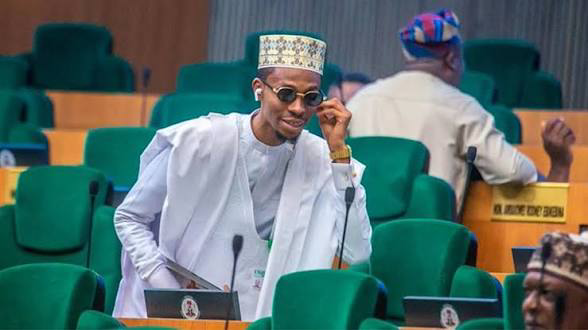
The petition arrived at the NDLEA headquarters with a UPS delivery record bearing a receiving stamp dated September 8, 2026. Inside was an evidence bundle: public statements, contemporaneous media reports, indexed exhibits, preserved screenshots, and SHA-256 references. The signatories were two men from Kaduna North Federal Constituency, Abubakar Hayatu of Kabala Ward and Musa Tukur of Unguwar Gaji Ward. Their target was not a stranger. It was their federal representative, Hon. Mohammed Bello El-Rufai.
The petition did not ask the National Drug Law Enforcement Agency to presume guilt or subject the lawmaker to a compulsory test. It asked for something simpler and, in the current political climate, more consequential: an independent assessment to determine whether there are lawful grounds for an investigation.
"Our concern is that an allegation of cocaine use involving a serving federal legislator cannot properly be disposed of merely by describing the controversy as a private family affair," the constituents wrote. "If established by competent evidence, unlawful cocaine use would engage Nigerian drug-control law and would also raise serious questions of public trust, ethical responsibility and confidence in an elected representative."
The allegation originated on August 29, 2026, when Bashir El-Rufai, the lawmaker's biological brother, launched a series of expletive-laden posts on his X handle. "I have a useless excuse for a brother, with his bony-ass face coated with an unknown white substance around his nostrils every night," Bashir wrote. "That is your Member of the House of Representatives, representing a whole populace, but prefers alcohol and cocaine." He later added, "He's the one on colos, actually, and a diet of cocaine and whiskey."
The posts were not merely about substance abuse. They were political. Bashir accused Bello of betraying the family by remaining aligned with Kaduna State Governor Uba Sani during the bitter feud between Sani and their father, former Governor Nasir El-Rufai. He described Bello as serving his own interests and abandoning the family until his relationship with Sani soured. "Where was he before then?" Bashir asked. He also threatened, "I will destroy you & climb my bed and sleep peacefully."
Bello El-Rufai has not publicly responded to the allegations or the petition. His silence is notable. When the allegations first surfaced, he did not issue a denial. He did not hold a press conference. He did not release a statement through his media aide. The silence has been deafening, and it has left room for speculation to fill the void.
The NDLEA has not confirmed whether it will investigate. The agency has a statutory responsibility under Sections 3 and 4 of the NDLEA Act to enforce drug-control laws and investigate allegations of drug-related offences. The petition cites these provisions explicitly. But the agency is also aware that the accusation emerged from a family dispute, and it may be weighing whether a full investigation would be seen as entering the murky waters of Kaduna's political warfare.
The politics are impossible to ignore. Nasir El-Rufai has been in custody since February 2026 over allegations of financial impropriety during his tenure as governor. His political alliance with Sani collapsed after Sani accused the previous administration of leaving behind debts of $587 million, N85 billion, and 115 contractual liabilities. The fallout divided the El-Rufai family. Bashir sided with his father. Bello initially sided with Sani, then shifted to the African Democratic Congress, the party his father now associates with. Bashir's social media tirade was as much about Bello's political choices as it was about his personal habits.
That context does not make the allegation false. It also does not make it true. The constituents who signed the petition understand this. They acknowledged that public office does not extinguish the right to privacy or the constitutional presumption of innocence. They acknowledged that the family relationship neither proves nor disproves the claim. What they are asking for is simple: a lawful process to determine whether the allegation has any basis.
The NDLEA now faces a choice. It can treat the petition as a politically motivated stunt and quietly shelve it. It can launch a discreet, preliminary inquiry to see if there is any substance to the claims. Or it can publicly announce a full investigation, an act that would inevitably become a political grenade in Kaduna and beyond. Whatever it decides, the decision will be scrutinised. The petition has a courier record. It has an NDLEA receiving stamp. It has an evidence bundle with preserved screenshots and references. It cannot simply disappear.
For the people of Kaduna North, the question is not just about one lawmaker's alleged habits. It is about whether the institutions meant to enforce the law will act when the allegation involves someone with political power. The constituents have done their part. They have filed the petition. They have provided the evidence. They have asked for a lawful process. The rest is up to the NDLEA.
📩 Stone Reporters News | 🌍 stonereportersnews.com
✉️ info@stonereportersnews.com | 📘 Facebook: Stone Reporters News | 🐦 X (Twitter): @StoneReportNew | 📸 Instagram: @stonereportersnews
Add comment
Comments