

Reported by: Ijeoma G | Edited by: L. Stone
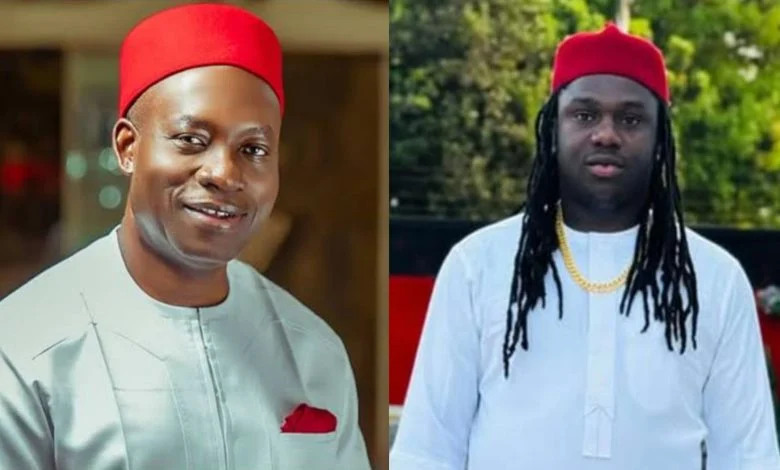
Anambra State Governor, Professor Chukwuma Soludo, has granted a pardon to jailed native doctor Chidozie Nwangwu, popularly known as Akwa Okuko Tiwara Aki, and appointed him Ambassador for Youth Reformation in the state, bringing an unexpected turn to a case that had attracted widespread attention over allegations involving ritual practices and the promotion of quick wealth.
The development occurred on Friday, September 18, 2026, when Soludo visited the Nigeria Correctional Service facility in Amawbia, Anambra State, where Nwangwu had been serving his sentence. The governor signed an order for his immediate release and announced that he would work with Nwangwu for the betterment of Anambra State. The pardon was disclosed by Dr Nelson Omenugha, the governor’s Special Adviser on Youth Reformation, who said the intervention reflected the administration’s emphasis on correction and restoration.
Nwangwu had been serving an 11-month custodial sentence after proceedings before the Anambra State High Court sitting in Awka. Reports on the judgment state that he was convicted in February 2026 following a plea bargain in which he pleaded guilty to charges connected with the practice of Oke-ite and related activities. The court also ordered the destruction of his shrine in Oba, Idemili South Local Government Area of Anambra State.
The legal case followed Nwangwu’s arrest in 2025 alongside seven other native doctors during a state government crackdown on activities authorities associated with money rituals, quick-wealth schemes and the alleged use of human parts for ritual purposes. The arrests followed the enactment of the Anambra State Homeland Security Law 2025, under which the state government intensified measures against practices it said were contributing to criminality and fraudulent activities.
Nwangwu’s sentence was initially described in reports as two years’ imprisonment, but part of the term was ordered to run concurrently with the period he had already spent in custody. That arrangement left him with 11 months to serve. He was subsequently incarcerated at the Nigeria Correctional Service facility in Amawbia, where he remained until the governor exercised the prerogative of mercy.
The court’s orders also imposed conditions relating to Nwangwu’s future activities. He was required to renounce Oke-ite and related charm practices and was expected to publicly speak against such practices. He was also directed to become an ambassador for youth reorientation after completing his sentence. Nwangwu accepted the conditions while serving his term.
Soludo’s decision therefore came before the full custodial sentence had been completed. By granting the pardon, the governor brought Nwangwu’s imprisonment to an early end while simultaneously placing him in a public role connected to the state’s youth reformation programme.
Omenugha described the appointment as part of the philosophy behind the state’s youth reformation initiative. He thanked Soludo for extending what he called a hand of mercy to Nwangwu and giving him a new responsibility as Ambassador for Youth Reformation. According to the adviser, the programme is intended to move beyond punishment by incorporating correction, restoration and the provision of a new purpose for individuals who have faced the justice system.
The governor’s intervention follows his earlier position that cases involving native doctors should pass through due legal processes. Nwangwu’s release comes after his conviction, distinguishing his case from calls for intervention before the conclusion of criminal proceedings. His pardon was therefore issued after the court had determined the case and imposed conditions concerning his future conduct.
The case has remained part of a wider debate in Anambra over the distinction between traditional medicine, cultural practices and activities the government considers harmful or criminal. The state administration has maintained that its measures are aimed at practitioners involved in fraudulent or dangerous activities rather than legitimate traditional medicine. Critics of the crackdown, however, have raised concerns about the treatment of traditional practitioners and the scope of the government’s enforcement measures.
The administration’s position has been that practices associated with money rituals, exploitation and the use of human body parts require firm action because of their potential links to violent crime and fraudulent schemes. The arrests of several native doctors in 2025 formed part of that broader security and public-order campaign.
Nwangwu became one of the most publicly recognised figures affected by the crackdown. His activities and public profile had previously attracted significant attention, making his arrest, prosecution and imprisonment a prominent case under the state’s new security framework. His subsequent appointment gives him a very different public responsibility from the one that led to his prosecution.
Under the new arrangement, Nwangwu is expected to participate in efforts aimed at youth reorientation and discourage young people from pursuing practices associated with quick wealth and related ritual activities. His personal experience of arrest, prosecution and imprisonment is likely to form part of the context surrounding the role, although the government has not publicly released a detailed programme outlining his duties, remuneration or specific activities as ambassador.
Soludo’s announcement was made during an inspection of the Amawbia correctional facility. The governor also inspected the custodial facility at Waterside, Onitsha, as part of activities focused on the welfare and wellbeing of inmates and conditions within correctional institutions in the state.
The pardon does not erase the fact that Nwangwu was convicted by the court. Rather, it represents the governor’s exercise of executive mercy following the conclusion of the criminal proceedings. The appointment also does not alter the court’s findings or the conditions previously imposed concerning his renunciation of Oke-ite and related practices.
For the Anambra Government, the case provides an opportunity to present youth reformation as an approach that combines accountability with reintegration. For Nwangwu, it marks a transition from serving a custodial sentence to taking on a public-facing role intended to influence young people.
The governor has also pledged to work with Nwangwu for the development of Anambra State. Details of the collaboration, including the programmes in which the newly appointed ambassador will participate, are expected to become clearer as the youth reformation initiative develops.
The decision has generated renewed public interest because of the sharp change in Nwangwu’s circumstances. Months after facing criminal proceedings and imprisonment, he has now been released through a gubernatorial pardon and assigned a role within the same administration’s youth-focused reform programme.
As of September 18, 2026, Nwangwu has been released from custody and designated Ambassador for Youth Reformation in Anambra State. His case remains significant within the state’s continuing campaign against practices linked by authorities to ritual crime and fraudulent quick-wealth schemes, while his new appointment places him within an official effort focused on discouraging such practices among young people.
The development ultimately represents a shift from prosecution and imprisonment to rehabilitation and public engagement. The effectiveness of the new role will depend on how the state government structures the programme and how Nwangwu carries out the responsibilities attached to his appointment.
📩 Stone Reporters News | 🌍 stonereportersnews.com
✉️ info@stonereportersnews.com | 📘 Facebook: Stone Reporters News | 🐦 X (Twitter): @StoneReportNew | 📸 Instagram: @stonereportersnews
Add comment
Comments