

by: L. Stone
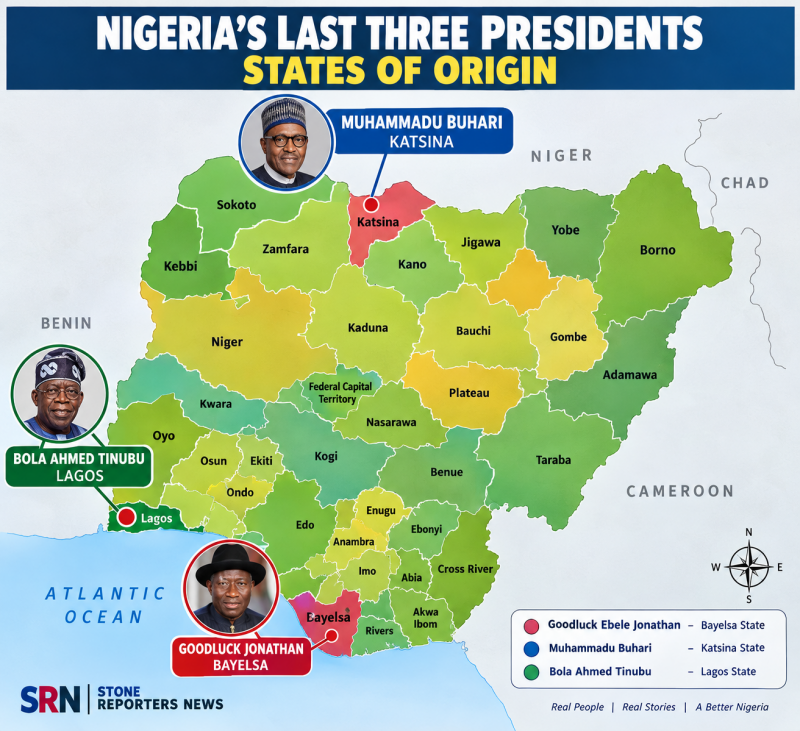
Over the last three administrations — Goodluck Jonathan from 2010 to 2015, Muhammadu Buhari from 2015 to 2023, and Bola Ahmed Tinubu from 2023 to the present — Nigerians have repeatedly gone to the ballot with expectations of stronger democracy, a more stable economy and greater security. Yet each administration has also left behind complaints that shaped the demand for another change.
Goodluck Jonathan became president in May 2010 after the death of Umaru Musa Yar’Adua, who had been elected in 2007. Jonathan later won the 2011 presidential election. His administration inherited an economy benefiting from strong oil revenues and relatively rapid growth, but the country remained deeply unequal. The World Bank reported strong economic growth around this period, while poverty remained high and unevenly distributed, particularly between northern and southern regions. Yet many households did not experience that growth equally.
Security increasingly dominated Jonathan’s presidency. Boko Haram expanded dramatically in the northeast, carrying out bombings, killings, attacks on communities and mass abductions. The 2014 abduction of 276 schoolgirls from Chibok became an international symbol of Nigeria’s security crisis. Human Rights Watch reported large-scale displacement and serious abuses by security forces in their response. The government declared states of emergency in parts of the northeast, but violence continued. By the 2015 election, insecurity, corruption allegations, unemployment and economic opportunity were major political issues.
The 2015 election produced Nigeria’s first democratic transfer of presidential power from an incumbent ruling party to an opposition party. Muhammadu Buhari of the All Progressives Congress defeated Jonathan. Buhari arrived with a powerful promise of change, particularly on corruption and security. Many voters frustrated by Boko Haram violence and allegations of corruption expected his government to restore order and improve public accountability. The transition mattered to Nigeria’s democracy.
But Buhari’s eight years were marked by new economic pressures and a changing security landscape. Nigeria entered recession in 2016 after the collapse in oil prices and production disruptions, and another recession followed during the COVID-19 crisis. The World Bank said economic growth between 2015 and 2022 averaged about 1.4 percent, while poverty increased. Inflation and unemployment became central public concerns, and the naira faced repeated pressure. By the end of Buhari’s tenure, many households were complaining about the cost of food, fuel, electricity and other essentials.
Security also changed rather than disappearing. Nigerian forces made gains against Boko Haram in some periods, but insurgency persisted in the northeast. At the same time, banditry, kidnapping and communal violence expanded in parts of the northwest and Middle Belt. Farmers and herders faced repeated conflicts, while criminal groups abducted schoolchildren and travellers for ransom. Human Rights Watch documented continuing violence and abuses. Nigerians who had expected the 2015 change to deliver greater safety were confronted with a wider and more complex security problem.
The 2023 election again became a contest shaped heavily by economic hardship and insecurity. Tinubu, the APC candidate, won after a three-way contest involving Atiku Abubakar of the Peoples Democratic Party and Peter Obi of the Labour Party. The election was Nigeria’s seventh presidential election since the return to democracy in 1999. The economy and national security were among the dominant concerns, while the process faced criticism over logistical failures, violence and disputes about the conduct and results.
Tinubu entered office in May 2023 promising major reforms and arguing that difficult decisions were necessary to rebuild the economy. His government quickly removed the long-standing petrol subsidy and changed foreign-exchange policy. The measures were intended to improve public finances and attract investment, but they also produced immediate hardship. Petrol prices rose sharply, transport costs increased and food became more expensive. The naira also weakened significantly, intensifying pressure on household incomes.
Three years into Tinubu’s presidency, the economic picture contains both measurable improvements and continuing hardship. The IMF reported in 2026 that reforms had produced stronger macroeconomic outcomes, while the World Bank said growth reached about 4 percent in 2025 and inflation declined from 33.2 percent in 2024 to 23 percent in 2025. Yet the World Bank estimated that about 63 percent of Nigerians were living below the national poverty line in 2025, with millions more people falling into poverty that year. Improved macroeconomic indicators have not automatically translated into better living standards.
Security remains another unresolved issue. Nigeria continues to face Boko Haram and ISWAP attacks in the northeast, banditry and kidnapping in the northwest, communal violence in parts of the Middle Belt and separatist-related violence in the southeast. The World Bank identifies insecurity as a continuing national challenge, while a 2026 International Republican Institute assessment said economic hardship, insecurity and declining confidence in political institutions were important challenges ahead of the 2027 elections.
The pattern across these administrations is clear. Jonathan faced complaints that insecurity and corruption were overwhelming the benefits of economic growth. Buhari inherited expectations that he would restore security and discipline, but Nigerians later complained about recession, inflation, unemployment and persistent violence. Tinubu inherited those problems and introduced major economic reforms, but citizens continue to complain about living costs, poverty and insecurity even as official indicators show some stabilization.
Now Nigeria is approaching another presidential election, scheduled by INEC for January 16, 2027. The central question is whether the next government can improve security, purchasing power, employment, infrastructure and public trust.
For more than a decade, Nigerians have repeatedly entered elections hoping that the next president will do better than the last. Each new administration has inherited unfinished problems, while citizens have continued to adapt, protest, vote, complain and hope. As another electoral cycle approaches, the question confronting the country is simple but difficult: after all the promises, transitions and sacrifices, will the next president finally break the cycle — or will Nigerians once again be asked to hope that the next one will do better?
📩 Stone Reporters News | 🌍 stonereportersnews.com
✉️ info@stonereportersnews.com | 📘 Facebook: Stone Reporters News | 🐦 X (Twitter): @StoneReportNew | 📸 Instagram: @stonereportersnews
Add comment
Comments