

Reported by Ariajegbe Sylvia Esezobor
The Independent National Electoral Commission has warned that the misuse of artificial intelligence to create and spread manipulated content is "no longer a distant, theoretical risk" to Nigeria's 2027 general elections, saying the growing accessibility of generative AI has made it cheaper and considerably harder to detect fabricated audio, videos and images.
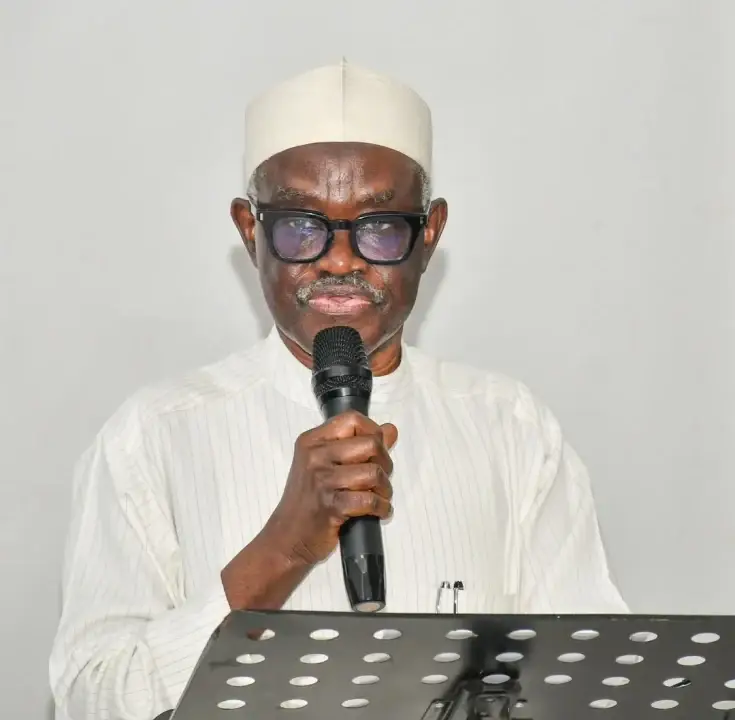
The warning was delivered on Monday in Abuja by the National Commissioner and Chairman of the Information and Voter Education Committee, Mohammed Haruna, at a capacity-building workshop for Public Affairs Officers drawn from across the states. The workshop, themed "Strengthening PAOs Capacity for Credible, Verified and Responsible Election Communication Towards 2027," was designed to equip the commission's frontline communicators with the skills required to respond to emerging information challenges. Haruna said the threat extended beyond fabricated content, noting that AI could also be deployed to produce highly targeted messages designed to feed conflicting narratives to different groups of voters. "Generative AI has made it cheaper and considerably harder to detect manipulated audio, video and images," he said.
The commission's alarm comes amid a growing body of evidence that AI-generated political content is already entering Nigeria's information environment. In January 2026, former Oyo State First Lady Florence Ajimobi denied a viral video purportedly showing her making controversial comments about the 2027 governorship election, with her office saying a forensic review identified the footage as AI-generated, including manipulated lip movements and cloned voice patterns. During the June 2026 Ekiti governorship election, fact-checkers identified an AI-generated image falsely presented as showing voters waiting to sell their votes. Cybersecurity and AI governance expert Toluwani Akinniyi warned that the challenge goes beyond the spread of misinformation to the ability of voters to determine whether images, videos and audio recordings encountered during the election period are genuine. She also cautioned about the "liar's dividend," whereby the growing prevalence of synthetic media makes it easier for individuals to dismiss genuine evidence as fake.
INEC Chairman Prof. Joash Amupitan has framed the challenge as one that demands a fundamental shift in how the commission approaches election management. He said electoral credibility no longer depends only on ballot papers, BVAS machines and result sheets, but also on the information environment in which voters form their judgments. He called for electoral technology and electoral communication to be treated "not as separate concerns but as a single discipline". The commission has begun deploying AI tools to help identify discrepancies in election result records, while stressing that the use of AI would remain subject to human oversight. Amupitan said the commission was undertaking a comprehensive audit of its electoral technology systems, covering system redundancy, penetration testing and disaster recovery planning, and was exploring the conduct of a mock presidential election ahead of 2027 to test accreditation, transmission and results viewing under conditions similar to election day.
The commission's credibility challenge is compounded by the legacy of the 2023 general elections. Amupitan acknowledged that the last cycle showed that technology such as BVAS and the INEC Result Viewing Portal could become a source of public doubt when it underperformed, adding that legitimacy would be earned only when systems performed reliably, were well understood and were explained honestly when they fell short. The 2023 elections were marked by widespread complaints over the failure of the result-viewing portal to upload polling unit results in real time, a controversy that eroded public confidence and became a central issue in litigation that followed the presidential poll. Senator Victor Umeh, representing Anambra Central, has warned against relying on AI for the 2027 elections, saying Nigerians are already anxious about the polls and that INEC has not adequately explained the 2023 glitch.
The commission has deepened engagement with global technology companies as part of efforts to strengthen cybersecurity and the responsible application of AI in the electoral process. INEC has engaged Google and Microsoft, among other firms, in recent days, and Amupitan has said the successful deployment of AI in electoral administration will depend more on strong institutions, governance structures and safeguards than on the sophistication of the technology. "AI must strengthen electoral integrity, improve public service, and always remain under human control," he said.
The warning from INEC is echoed by media stakeholders. At the 8th Bagauda Kaltho Media Lecture Series organised by the Africa Media Development Foundation, journalists and media professionals raised the alarm over the growing use of AI to produce fabricated election results, deepfake videos and manipulated audio, warning that misinformation and disinformation often travel faster on social media than professional journalists and fact-checkers can respond. The communique called on media organisations to invest in continuous training in fact-checking, digital verification, artificial intelligence and investigative journalism, and urged technology companies and digital platforms to work with journalists, civil society and government institutions to address harmful disinformation. It also advocated greater media literacy and critical thinking at the community level, urging citizens to pause, question and verify information before sharing it.
The scale of Nigeria's electoral operations makes the challenge more acute. The country has more than 93 million registered voters, approximately 180,000 polling units and about 185,000 BVAS devices, with elections conducted simultaneously across the 36 states and the Federal Capital Territory. The 2027 general elections are scheduled for January 16, with the governorship and state assembly elections following on February 6. As the campaign season intensifies, the information environment in which voters will make their choices is already contested, and the commission's ability to monitor, verify and respond to AI-generated threats in real time will be tested as never before. The capacity-building workshop for Public Affairs Officers is the beginning of what Eta-Messi described as "sustained engagement" to ensure that the commission's communicators are adequately prepared. Whether that preparation will be sufficient to protect the integrity of the 2027 elections from the accelerating threat of AI misuse remains the central question.
📩 Stone Reporters News | 🌍 stonereportersnews.com
✉️ info@stonereportersnews.com | 📘 Facebook: Stone Reporters News | 🐦 X (Twitter): @StoneReportNew | 📸 Instagram: @stonereportersnews
Add comment
Comments