

Reported by: Oahimire Omone Precious | Edited by: Oravbiere Osayomore Promise.
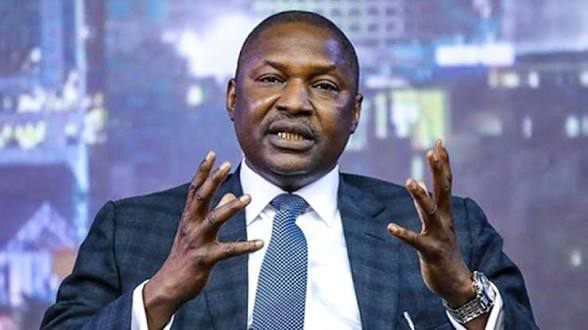
Former Attorney-General of the Federation and Minister of Justice, Abubakar Malami, has formally rejected the bribery and corruption findings contained in the International Chamber of Commerce arbitral award on the Mambilla Hydroelectric Power Project dispute, insisting that the observations must be considered against the complete documentary and evidentiary record rather than through what he described as selective accounts of the tribunal's findings. In a statement issued on Tuesday, September 22, 2026, by his Special Assistant on Media, Mohammed Bello Doka, Malami welcomed the tribunal's rejection of Sunrise Power's claims against Nigeria, but drew a sharp distinction between an international commercial arbitration and a criminal adjudication. "The proceedings were commercial arbitration proceedings between parties to a dispute. They were not a criminal prosecution of Abubakar Malami, SAN, and the award does not constitute a criminal conviction of him," the statement read.
The dispute centres on the 616-page final award delivered in Paris on September 16, 2026, by a three-member ICC tribunal, which dismissed Sunrise Power and Transmission Company Limited's claims against Nigeria but contained severe criticisms of Malami's handling of a 2020 settlement agreement with Sunrise promoter, Leno Adesanya. The tribunal found that Malami acted against Nigeria's interests and described the January 2020 settlement agreement and the March 2020 addendum as products of corruption and therefore unenforceable on grounds of Nigerian public policy. The tribunal also found that the agreements were not binding on Nigeria because the required presidential approval had not been obtained. In a handwritten note dated April 20, 2020, former President Muhammadu Buhari reportedly rejected the proposed settlement, writing "Not approved".
The ICC tribunal further noted that Malami failed to appear before it to give evidence, and that Nigeria had informed the tribunal that Malami was under investigation by the Economic and Financial Crimes Commission when he declined to appear for oral examination. Adesanya, who testified as a key witness for Sunrise, alleged that Malami solicited a bribe during negotiations after the $200 million settlement had already been signed. According to the tribunal, Adesanya testified that he heard Malami and former Minister of Power, Saleh Mamman, say that Nigeria would not pay the $200 million at once but would initially pay half and release the remaining amount after he had done "what is needed". The tribunal said Adesanya claimed to possess audio and video recordings of the alleged solicitation but withheld them from the tribunal. It noted that the recordings could have been significant evidence had they been produced. On the balance of probabilities, the tribunal found that a corrupt agreement had been reached under which Malami was promised a share of money Sunrise would receive, and that the settlement and addendum were "a product of corruption".
Malami, in his response, acknowledged the seriousness of the findings, saying they "should not be ignored, trivialised or answered by speculation," but maintained that the observations concerning the settlement agreement, presidential approval, his communications with Adesanya, and the alleged corrupt arrangement should be considered alongside the complete documentary and evidentiary record. He said he would undertake a comprehensive review of the full award and the underlying records before making a detailed response to the specific findings. He also rejected any suggestion that he received personal financial benefit from Sunrise Power, describing the claim as false. He noted that Adesanya had claimed to possess audio and video recordings relevant to the allegations, but none of the recordings was produced before the tribunal.
Malami sought to place his involvement in historical context, arguing that the Mambilla controversy had been in existence for more than a decade before he became Attorney-General. He said Sunrise became involved in the proposed project in 2003, and that successive administrations and Attorneys-General had dealt with the resulting contractual disputes. He said former AGF Michael Aondoakaa had reviewed the dispute before his tenure and recommended an amicable resolution, while a 2012 General Project Execution Agreement involving Sunrise and Sinohydro also predated his tenure. He said his involvement followed a directive communicated by the then Chief of Staff to President Buhari in April 2016 concerning the resolution of disputes surrounding the Mambilla project, and that the Ministry of Justice's role was primarily to advise the Federal Government on its legal exposure and possible ways of resolving the dispute.
Malami also provided details of the settlement negotiations, stating that Sunrise initially demanded $500 million as a full and final settlement during negotiations in London in November 2019, while Federal Government representatives countered with $100 million before a $200 million figure emerged. He said President Buhari did not approve the proposed $200 million settlement, and that Buhari's position was communicated to Sunrise in April 2020, while a subsequent request in January 2021 was also rejected with the words "Not approved". Malami said he subsequently instructed the government's lawyers to resist Sunrise's attempt to enforce the settlement terms against Nigeria.
The former AGF's response comes amid growing calls for accountability. The Human Rights Writers Association of Nigeria has called for professional sanctions against Malami, citing the tribunal's findings that the settlement agreements were products of corruption and unenforceable on grounds of Nigerian public policy. The group also backed the Attorney-General of the Federation and the EFCC in their efforts to protect Nigeria from unjustified financial liabilities. Separately, the EFCC has established a team to investigate Atiku Abubakar, Malami, and others named in the ICC ruling on the Mambilla deal. Malami is already facing trial after the EFCC accused him, his wife, and son of conspiring to conceal, disguise and retain about N8.7 billion in proceeds of unlawful activities.
The ICC tribunal's award is a significant victory for Nigeria, clearing the single biggest legal hurdle that had paralysed the Mambilla Hydroelectric Power Project for years. President Bola Tinubu welcomed the ruling, noting that it rejected Sunrise Power's $680 million claim and ordered the company and its promoter to reimburse Nigeria $11.8 million in legal costs. However, the tribunal's findings against Malami have cast a shadow over the victory, raising questions about the conduct of a former top government official and the integrity of the settlement process. Malami's demand for the full arbitral record to be made public is a direct challenge to his critics: if the complete record vindicates him, he wants Nigerians to see it. If it does not, the findings already in the public domain will speak for themselves. For now, the former Attorney-General maintains his innocence, and the battle over the interpretation of the 616-page award continues.
📩 Stone Reporters News | 🌍 stonereportersnews.com
✉️ info@stonereportersnews.com | 📘 Facebook: Stone Reporters News | 🐦 X (Twitter): @StoneReportNew | 📸 Instagram: @stonereportersnews
Add comment
Comments